

A developmental assessment describes a child’s abilities and needs at a particular point in time. As children grow, receive intervention and encounter new educational demands, the information needed to plan support may change. Repeating a developmental assessment can be useful, but the timing should depend on the purpose of reassessment rather than a universal schedule.
What is the purpose of repeating an assessment?
A reassessment may help clarify current developmental abilities, investigate new concerns or inform decisions about educational placement and intervention. It can also provide information about changes in performance since an earlier evaluation. The professional should identify the questions that the new assessment is intended to answer before selecting instruments.
For example, a child approaching primary school may need updated information about communication, adaptive functioning and classroom readiness. A child receiving targeted literacy intervention may instead need an academic assessment focused on reading and spelling rather than another broad developmental evaluation.
Is there a recommended interval?
There is no single interval suitable for every developmental assessment. Test manuals may specify recommended retesting intervals or describe limitations associated with repeated administration. The child’s age, referral question, developmental history and changes in functioning should also guide the decision.
Repeating the same standardized tasks too soon may introduce practice effects, particularly when a child remembers materials or procedures. Conversely, waiting for a scheduled reassessment may be inappropriate if new concerns require immediate investigation. Discuss timing with the professional responsible for selecting and interpreting the assessment.
When might an earlier evaluation be necessary?
New difficulties with communication, movement, learning or daily living may justify further evaluation. A significant change in school demands or an unexpected lack of progress may also prompt a review of the existing intervention plan.
Loss of previously established developmental skills requires timely medical evaluation. Families should not wait for a routine educational reassessment when a child experiences unexplained regression or other concerning health changes. The appropriate professional can determine whether medical investigations or additional specialist assessment are required.
Progress monitoring is different from formal reassessment
Teachers and therapists can monitor progress regularly through observations, work samples and measurements of individualized goals. These methods can show whether a child is using new skills independently and applying them in different settings. They do not necessarily require repeating a standardized assessment.
For instance, a therapist may record how independently a child follows instructions or completes a dressing routine. This information can guide intervention adjustments between formal assessments and provide useful context when a reassessment eventually takes place.
How should results be compared?
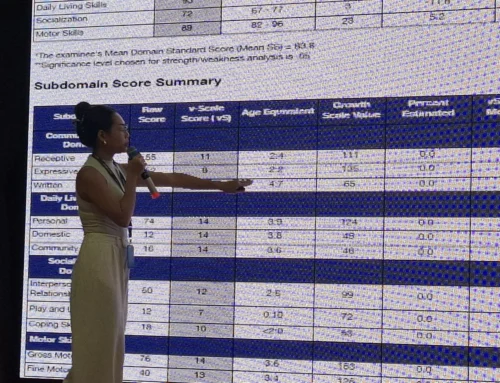
Standardized scores reflect performance relative to a reference group. A child can acquire new skills while maintaining a similar standard score because expectations increase with age. Changes in scores should be interpreted alongside measurement uncertainty, testing conditions and the suitability of the comparison.
Different instruments may measure different abilities, even when their scores use similar numerical scales. Professionals should explain whether results are directly comparable and avoid interpreting every numerical difference as meaningful developmental change.
Developmental reassessment in Phnom Penh
OrbRom Center provides developmental and educational assessment options alongside individual special education intervention, speech therapy and occupational therapy.
Bring previous assessment reports, intervention goals, recent progress records and teacher observations to a consultation. Discuss whether a full reassessment, targeted evaluation or routine progress review would answer the current questions. The resulting recommendations should explain what has changed, what support remains necessary and how progress will be monitored. Choosing the right assessment at the right time is more useful than repeating every available test at fixed intervals.


Leave A Comment