

A child may demonstrate advanced mathematical reasoning, exceptional vocabulary or sophisticated knowledge of particular subjects while struggling significantly with reading, spelling or written expression. High ability and learning disabilities can coexist. Children who demonstrate giftedness alongside a disability are often described in educational settings as twice-exceptional learners.
What does twice-exceptional mean?
Twice-exceptionality describes the combination of identified high ability or giftedness and a disability that affects learning or participation. Definitions of giftedness and eligibility for educational programs vary between schools and jurisdictions. Twice-exceptionality is an educational description rather than a standalone clinical diagnosis.
A student may demonstrate advanced reasoning while experiencing persistent difficulty with decoding written words. Another may understand complex scientific concepts but struggle to organize written responses. The particular combination of strengths and difficulties differs between individuals.
Why can learning disabilities be overlooked?
Strong reasoning, memory or verbal abilities may help some children compensate for difficulties. A student with advanced vocabulary may infer the meaning of written material despite inefficient decoding. Academic results may initially appear satisfactory because the child invests substantial effort or receives considerable assistance.
Conversely, a significant learning difficulty can prevent a child from demonstrating advanced abilities in conventional classroom assessments. Slow written production, for example, may limit the amount of knowledge a student communicates during a timed examination. Neither average grades nor uneven performance independently establishes twice-exceptionality.
What patterns should parents and teachers investigate?
Consider persistent differences between oral explanations and written work, advanced understanding alongside weak foundational academic skills, or substantial effort required to complete apparently manageable assignments. Observe whether difficulties persist despite appropriate instruction and opportunities to practise.
These patterns may have several explanations, including language exposure, attention difficulties or interrupted education. Children attending international schools in Cambodia may also demonstrate uneven skills because of curriculum changes or differences between home and school languages. Comprehensive evaluation helps distinguish these possibilities.
How can assessment identify an uneven learning profile?
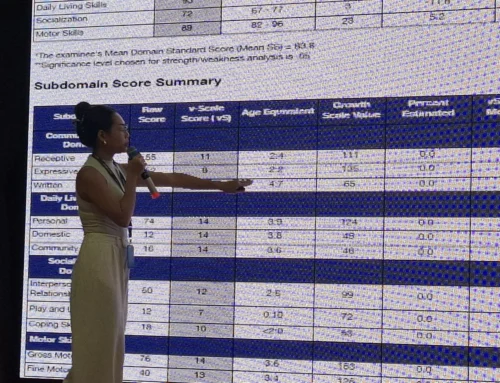
Assessment may include standardized academic achievement measures, cognitive evaluation when appropriate, educational history and classroom observations. The instruments should be selected according to the referral question and administered by appropriately qualified professionals.
A difference between cognitive and achievement scores is not sufficient on its own to diagnose a specific learning disorder. Diagnostic evaluation considers persistent functional difficulties, developmental history, instruction and alternative explanations. Giftedness should likewise be evaluated according to relevant criteria rather than inferred from a single strength.
Support both advanced abilities and learning needs
Children should have opportunities to engage with intellectually challenging material while receiving explicit instruction in areas of difficulty. A student with advanced scientific reasoning and reading difficulties may benefit from accessible science materials alongside systematic literacy intervention.
Appropriate accommodations can reduce barriers to demonstrating knowledge without replacing instruction in foundational skills. Avoid assuming that gifted children require less assistance or that remediation must be completed before they can access advanced learning opportunities.
Assessment and educational support in Phnom Penh
OrbRom Center provides academic assessment options and individual special education intervention. Where relevant, speech and language assessment and occupational therapy can help investigate additional barriers.
Bring examples of advanced work, areas of difficulty and previous assessment reports. Discuss whether further cognitive or diagnostic evaluation is required. An individualized plan should include goals for developing weaker skills and maintaining access to appropriately challenging learning. Regular reviews can examine academic progress, independence and the effort required to complete tasks. Recognizing both strengths and disabilities helps schools avoid overlooking support needs simply because a child demonstrates exceptional abilities in another area.


Leave A Comment