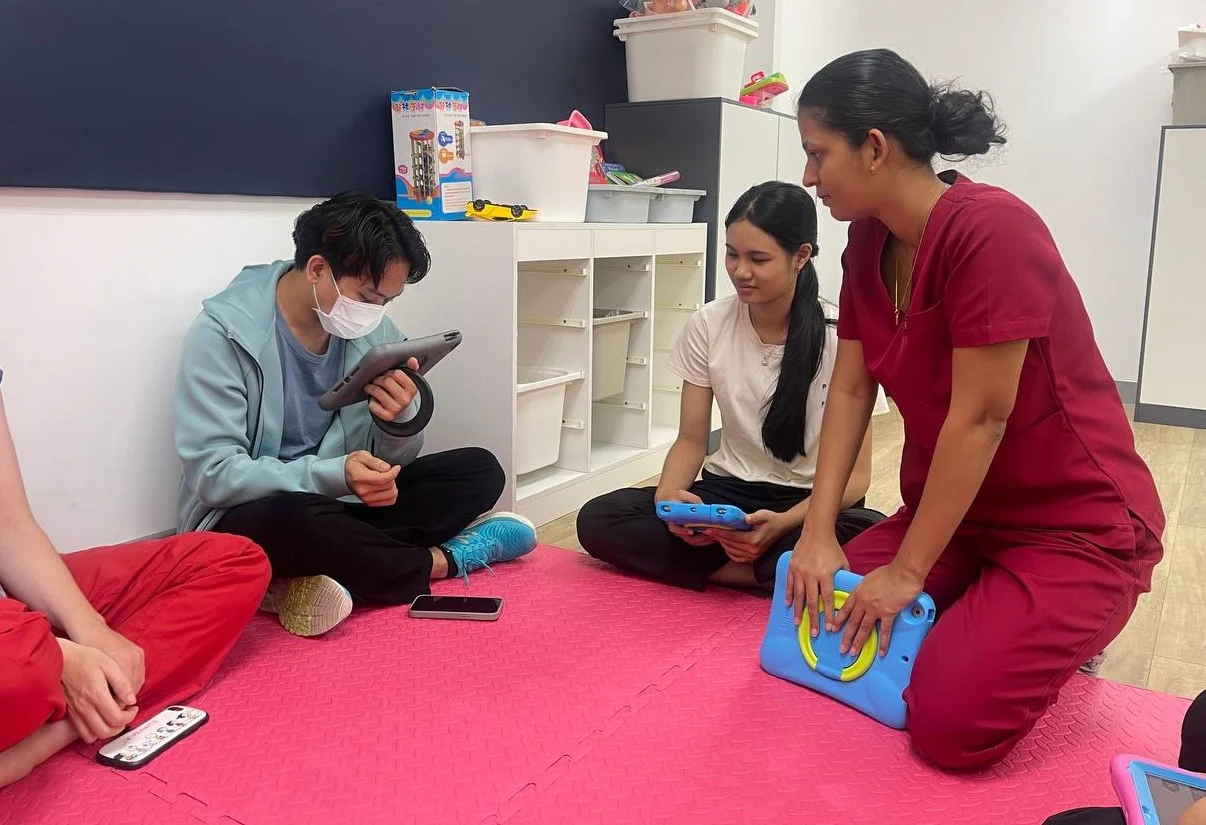
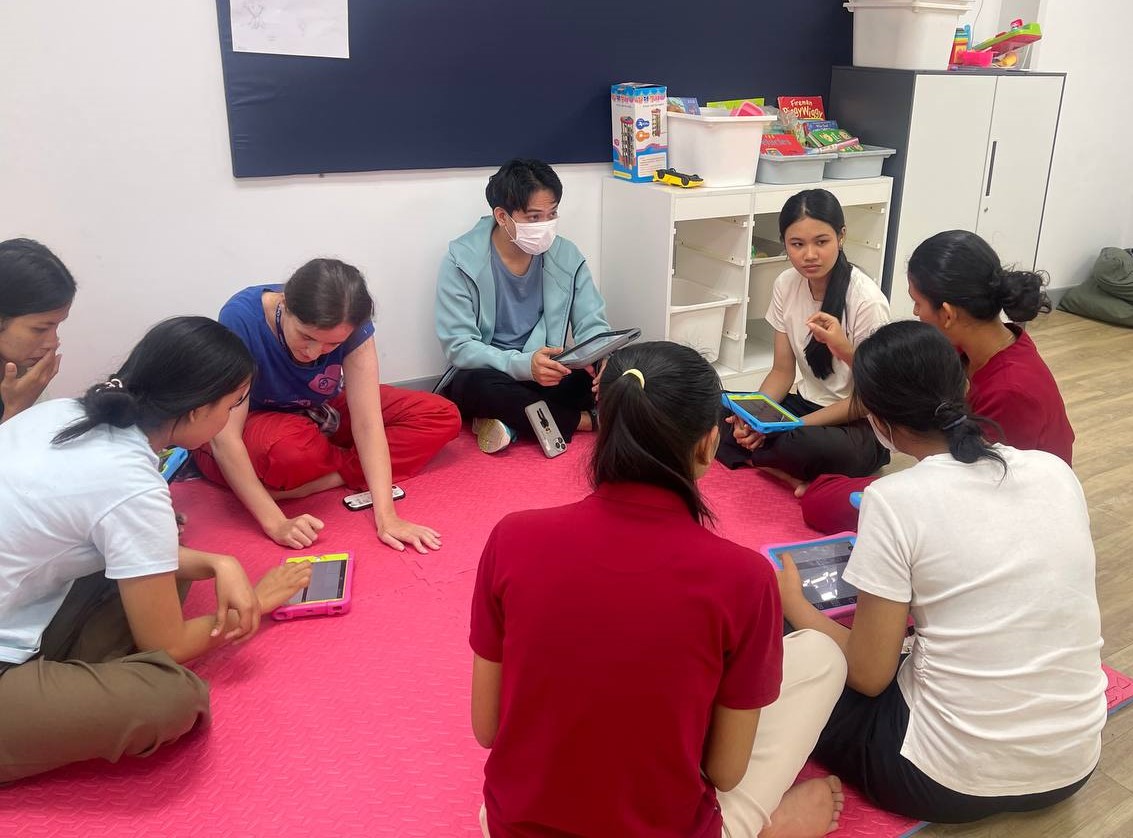
AAC training session work looks very different when it is done well. In the recent AAC training session led by Rasika Haggepolа Arachchi, Speech Language Pathologist at OrbRom Center, the focus was not on devices alone, but on meaningful communication that children can actually use in daily life. The session reflected what effective AAC should be: practical, child-centered, and deeply grounded in evidence-based speech therapy practice.
At OrbRom Center, AAC is not treated as a “last option.” It is treated as a language system. This distinction matters, especially for children who are minimally verbal, non-verbal, or struggling with functional communication.
What AAC Training Really Targets
AAC training sessions are often misunderstood. Many people assume the goal is to teach children to tap icons correctly. In reality, the goal is to teach communication intent—requesting, commenting, protesting, sharing attention, and expressing needs.
During the session, children were supported to:
-
Initiate communication independently
-
Understand cause and effect in communication
-
Use symbols meaningfully rather than repetitively
-
Build joint attention with a communication partner
This approach aligns closely with OrbRom’s broader philosophy around individualized support and one-on-one intervention, where communication is embedded into interaction rather than drilled in isolation. Parents who want to better understand how communication develops may also find value in this overview of communication and language development.
Rasika’s Clinical Approach to AAC
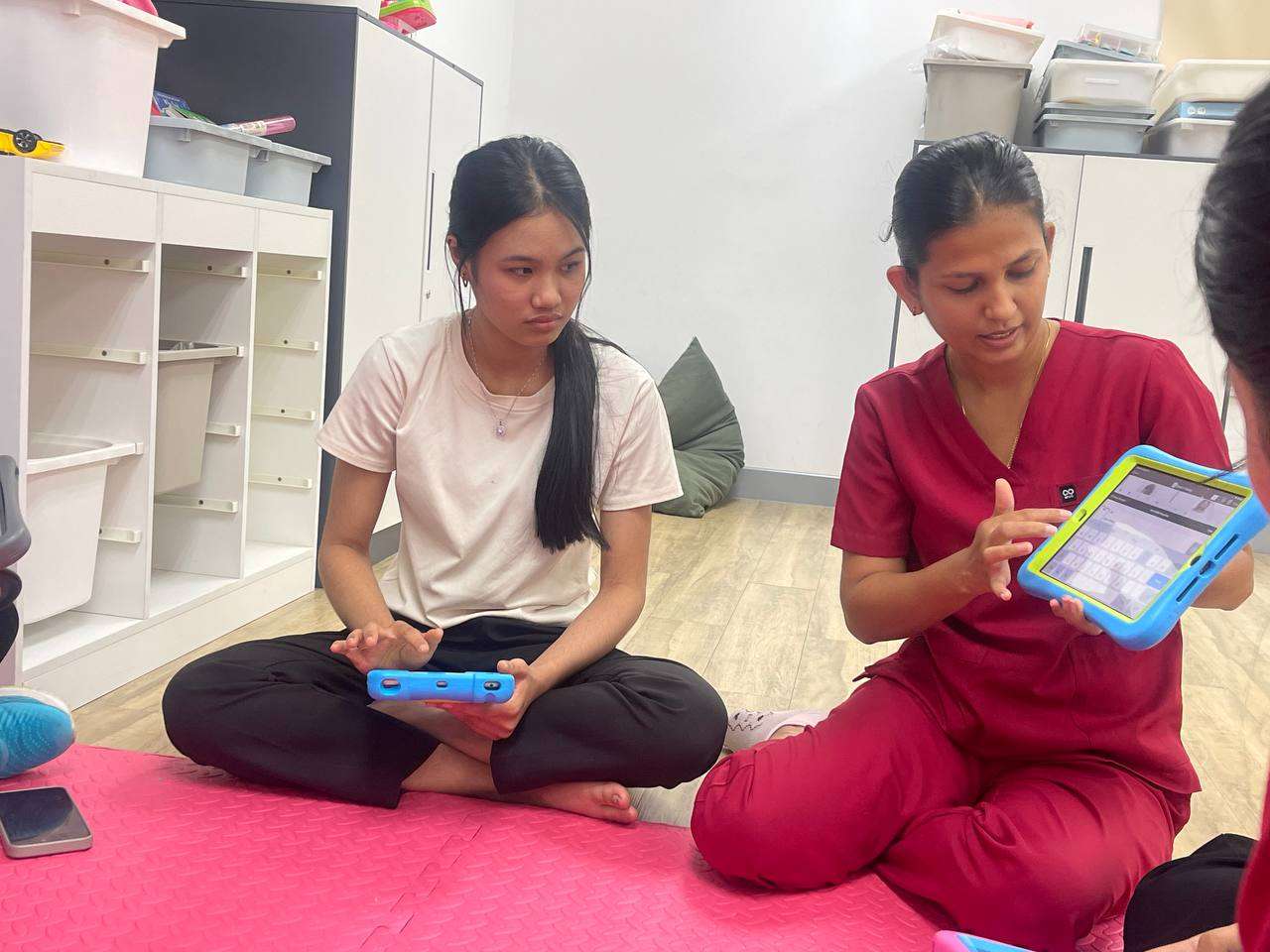
Rasika Haggepolа Arachchi brings a strong clinical lens to AAC training. Her work emphasizes language modeling, responsiveness, and emotional safety. Instead of correcting children constantly, she models language on the AAC system while following the child’s lead. This is critical for reducing frustration and building trust.
Her approach also recognizes that AAC users often face social communication challenges, not just expressive language delays. Supporting turn-taking, shared attention, and pragmatic language is just as important as vocabulary selection. This connects closely with the challenges described in social communication and interaction challenges.
Why Environment and Structure Matter
AAC training does not happen in a vacuum. The session demonstrated how structure, visual supports, and predictable routines support communication success. Children who struggle with regulation often communicate less effectively when overwhelmed, which is why AAC training is frequently integrated with sensory-aware strategies.
This overlap is especially relevant for children who benefit from both speech therapy and occupational therapy, as explained in what is occupational therapy. Communication improves when regulation improves.
AAC as Part of a Bigger Intervention Plan
At OrbRom Center, AAC is never a standalone service. It is integrated into individualized plans that may include speech therapy, structured classroom support, and intensive one-on-one intervention. AAC users are not excluded from literacy, play, or learning expectations. They are supported to access them differently.
Parents often ask whether AAC will stop speech from developing. Evidence shows the opposite: AAC often supports spoken language growth, especially when implemented early and consistently. For families navigating these decisions, resources such as what is speech therapy and individualized support is key provide useful context.
Moving Toward Functional Communication
The most important outcome of this AAC training session was not device accuracy—it was confidence. Children were seen engaging, initiating, and participating. That is the real measure of success.
AAC training, when delivered with clinical expertise and respect for the child, becomes a bridge to participation, learning, and connection. At OrbRom Center, sessions like this reflect a commitment to communication that works in real life, not just in therapy rooms.
We are the only Preschool specialized on children with special needs in PhnomPenh.
- Internationally qualified teachers
- Cambodia’s largest sensory room
- Outdoor swimming pool
- Covered outdoor playground
📞 Phone: 077.455.993
Telegram Link: https://t.me/OrbRom