
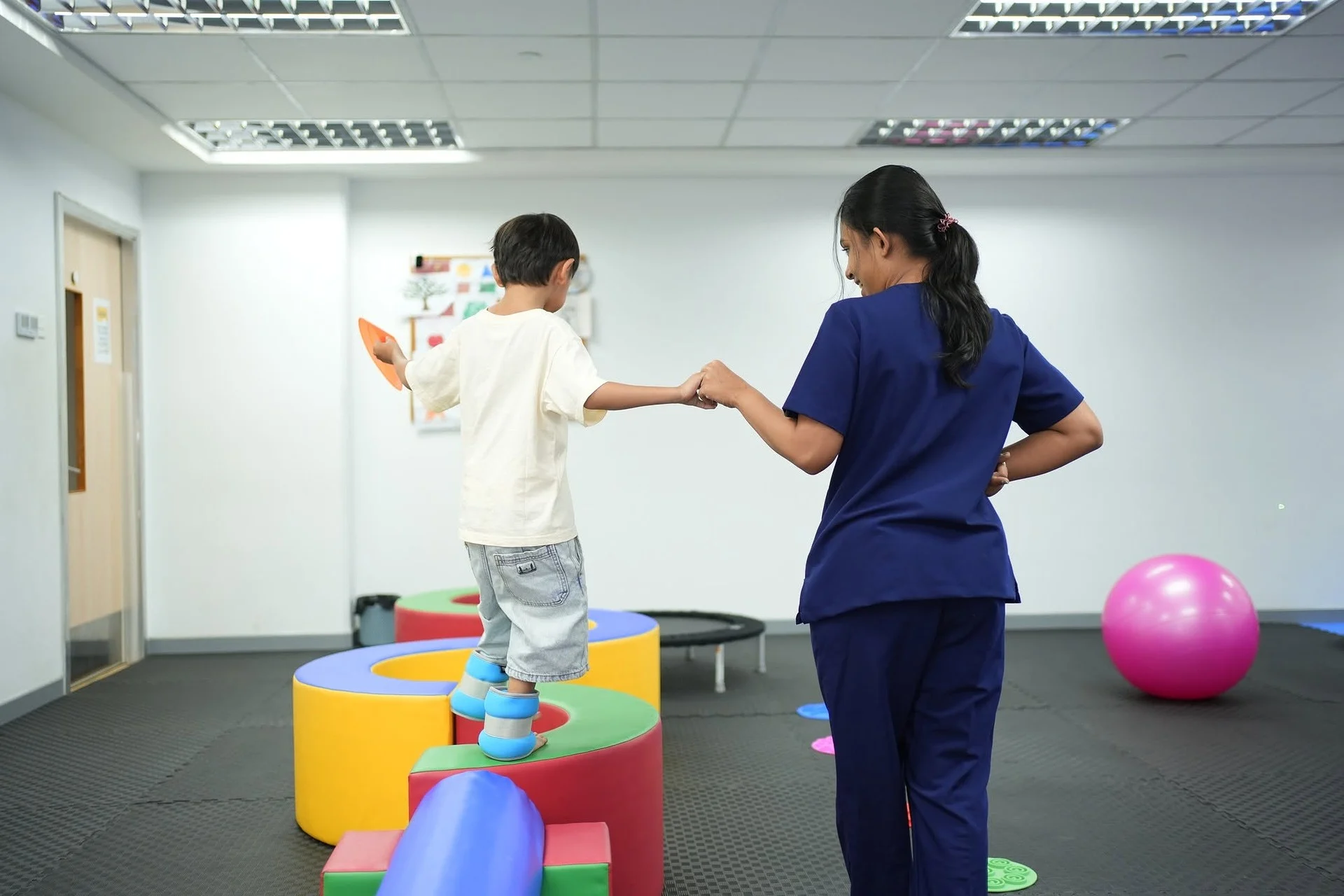
Balance and coordination help children move confidently through everyday environments, from playgrounds and classrooms to stairs and uneven surfaces. Pediatric occupational therapy can use structured movement activities to practise postural control, body awareness, and motor planning. At OrbRom Center in Phnom Penh, activities are selected according to each child’s abilities, functional goals, and need for support.
Why balance matters for children
Balance allows children to maintain a stable position while standing, walking, reaching, or changing direction. It depends on information from vision, the vestibular system, and proprioception, which helps the body sense joint and muscle position. These systems work together during everyday movement. Difficulties with balance may affect playground participation, navigating obstacles, or moving safely in busy spaces. Occupational therapists consider how these challenges influence a child’s daily activities rather than judging performance from one exercise.
Practising weight shifting and postural control
Stepping between low surfaces requires a child to transfer weight from one foot to the other and adjust their posture. Foam blocks and other age-appropriate equipment can provide opportunities to practise these movements in a controlled environment. An adult may initially offer hand support to help the child feel secure. The amount of assistance can change as the child demonstrates improved control. Equipment height, spacing, and stability should be matched to the child’s skills and supervised closely.
Developing motor planning and coordination
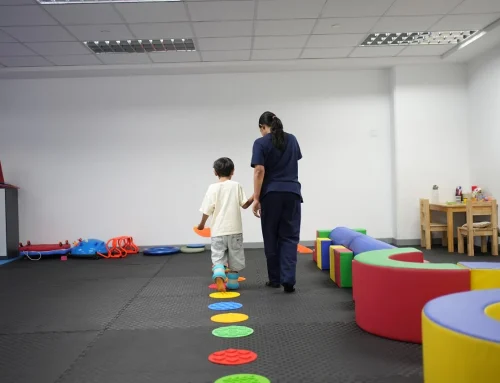
Motor planning involves organizing a movement, carrying it out, and adapting when conditions change. A simple obstacle course can encourage children to decide where to place their feet, negotiate a turn, or move from one surface to another. Therapists may demonstrate the sequence, use visual markers, or break the task into smaller steps. The goal is to create a manageable challenge that encourages active participation without unnecessary frustration or risk.
Supporting confidence through gradual challenges
Some children hesitate when faced with unfamiliar movement tasks, while others move quickly without recognizing potential hazards. A predictable activity with clear boundaries can help adults teach safe decision-making. Children may begin with low, stable equipment and progress only when ready. Encouragement should focus on specific efforts, such as pausing before a step or adjusting foot placement. Confidence develops through repeated successful experiences and opportunities to make choices, rather than pressure to complete a difficult course.
Adapting activities for different needs
Children vary in strength, coordination, sensory responses, attention, and understanding of instructions. One child may need a hand to hold, another may benefit from floor markers, and another may need fewer steps. Therapists also consider fatigue, footwear, and the environment. Activities should be adjusted when a child becomes distressed, loses balance repeatedly, or cannot follow the safety instructions. Individual assessment helps determine whether an exercise is appropriate.
Connecting therapy to everyday participation
The purpose of balance activities is to support meaningful participation outside the therapy room. Families and teachers may notice changes in how a child manages playground equipment, steps over obstacles, or joins movement games. Progress should be evaluated across settings and over time. A child completing a foam obstacle course does not automatically mean that the same skills transfer to stairs or outdoor play; those situations may require separate practice and support.
Occupational therapy at OrbRom Center
OrbRom Center offers pediatric occupational therapy, individualized special education intervention, and an early learning preschool program in Phnom Penh. Families can contact the center to discuss motor development concerns, assessment options, and activities linked to their child’s everyday goals.
Leave A Comment