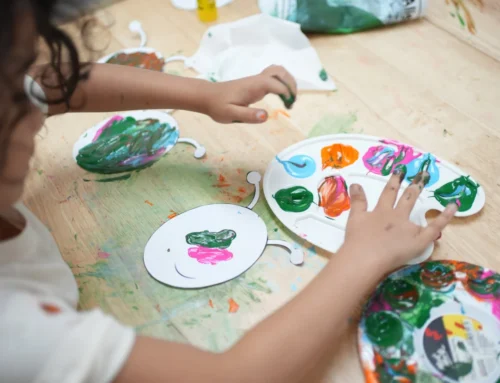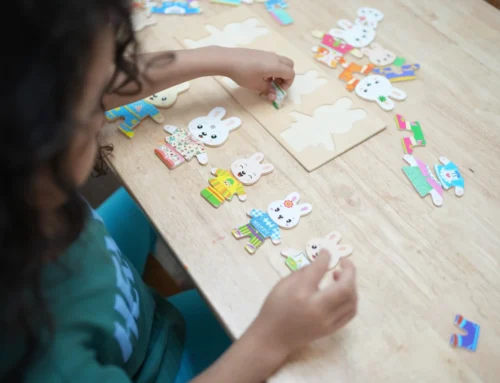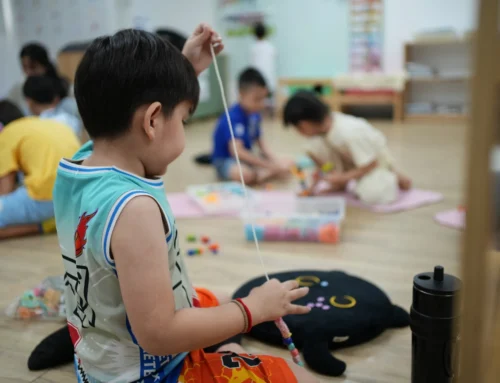
The first day of school can feel big—especially for young children who have not spent much time away from their parents. Separation anxiety is common and developmentally normal, but it can still be stressful for families. The goal is not to eliminate feelings; it’s to help your child feel safe, predictable, and capable while they adjust to a new routine.
Below are practical, evidence-informed strategies that families can use to make drop-off smoother and reduce anxiety over time.
Understand what separation anxiety is (and what it isn’t)
Separation anxiety usually shows up as crying, clinging, refusing to enter the classroom, stomachaches, or sudden tantrums at drop-off. It is not “bad behavior.” For many children, it is their nervous system responding to uncertainty: new people, new sounds, new expectations, and a parent leaving.
Children with sensory sensitivities, language delays, ADHD traits, or autism features may experience stronger anxiety because the environment feels more unpredictable (see: sensory processing sensitivity and understanding emotions).
Prepare before the first day
A smooth first day often starts a week earlier.
Practice mini-separations
Do short separations at home or with a trusted adult. Keep your return time consistent so your child learns that leaving is temporary and predictable.
Create a “school story”
Use simple sentences: “We will drive to school. You will play. Teacher will help you. I will come back after snack/after story time.” If your child benefits from visual supports, draw a simple 3-step picture schedule.
Visit the school environment if possible
Even a quick walk near the gate can reduce the shock of a new setting.
Use a predictable goodbye routine
The most common mistake is staying too long or returning multiple times. That increases uncertainty.
Keep it short, warm, and consistent:
-
Crouch to your child’s level
-
Say one clear sentence: “I’m leaving now. I’ll come back after school.”
-
One hug, one kiss, one wave
-
Hand off to the teacher and go
A calm exit teaches your child that school is safe and that you trust the adults there.
Support regulation (not just emotions)
Many “anxiety” behaviors are actually dysregulation. Before school, prioritize basics:
-
Good sleep the night before
-
Protein + water in the morning
-
Time to move (5–10 minutes of jumping, pushing a wall, or carrying a backpack)
If your child struggles with self-regulation, an occupational therapy plan can help build coping tools and routines that generalize to school (see: what is occupational therapy and Occupational therapy).
Partner with the teacher for a drop-off plan
Ask the teacher for a simple plan that starts immediately on arrival:
-
A “job” (carry a book, put name card on board)
-
A preferred activity (puzzles, blocks, drawing)
-
A consistent spot to sit
This replaces uncertainty with action, which reduces anxiety faster than talking about feelings alone.
What to avoid on the first day
-
Sneaking away (it damages trust)
-
Long negotiations (“Just five more minutes”)
-
Promising big rewards for stopping tears (it can increase pressure)
-
Repeatedly asking, “Are you okay?” (it keeps the anxiety active)
When to seek extra support
If intense distress lasts more than 2–4 weeks, or if your child’s anxiety affects sleep, eating, or daily functioning, it may help to get professional guidance. OrbRom Center can support families through child-focused strategies and parent coaching, and assessments can clarify whether anxiety is linked to sensory, communication, or developmental needs (see: Assessments).
A hard first day does not mean a bad year. With predictable routines, confident goodbyes, and the right supports, most children adapt—and many become proud of their independence sooner than parents expect.
We are the only Preschool specialized on children with special needs in PhnomPenh.
- Internationally qualified teachers
- Cambodia’s largest sensory room
- Outdoor swimming pool
- Covered outdoor playground
📞 Phone: 077.455.993
Telegram Link: https://t.me/OrbRom