
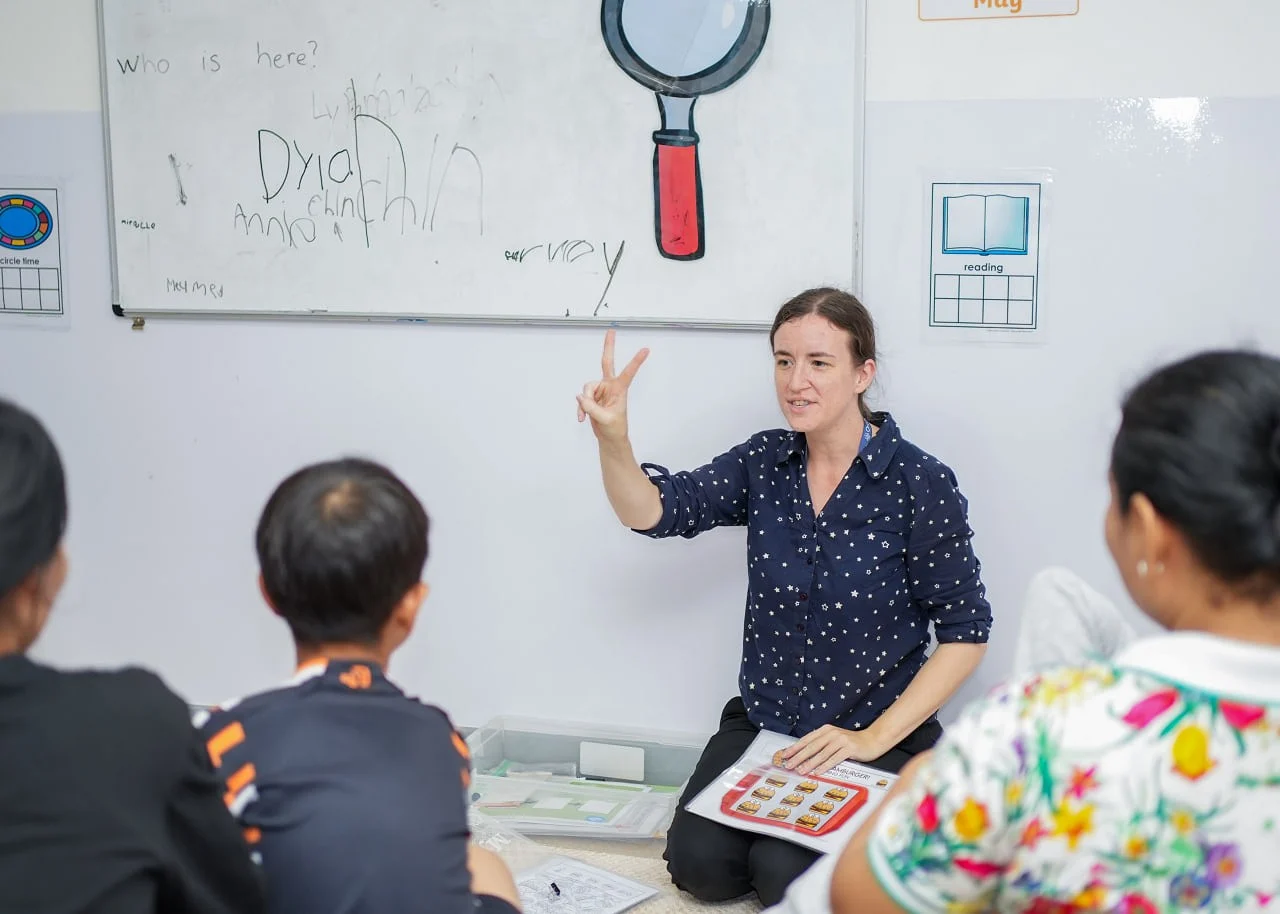
Circle time in special education provides children with structured opportunities to practice communication, social interaction, attention, and participation in group activities. Through songs, discussions, visual supports, and interactive learning, children develop skills that help them engage more confidently in classroom routines.
For children with autism, ADHD, speech delays, or other developmental differences, group learning can present challenges. Some children struggle to follow instructions, wait for their turn, respond to questions, or maintain attention during activities.
At OrbRom Center in Phnom Penh, structured group activities are incorporated into our preschool program to support children’s individual learning and developmental needs.
How circle time supports communication development
Circle time creates opportunities for children to practice receptive and expressive language in a natural group setting.
Teachers may use pictures, gestures, questions, and familiar routines to encourage participation.
For example, asking children to identify objects, name pictures, or answer simple questions helps develop vocabulary and language comprehension.
Children can also practice:
- Following one-step and two-step instructions.
- Answering questions and expressing ideas.
- Listening to others during conversations.
- Using gestures, words, or alternative communication methods.
- Understanding everyday classroom vocabulary.
Children with communication difficulties may benefit from additional speech therapy to develop the language skills needed for classroom participation.
Developing social skills through group learning
Participating in a group requires children to recognize social cues, share attention, and respond appropriately to others.
During circle time, children practice waiting, taking turns, and participating in shared activities.
For children with autism, these skills may require explicit teaching, visual supports, and repeated opportunities to practice.
Teachers can encourage participation by modeling appropriate responses, providing additional processing time, and adjusting expectations according to each child’s abilities.
These strategies are particularly useful when supporting social communication in children with autism.
Improving attention and following instructions
Some children find it difficult to remain engaged during group activities, especially when instructions are lengthy or the environment contains distractions.
Effective circle time activities are structured, predictable, and appropriate for children’s developmental levels.
Teachers can support attention by:
- Keeping instructions short and specific.
- Using visual schedules to explain activities.
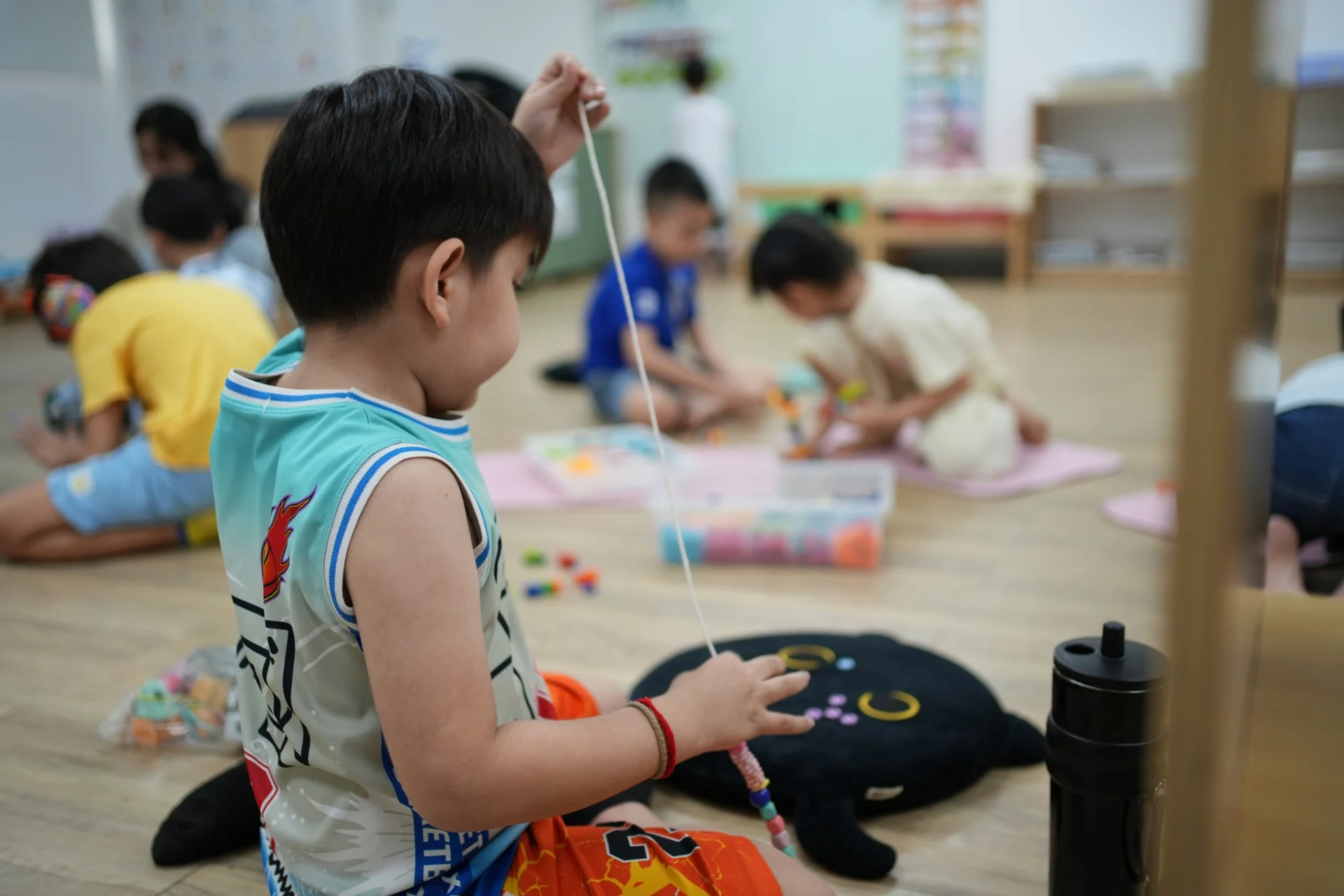
- Incorporating movement and interactive tasks.
- Allowing flexible seating and appropriate movement breaks.
- Reinforcing participation and successful task completion.
Children with attention difficulties may also benefit from strategies for teaching students with ADHD.
The objective is meaningful engagement rather than requiring every child to sit still for the same amount of time.
Why visual supports are important in special education
Visual supports help children understand expectations, follow routines, and process information.
During circle time, teachers may use picture cards, communication boards, visual schedules, and gestures to make instructions more accessible.
For children with limited verbal communication, these tools provide additional ways to participate and express understanding.
Visual supports are particularly useful in inclusive education environments where children have different communication and learning needs.
How OrbRom Center supports group learning in Phnom Penh
At OrbRom Center, our special needs preschool program incorporates structured learning opportunities that support communication, social interaction, independence, and school readiness.
Teachers adapt activities to children’s individual abilities, providing additional prompts, visual supports, or individualized assistance when necessary.
Our approach recognizes that children develop at different rates. Participation may involve answering questions, pointing to pictures, using communication aids, observing peers, or gradually joining group activities.
Through consistent practice and individualized teaching, circle time in special education can help children strengthen the skills needed to participate in classroom routines.
Families looking for a special education preschool in Phnom Penh can contact OrbRom Center to learn about our early learning and school readiness programs.
We are the only Preschool specialized on children with special needs in PhnomPenh.
| Included therapy sessions per month: |
| – Speech Therapy – 4 sessions / month |
| – Occupational Therapy – 4 sessions / month |
| – Free pre-enrollment assessment |
| – Individualized Learning Plans (ILPs) |
📞 Phone: 077.455.993
Telegram Link: https://t.me/OrbRom

Leave A Comment