
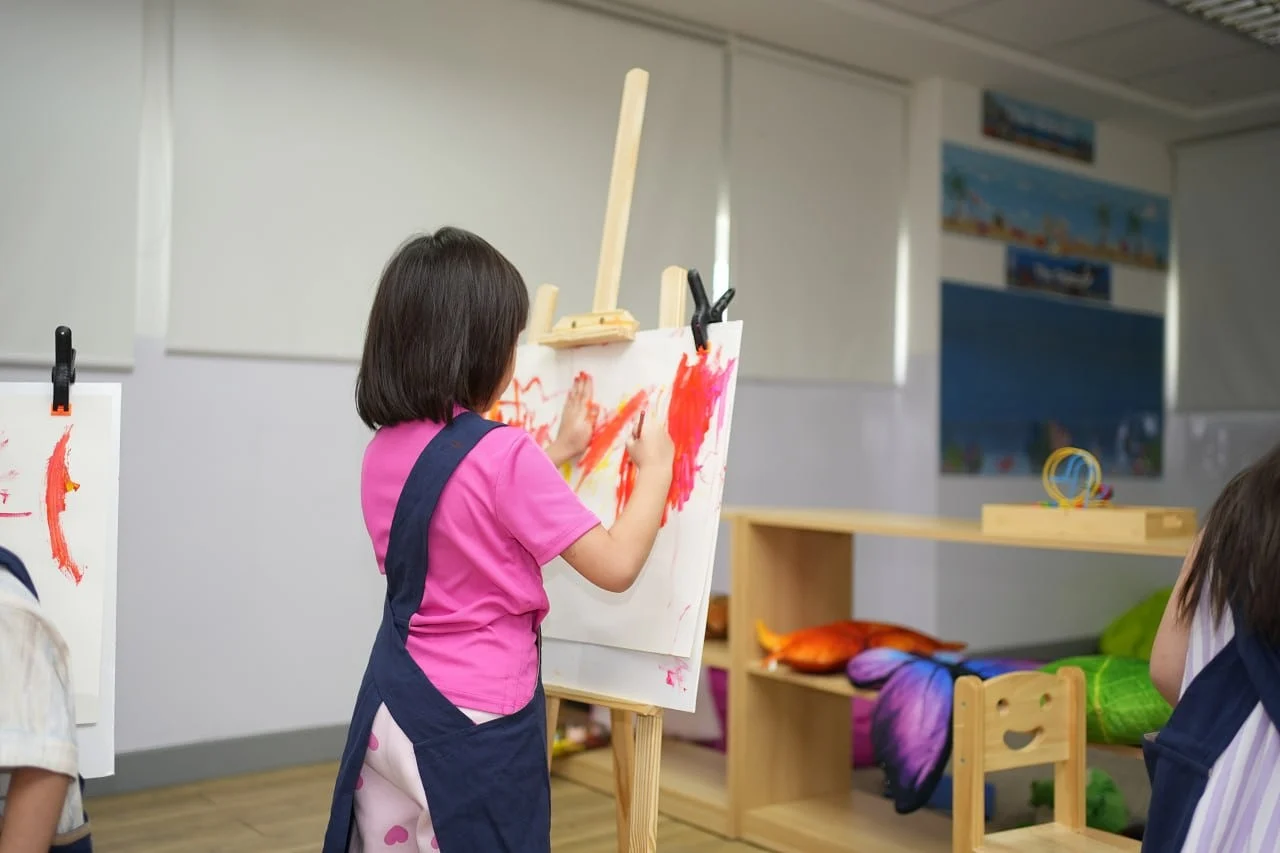
Sensory art activities in preschool give children opportunities to explore colour, texture, movement, and creative expression. Finger painting can encourage experimentation while children practise hand movements, make choices, and communicate their ideas. For young learners with different developmental needs, the activity can be adapted to support participation without expecting a particular finished result. At OrbRom Center in Phnom Penh, creative activities can be incorporated into individualized early learning goals.
How sensory art supports exploration
Art materials provide different sensory experiences. Paint may feel cool, slippery, or sticky, and spreading it across paper produces visible changes that children can control. Some children enjoy direct contact with materials, while others prefer a brush, sponge, or tool. Offering choices respects these differences. Sensory activities should be introduced gradually, with attention to the child’s comfort, safety, and willingness to participate. Enjoyment and engagement matter more than requiring every child to touch the same material.
Developing hand skills through painting
Finger painting involves reaching, pressing, moving the fingers, and coordinating both hands. Children can experiment with short strokes, broad movements, or individual fingertip marks. These actions provide opportunities to practise motor control and hand-eye coordination. An educator might encourage a child to move paint from one area to another or to alternate hands, depending on the child’s abilities. Activities should be adjusted so that motor challenges remain manageable and do not prevent creative participation.
Communication and choice-making during art
Painting creates natural reasons for children to request colours, ask for more materials, indicate that they are finished, or share an idea. Adults can model useful language such as ‘more red,’ ‘mix,’ ‘wet,’ and ‘finished’ while accepting gestures, pointing, speech, or other communication methods. Offering two colours can encourage purposeful choices. Educators should leave time for children to respond and avoid turning every action into a question. Conversation can develop naturally around what the child chooses to do.
Supporting attention and independence
A predictable routine helps children understand the sequence of an art activity: prepare materials, explore paint, and clean up. Visual cues or a short demonstration may help children who need additional structure. Some children benefit from a smaller workspace, limited colours, or shorter activity periods. Participation may include opening an apron, choosing a colour, or helping wash hands afterward. These everyday actions can support independence alongside creative learning.
Adapting sensory activities for different learners
Children vary in their sensory preferences, coordination, attention, and communication skills. A child who dislikes paint on their hands may use a roller or brush. Another child may need paper secured to the table or an easel positioned at a comfortable height. Non-toxic, age-appropriate materials, close supervision, and accessible cleaning supplies are important. Educators should avoid interpreting reluctance as misbehaviour; changing the tools or pace may make participation more comfortable.
When occupational therapy may be relevant
Some children experience sensory or motor difficulties that interfere with play, self-care, or classroom routines. Occupational therapists can assess functional participation and recommend individualized strategies when needed. Art activities may provide useful practice, but they do not diagnose sensory processing differences or replace professional assessment. Goals should connect to the child’s everyday needs rather than assuming that exposure to a particular texture will produce a specific therapeutic outcome.
Creative learning at OrbRom Center
OrbRom Center offers an early learning preschool program, occupational therapy, and individualized special education support in Phnom Penh. Families can contact the center to discuss developmental needs and explore activities and services that support communication, motor skills, and classroom participation.
Leave A Comment