
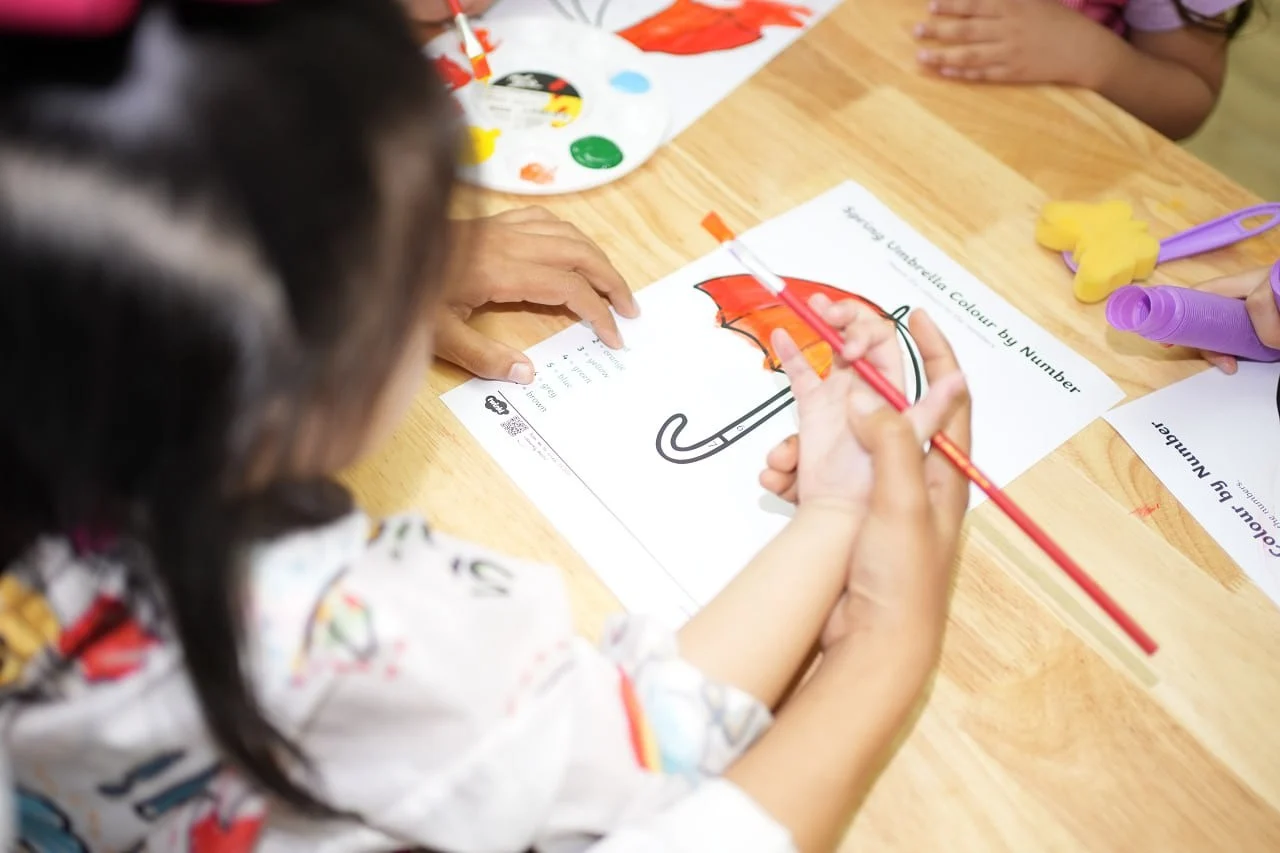
Painting by number can help preschool children practise early numeracy, hand control, and following visual instructions within an enjoyable art activity. By connecting numbers with colours and completing a simple picture, children have opportunities to combine learning with purposeful movement. At OrbRom Center in Phnom Penh, art activities can be adapted to each child’s developmental readiness, interests, and support needs.
How painting supports fine motor development
Holding and guiding a paintbrush involves coordination of the fingers, wrist, and arm. Children practise controlling the direction and pressure of their movements as they apply paint to paper. Activities can also encourage the use of both hands, with one hand stabilizing the page while the other works. The aim is gradual improvement in functional control rather than perfectly staying inside an outline. Larger brushes, thicker handles, or broader painting areas can make participation easier for children who are still developing these skills.
Connecting numbers with colours
A colour-by-number activity introduces a clear relationship between a symbol and an action. Children may identify a numeral, find the corresponding colour, and apply paint to the matching area. This combines number recognition, visual scanning, and simple decision-making. For younger learners, educators can begin with only two colours or use matching colour dots instead of numerals. Children who are ready for more complexity may work with additional numbers and choices. The difficulty should reflect what the child understands rather than their age alone.
Following instructions and building attention
Art activities provide a natural reason to listen to and follow short instructions. An adult might model how to select a colour, dip the brush, and paint one section before asking the child to try. Breaking the task into smaller steps can reduce frustration and help children understand the sequence. Visual examples and consistent routines may support children who have difficulty processing spoken directions. Educators can gradually reduce assistance when a child demonstrates greater independence.
Communication during creative activities
Painting creates opportunities for children to request materials, make choices, describe colours, and ask for help. A child might say ‘red please,’ point to a colour, or use an alternative communication system. Adults can model useful words without turning every action into a question. Simple comments such as ‘more blue’ or ‘the brush is wet’ can connect language to what the child is doing. Shared activities can also support turn-taking and brief interactions with peers.
Adapting painting for different sensory needs
Children respond differently to paint, brushes, textures, and the possibility of getting messy. Some enjoy exploring the materials, while others prefer to avoid direct contact. Educators can offer sponge brushes, larger handles, trays, or a less messy alternative. A child should have opportunities to choose how to participate without being pressured to touch an uncomfortable material. Adjustments can preserve the educational goal while making the activity more accessible.
Encouraging confidence and independence
Creative tasks are useful opportunities for children to make decisions and experience the results of their choices. Adults can offer help when necessary while leaving room for experimentation. Praise is most informative when it refers to a specific effort, such as selecting a colour independently or completing another step. The finished picture is less important than the child’s participation, communication, and growing ability to manage the task.
Early learning at OrbRom Center
OrbRom Center offers an early learning preschool program, occupational therapy, and individualized special education support in Phnom Penh. Families can discuss how classroom activities and targeted intervention may help children develop practical learning and participation skills.
Leave A Comment