
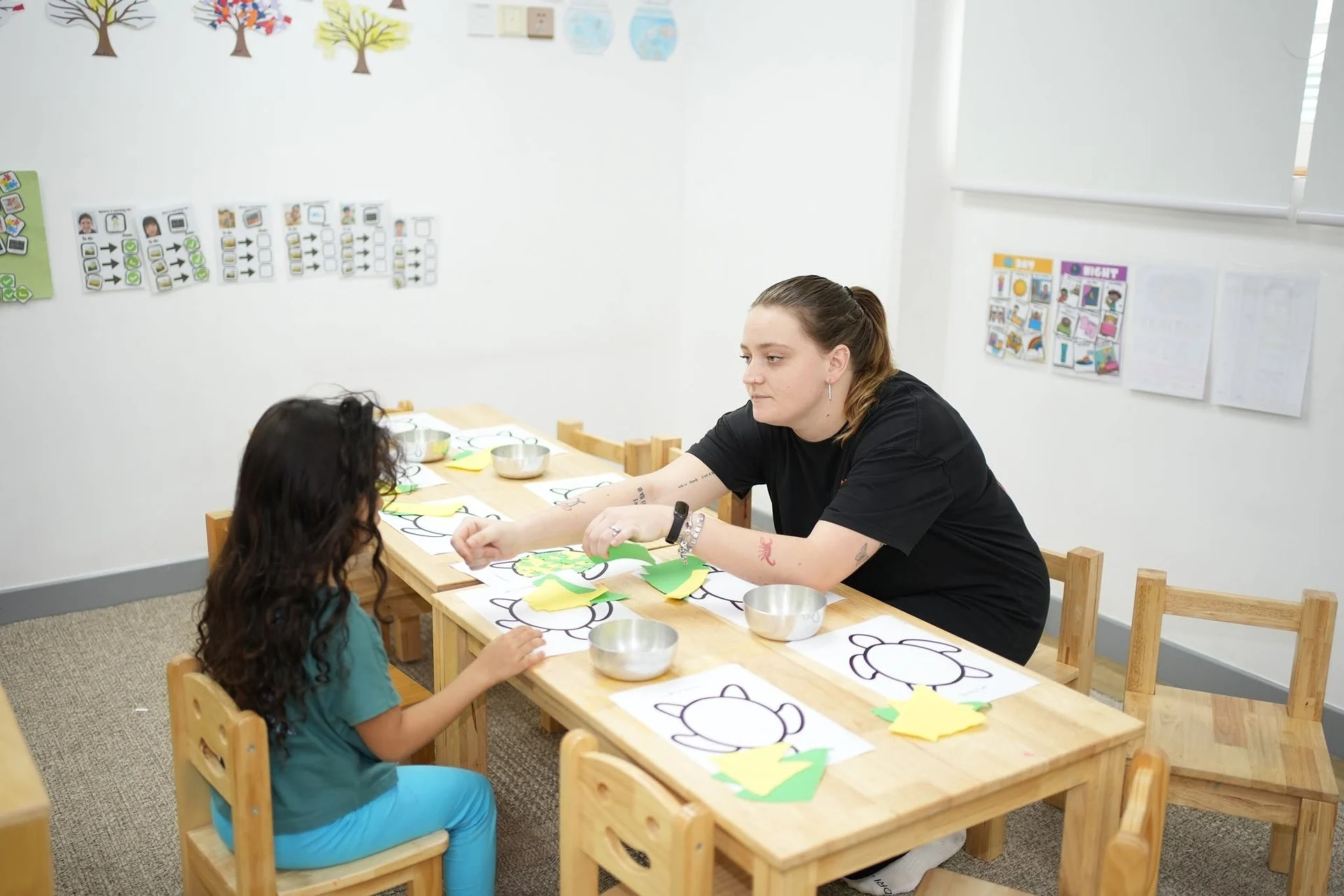
Fine motor activities for preschoolers help children develop controlled hand movements, hand-eye coordination, and the ability to use materials independently. Paper crafts offer opportunities to practise these skills while making choices, following instructions, and communicating with an adult. At OrbRom Center in Phnom Penh, early learning activities can be adjusted to a child’s developmental level so that participation remains achievable and purposeful.
Why fine motor skills matter
Fine motor skills involve the small muscles of the hands and fingers working together with vision and posture. Children use these skills when picking up small objects, turning pages, opening containers, drawing, and managing clothing fasteners. Early activities do not need to resemble formal handwriting lessons. Placing paper pieces on a page, holding a bowl steady, or separating materials can provide useful practice. The goal is to build control and independence gradually, rather than to produce a perfect finished craft.
Learning through paper crafts
Paper activities can involve selecting colours, tearing or arranging shapes, and positioning pieces within an outline. Each step places different demands on coordination. Larger shapes may be easier to grasp, while smaller pieces require greater precision. An educator can model a step and allow the child time to try before providing assistance. Children can also learn to use both hands together, with one hand stabilizing the paper while the other places a shape. Materials and tools should be selected with the child’s safety and abilities in mind.
Combining motor skills with communication
Craft sessions offer natural reasons to request materials, choose between options, and comment on actions. Adults can model words such as ‘more,’ ‘on,’ ‘next,’ and ‘finished’ without turning every movement into a verbal test. A child may communicate by speaking, pointing, gesturing, or using an alternative communication system. Educators can respond to these attempts and provide clear instructions in manageable steps. This approach helps integrate communication into meaningful classroom activities.
Supporting attention and task completion
A craft with a clear beginning, middle, and end can help children practise remaining with an activity and completing a sequence. Visual examples or a simple first-then cue may make expectations easier to understand. Some children need shorter tasks, fewer materials on the table, or movement breaks between steps. Adults should notice when frustration increases and adjust the level of support. Success may mean independently completing one part of the task, rather than finishing every element.
Adapting activities for different learners
Children develop hand skills at different rates and may have distinct sensory preferences. Some dislike sticky textures, while others struggle to coordinate small objects. Educators can offer pre-cut shapes, thicker paper, larger pieces, or different ways to attach materials. Children who need additional challenge may practise controlled tearing, folding, or carefully positioning smaller shapes. Adaptations should reflect observed needs and goals rather than assumptions based on a diagnosis.
When occupational therapy may help
If fine motor difficulties consistently interfere with dressing, feeding, play, or classroom participation, an occupational therapy assessment may help identify contributing factors. Occupational therapists consider functional performance and may recommend targeted activities, environmental changes, or adaptations. Classroom craft activities can complement these goals, but one activity alone cannot establish a child’s motor development or replace an individualized assessment.
Early learning support at OrbRom Center
OrbRom Center offers a preschool program, occupational therapy, and individualized special education intervention in Phnom Penh. Families can contact the center to discuss developmental concerns and explore suitable support for fine motor skills, communication, and everyday participation.
Leave A Comment