
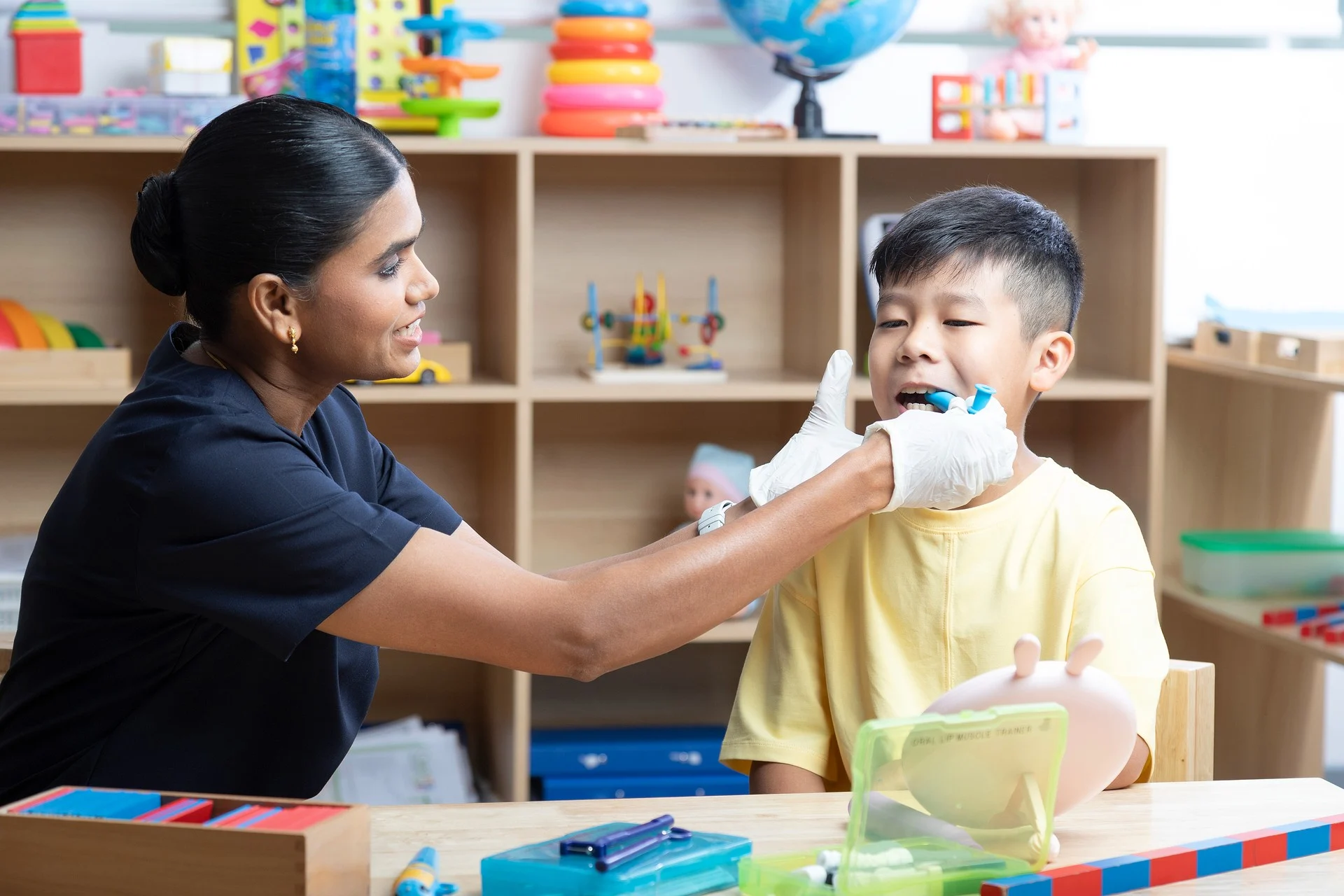
Speech therapy for children can support the development of functional communication, language comprehension, and social interaction. Individual sessions provide opportunities to identify a child’s current communication skills and practise goals that matter in everyday life. At OrbRom Center in Phnom Penh, speech-language support can be adapted to the child’s age, developmental profile, and priorities identified with the family.
Understanding a child’s communication needs
Communication involves more than producing clear speech sounds. Children may need support understanding spoken instructions, expressing ideas, asking questions, maintaining conversations, or using gestures and other communication methods. An assessment helps distinguish the areas that need attention. Therapists also consider how the child communicates at home and school, because a skill demonstrated in a structured session may be harder to use in a busy classroom.
Building receptive and expressive language
Receptive language refers to understanding words, sentences, and messages. Expressive language involves sharing information through speech, signs, gestures, or augmentative communication. Therapy activities can target vocabulary, sentence development, following instructions, and explaining ideas. The therapist adjusts the language demands and provides models or visual supports as needed. Goals should be functional, such as asking for clarification when confused or explaining a need to an adult.
Using play and structured activities
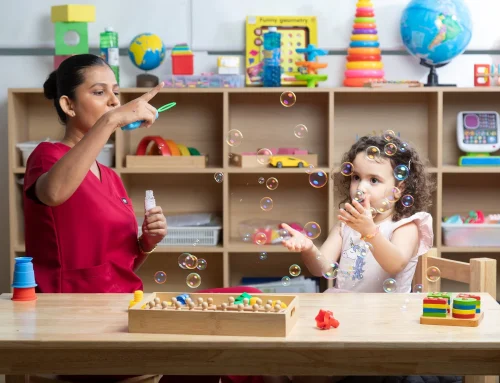
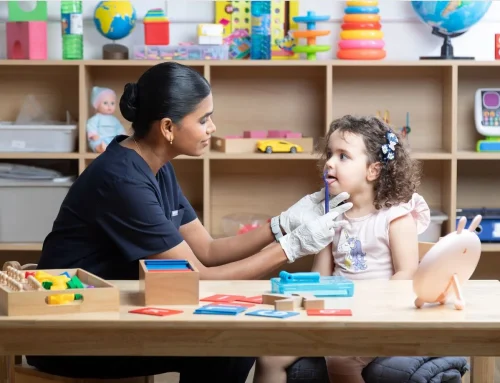
Games, pictures, books, and everyday objects can create meaningful communication opportunities. A therapist might offer choices, model a phrase, pause for a response, or build a short exchange around an activity the child enjoys. Some children benefit from predictable tasks with a clear beginning and end. Others learn best through play-based interaction. The activity itself is a teaching tool; progress depends on how the therapist responds to the child’s communication and gradually adjusts support.
Supporting children who use hearing technology
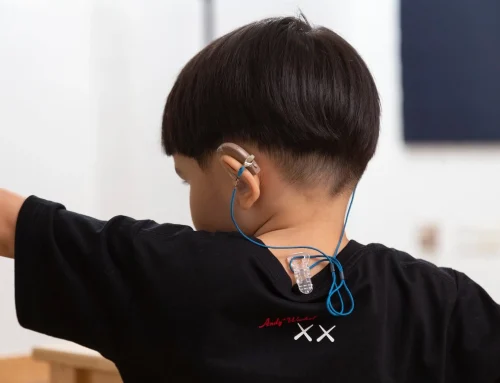
Children who use hearing aids or other hearing technology may have individual listening and language needs. Their support should reflect audiological findings, access to sound, and recommendations from relevant hearing professionals. Therapists can use appropriate visual and communication supports and coordinate with families and schools. Wearing a device does not, by itself, indicate a particular language ability or determine the right therapy approach. Individual assessment remains essential. Families and clinicians should also consider whether the child can hear and understand instructions comfortably in different environments, including noisy classrooms. Adjusting seating, background noise, and visual access may improve participation alongside individualized communication support.
Encouraging confidence and participation
Children sometimes hesitate to communicate when instructions are difficult or when they have experienced repeated misunderstandings. Therapy can provide supported opportunities to express choices, ask for help, and participate in conversations. Adults should allow processing time and acknowledge meaningful communication attempts rather than demanding immediate answers. Progress may include using a new phrase, repairing a misunderstanding, or communicating more independently in a familiar routine.
Working with families and schools
Communication skills are most useful when children can apply them beyond therapy. Parents and teachers can share examples of successful interactions and situations that remain challenging. A therapist may recommend simple strategies, such as using shorter instructions, offering visual choices, or waiting before repeating a question. Regular reviews help determine whether the child is using skills in daily routines and whether goals need adjustment.
Speech therapy at OrbRom Center
OrbRom Center provides speech therapy, individualized special education intervention, and an early learning preschool program in Phnom Penh. Families seeking support for speech, language, or functional communication can contact the center to discuss assessment and suitable next steps.
Leave A Comment