
Aphasia: When Language Becomes Hard to Use
Aphasia is a communication disorder that affects a person’s ability to understand, speak, read, or write language. It often happens after a stroke, brain injury, infection, tumor, or neurological condition. Aphasia does not mean a person has lost intelligence. The thoughts may still be there, but finding the words, understanding sentences, or joining a conversation can become difficult.
What Aphasia Can Look Like
A person with aphasia may know what they want to say but cannot find the right words. Others may speak fluently, but their sentences may not make sense. Some people understand simple conversation but struggle with longer instructions, reading, or writing.
Common signs include difficulty naming objects, mixing up words, using short phrases, trouble following conversations, frustration when speaking, and avoiding social interaction. These challenges can affect school, work, relationships, and confidence.
Why Speech Therapy Helps Aphasia
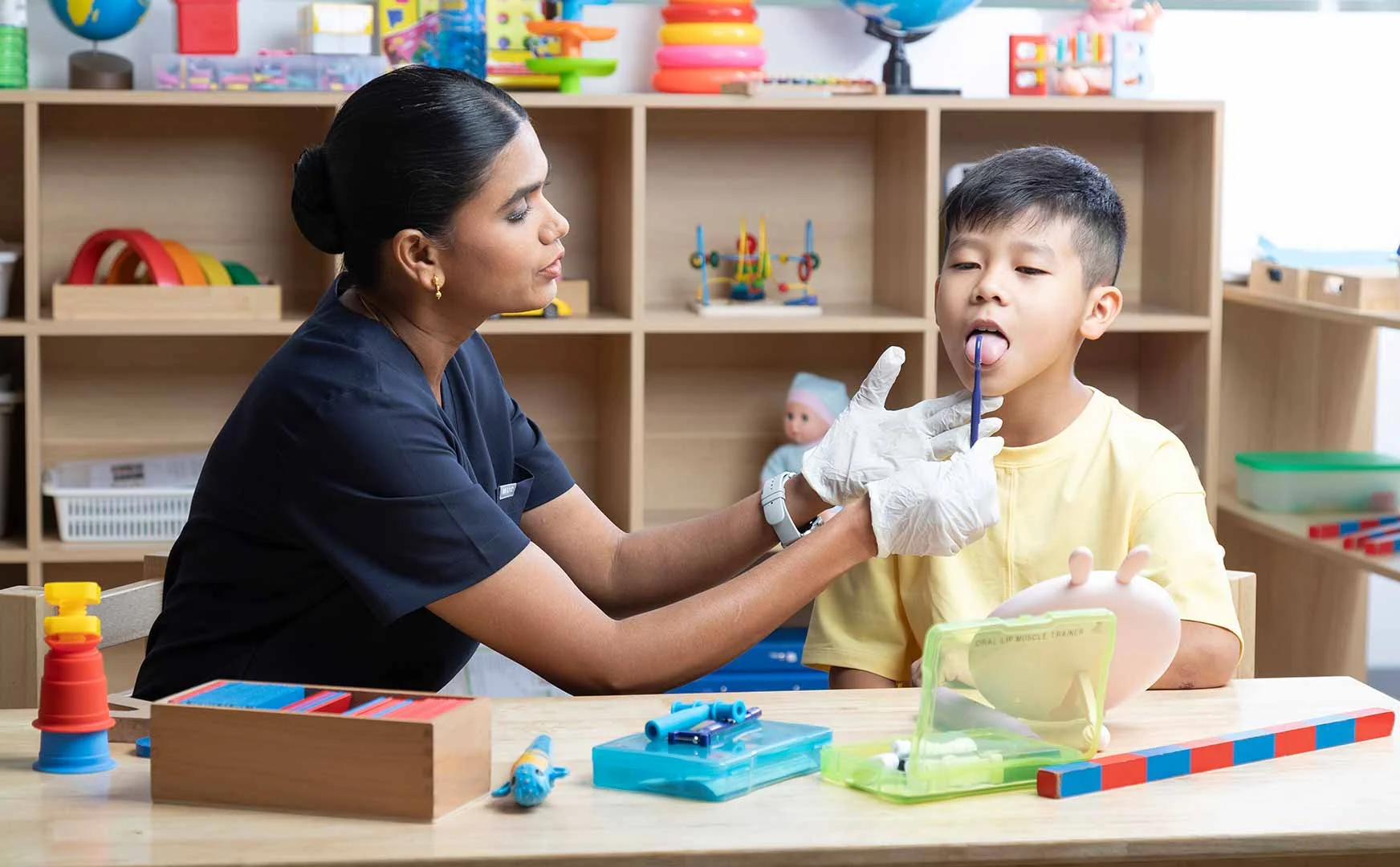
Aphasia therapy focuses on rebuilding communication skills and teaching practical strategies. A speech-language therapist may work on word finding, sentence formation, comprehension, reading, writing, and alternative ways to communicate. This may include gestures, picture supports, writing keywords, or using communication apps.
At OrbRom Center, speech therapy supports individuals who need help with communication challenges, including language difficulties that affect daily life. Therapy is most effective when it is consistent, goal-based, and connected to real situations, such as asking for help, joining family conversations, or expressing needs clearly.
Aphasia and Family Support
Family members play an important role. Speaking slowly, giving extra time, using simple sentences, and avoiding pressure can make communication easier. It is also important not to speak over the person or treat them like they do not understand. Respect, patience, and encouragement help reduce frustration.
For children or adults with broader communication needs, understanding speech and language disorders can help families know when professional support is needed.
When to Seek Professional Help
If someone suddenly has trouble speaking, understanding language, or reading, it should be treated as urgent, especially after a possible stroke or head injury. After medical care, therapy can support recovery and help the person regain independence.
In Cambodia, access to specialized therapy is growing, but families should choose services that provide clear goals, regular progress updates, and practical home strategies. Aphasia can be frustrating, but with the right support, communication can improve.
For families looking for aphasia support, OrbRom Center in Phnom Penh provides structured therapy that focuses on meaningful communication, confidence, and daily-life progress.
We are the only Preschool specialized on children with special needs in PhnomPenh.
| Included therapy sessions per month: |
| – Speech Therapy – 4 sessions / month |
| – Occupational Therapy – 4 sessions / month |
| – Free pre-enrollment assessment |
| – Individualized Learning Plans (ILPs) |
📞 Phone: 077.455.993
Telegram Link: https://t.me/OrbRom


This is a very important topic, especially in Cambodia where many people still don’t understand what aphasia really is. In Phnom Penh, I’ve seen families assume it’s just memory loss or aging, when in reality it’s a communication difficulty after something like a stroke. I appreciate how clearly this article explains the signs and how speech therapy can support recovery. More awareness like this is really needed so families can seek help earlier and support their loved ones better.