
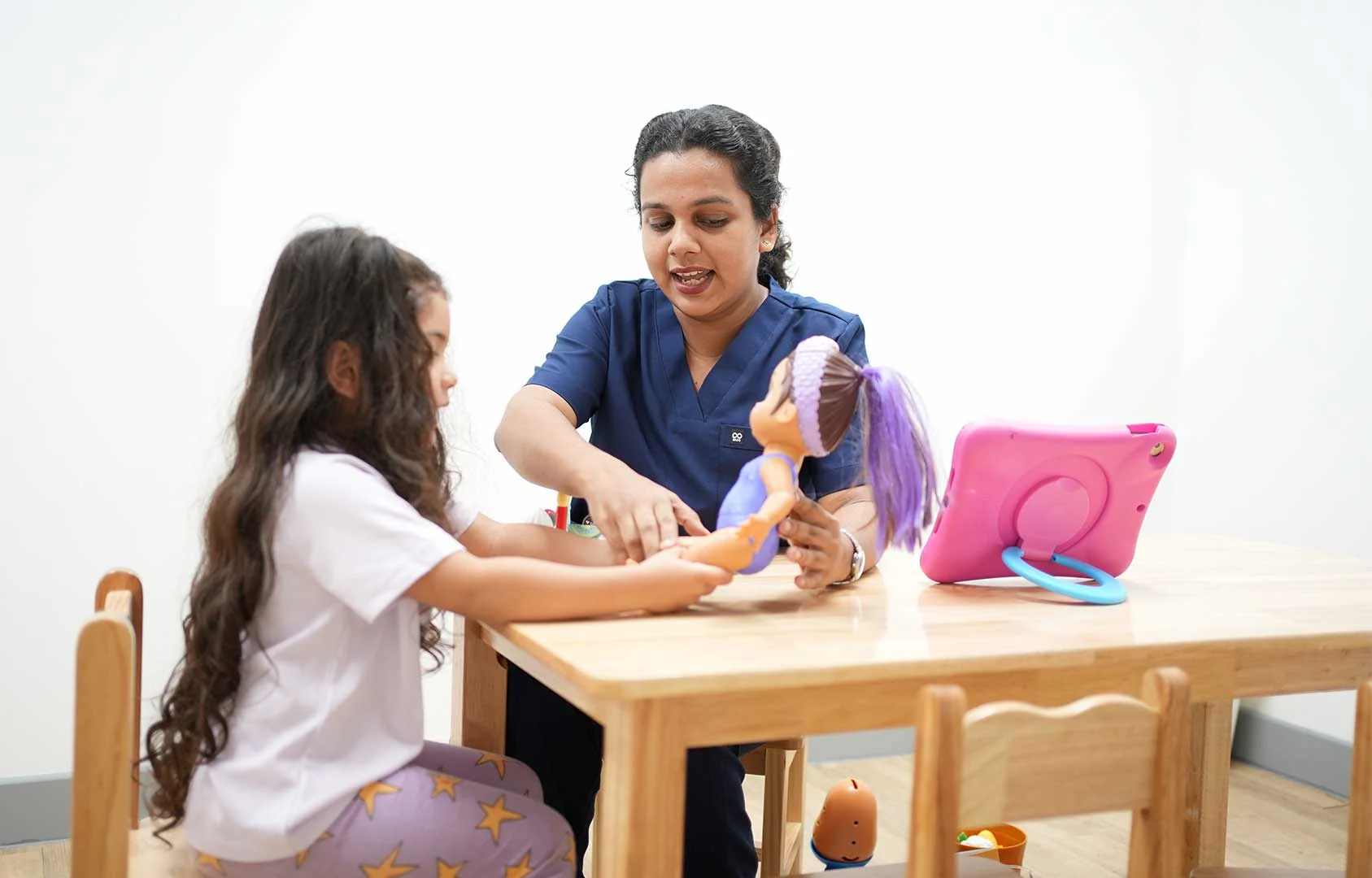
Speech therapy helps children build the communication skills they need for learning, friendships, independence, and daily life. For some children, the challenge may be pronunciation. For others, it may be understanding instructions, using words to express needs, answering questions, or joining conversations. When communication is difficult, children may become frustrated, quiet, or dependent on gestures instead of words.
At OrbRom Center, speech therapy focuses on practical communication, not just “talking more.”
What Speech Therapy Can Support
A child may benefit from speech therapy if they:
- Speak less than expected for their age
- Have unclear pronunciation
- Struggle to follow directions
- Use short or incomplete sentences
- Repeat sounds or words frequently
- Have difficulty answering WH questions
- Avoid talking with adults or peers
- Become frustrated when trying to communicate
Some children need support with speech and language delay, while others may need help with articulation, social communication, or language comprehension.
Speech Therapy Is More Than Repeating Words
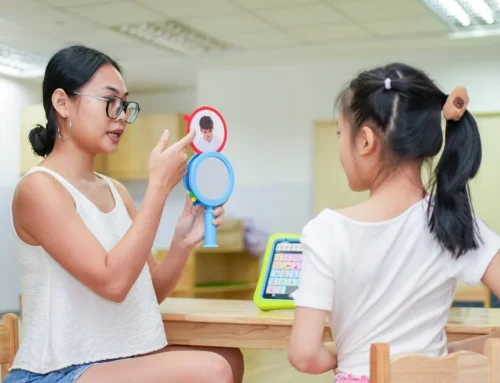
Good therapy is not simply asking a child to repeat sounds again and again. Children learn communication best when sessions are meaningful, structured, and motivating. A speech therapist may use play, pictures, books, conversation practice, visual supports, and real-life routines to help the child understand and use language naturally.
For example, instead of only teaching the word “open,” a therapist may practice it during a game, snack activity, or toy routine. This helps the child connect the word to a real purpose.
When Parents Should Seek Support
Parents should consider professional guidance if speech delays continue, if the child is difficult to understand, or if communication difficulties affect school readiness, behavior, or social interaction. Waiting too long can make learning and classroom participation more difficult.
OrbRom Center provides individualized speech therapy for children who need support with communication, language development, pronunciation, and confidence. For children with broader developmental concerns, an assessment may also help identify the child’s strengths, needs, and the most appropriate support plan.
Building Communication at Home
Parents can support speech therapy progress by using simple daily strategies:
Talk during routines: “wash hands,” “put shoes on,” “open bag.”
Give choices: “Do you want apple or banana?”
Wait before helping, so the child has time to respond.
Expand what your child says. If they say “car,” you can say “red car” or “car go.”
Read short books and ask simple questions.
Speech therapy works best when parents and therapists use the same goals consistently. With the right support, children can become more confident communicators at home, in school, and in the community.
We are the only Preschool specialized on children with special needs in PhnomPenh.
| Included therapy sessions per month: |
| – Speech Therapy – 4 sessions / month |
| – Occupational Therapy – 4 sessions / month |
| – Free pre-enrollment assessment |
| – Individualized Learning Plans (ILPs) |
📞 Phone: 077.455.993
Telegram Link: https://t.me/OrbRom
Leave A Comment