If you’ve ever watched a young animal learn to trust its body again after a scare—one careful step at a time—you already understand the heart of therapy: safety first, then skill. For many children, balance and body control don’t “just happen.” They need structured practice that feels achievable. That’s exactly what occupational therapy Phnom Penh families look for when a child struggles with coordination, posture, or self-regulation at school and at home.
In a well-designed OT session, movement isn’t random play. It’s purposeful, measurable work that builds foundations for learning.
What Balance Work Really Supports (Beyond “Being Steady”)
When a child has weaker balance or core stability, it often shows up in surprising ways:
-
Slouching or frequently changing positions at the desk
-
Fatigue during writing, coloring, or fine-motor tasks
-
Clumsiness, bumping into peers, or avoiding playground challenges
-
Difficulty staying calm during transitions or noisy environments
This is because the body is working overtime just to stay upright and organized. Improving core strength and postural control frees up mental energy for attention, language, and classroom participation. If you want a deeper breakdown of what OT targets, see what occupational therapy is and how it helps.
Why “Unstable” Surfaces Are Used in Occupational Therapy
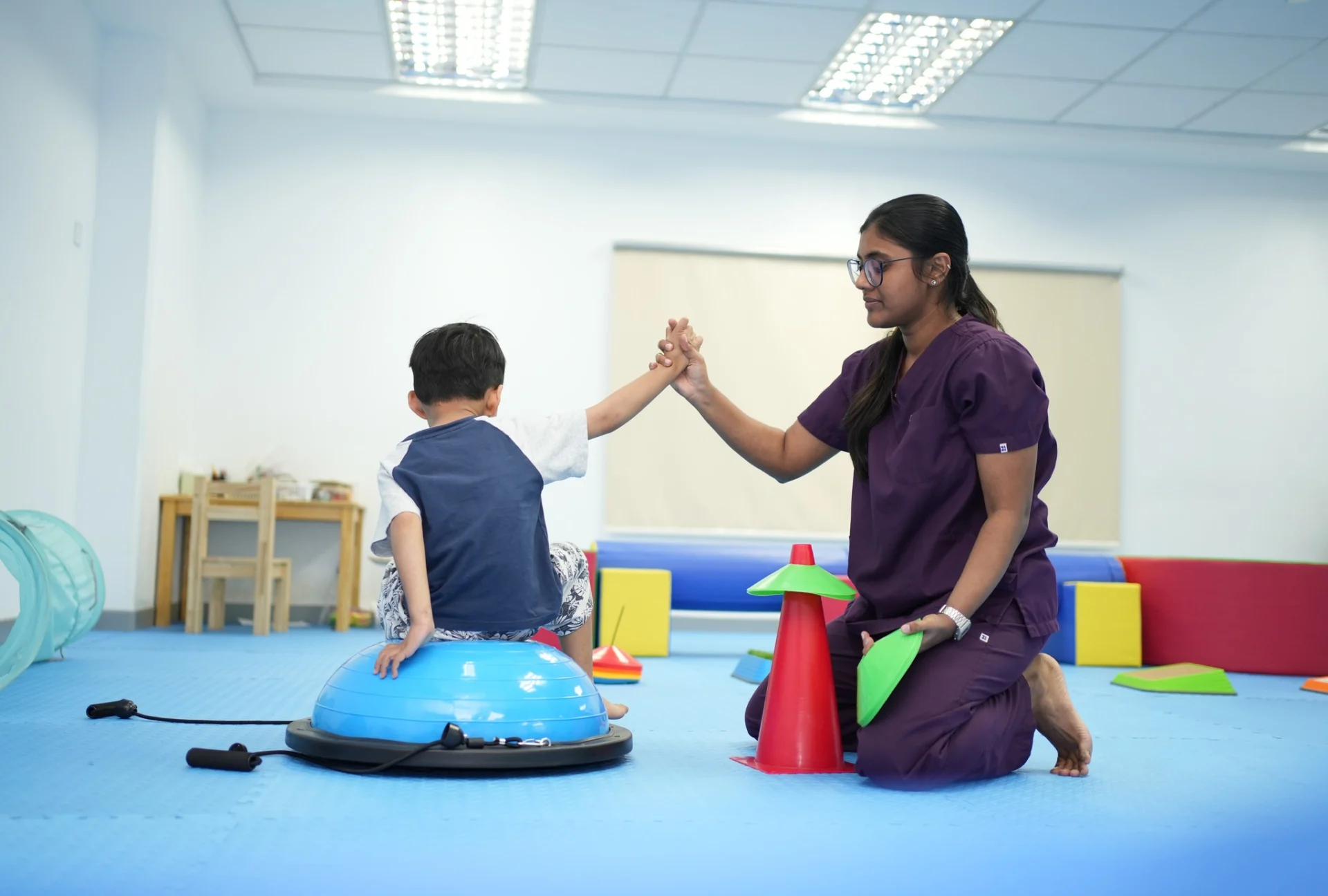
You’ll often see therapists using wobble cushions, balance equipment, or shifting surfaces. The goal isn’t to make children struggle—it’s to activate core muscles, improve body awareness, and strengthen the balance system in a safe, guided way.
These activities also deliver important proprioceptive input (the “body map” system), which helps many children feel grounded and less overwhelmed. Parents can explore simple movement ideas in proprioceptive activities and learn how these inputs support regulation throughout the day.
Balance, Regulation, and Attention Are Connected
A child who feels unsteady in their body may also look “distracted” or “hyper,” especially in busy classrooms. That’s not always an attention disorder—it can be the nervous system asking for stability.
OT sessions often blend balance challenges with calm, predictable routines to support self-regulation. This is particularly helpful for children with sensory sensitivities. If that sounds familiar, you may relate to sensory processing sensitivity and how it affects behavior, focus, and transitions.
What Parents Can Watch for at Home
You don’t need special equipment to notice signs that OT may help:
-
Avoids climbing, jumping, or balancing games
-
Trips often or seems unsure on stairs
-
Uses “too much force” or “too little force” in daily tasks
-
Gets overwhelmed easily when the environment is loud or busy
These patterns often overlap with delayed gross motor skills and sensory processing differences. A structured OT plan can target these foundations so children gain confidence in movement—and confidence in school.
If you’re considering support, OrbRom Center offers Occupational Therapy and can also guide families toward appropriate screening through our Assessments when the profile is unclear. The right starting point depends on the child, but the goal is the same: practical progress you can see in daily life. For families searching for occupational therapy Phnom Penh, focusing on balance and core strength is often one of the fastest ways to unlock calmer bodies, better participation, and more confident learners.
We are the only Preschool specialized on children with special needs in PhnomPenh.
| Included therapy sessions per month: |
| – Speech Therapy – 4 sessions / month |
| – Occupational Therapy – 4 sessions / month |
| – Free pre-enrollment assessment |
| – Individualized Learning Plans (ILPs) |
📞 Phone: 077.455.993
Telegram Link: https://t.me/OrbRom