
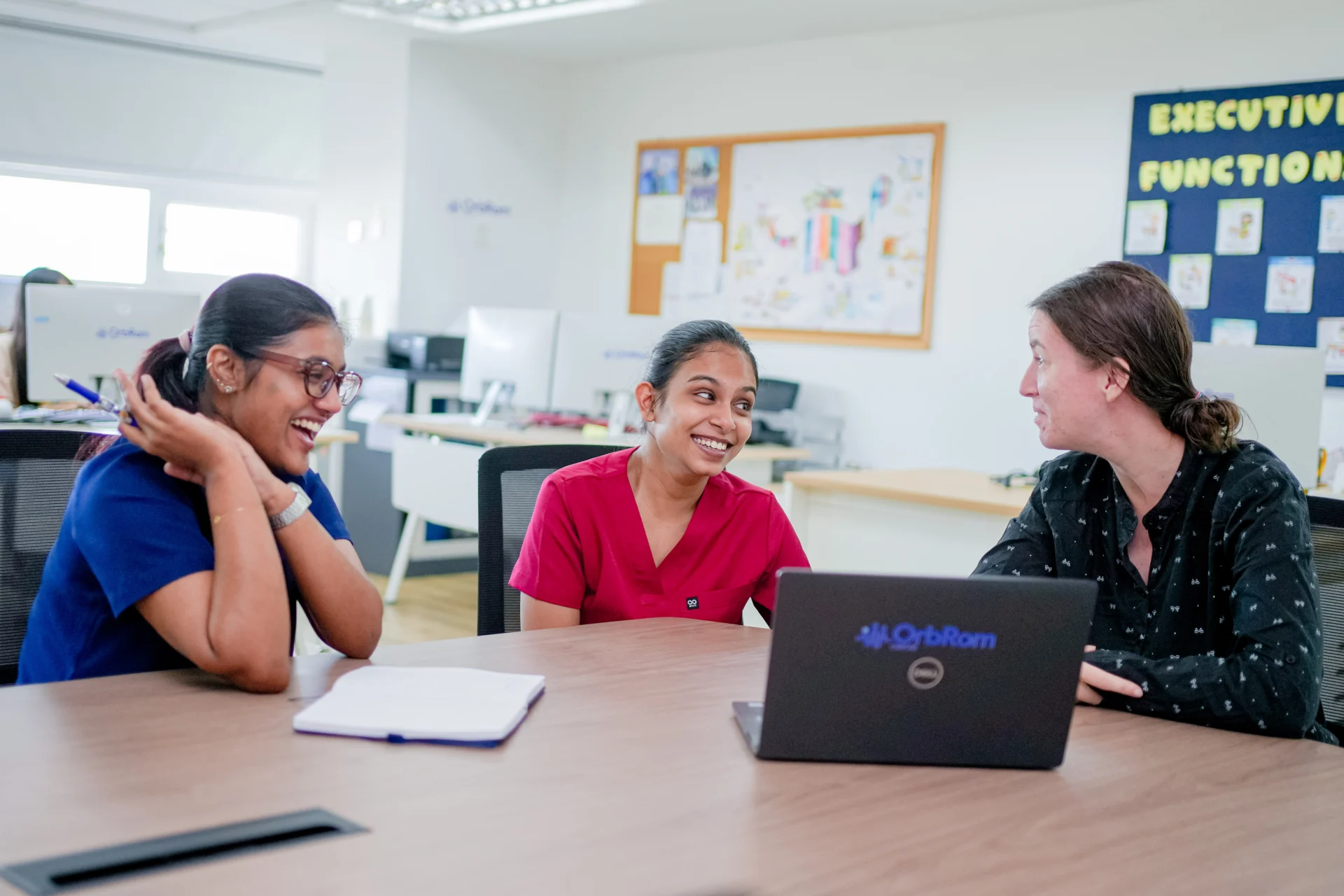
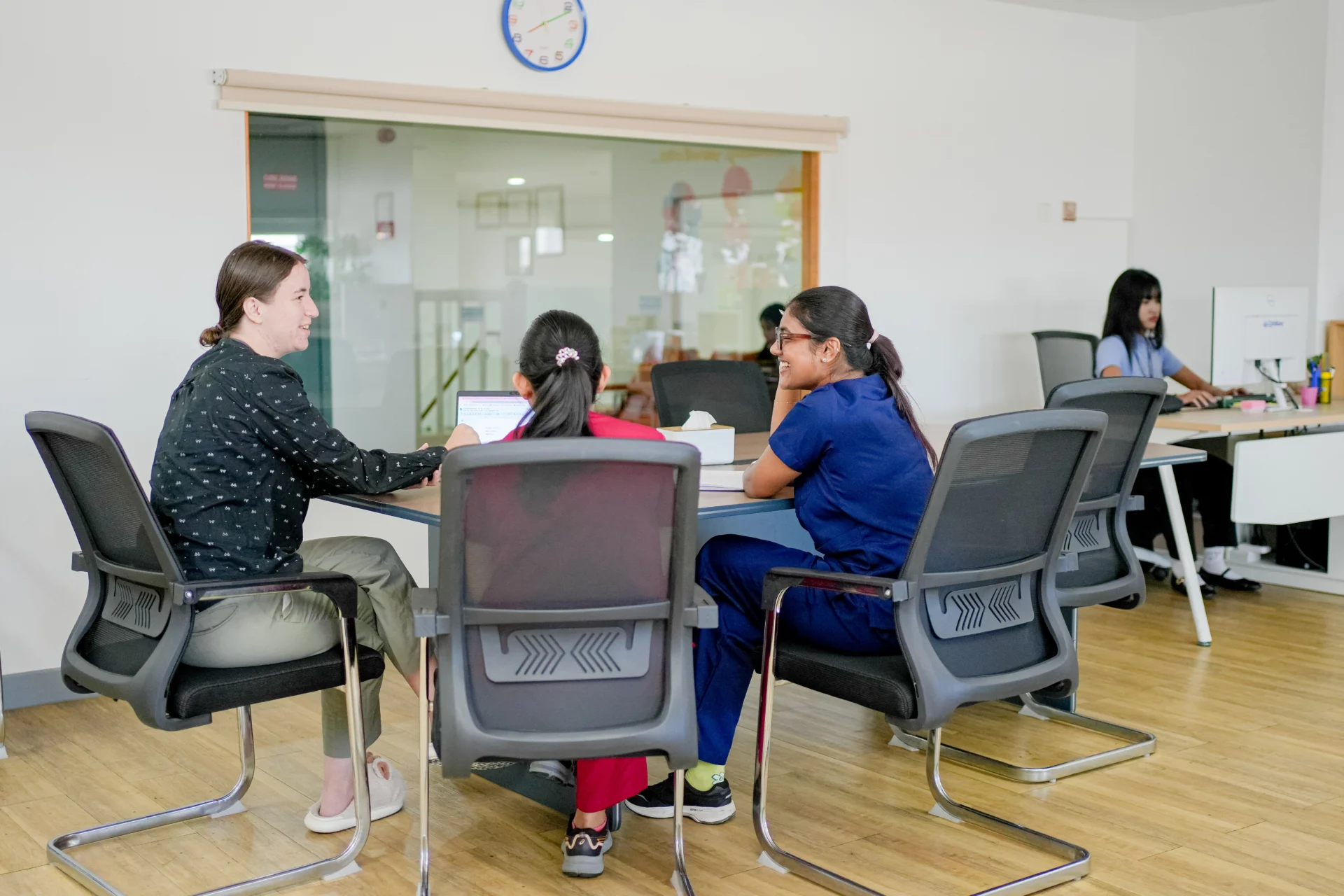
Children make stronger progress when the adults supporting them work toward the same goals. At OrbRom Center, occupational therapy in preschool is connected directly to classroom learning rather than treated as a separate service. Regular discussions between teachers and occupational therapists help the team understand what each child can do, where support is still needed, and which strategies should be used throughout the school day.
Recently, Lead Teacher Kate Bowler met with Occupational Therapists Saona and Mariyam to review the progress of children attending OrbRom’s preschool. Their discussion focused on practical observations from the classroom and therapy sessions, including participation, sensory regulation, fine motor development, attention, independence, and readiness to learn.
What Occupational Therapy in Preschool Looks At
A preschool child may understand an activity but struggle to sit comfortably, hold a pencil, use scissors, manage buttons, tolerate different textures, or move calmly between activities. These difficulties can affect learning and participation even when the child has strong abilities in other areas.
An occupational therapist looks at the skills behind these everyday tasks. The therapist may assess posture, hand strength, coordination, sensory responses, motor planning, self-care abilities, and emotional regulation. OrbRom’s occupational therapy services use this information to develop goals that are meaningful in the child’s daily life.
Turning Observations Into Practical Support
Progress reviews allow teachers and therapists to compare what they see in different settings. A child may complete a fine motor task successfully during an individual therapy session but find the same task difficult in a busy classroom. Another child may participate well in the morning but become overwhelmed later in the day.
By sharing these observations, the team can adjust support. This may include changing the way instructions are given, adding movement breaks, adapting classroom materials, using visual schedules, practising self-care routines, or introducing activities that build hand strength and coordination. These strategies are most effective when they are used consistently rather than only during therapy.
Measuring Progress Beyond Academic Skills
Preschool progress is not limited to letters, numbers, and worksheets. For many children, important achievements include joining a group activity, waiting for a turn, asking for help, opening a lunchbox, coping with a transition, or completing a task with less adult support.
Regular team reviews help ensure that these changes are noticed and recorded. They also help the team decide whether a goal should continue, be adjusted, or be replaced with a more appropriate next step. This individualized approach is central to OrbRom’s preschool program and supports each child at their current developmental level.
Consistent Support Across the Preschool Day
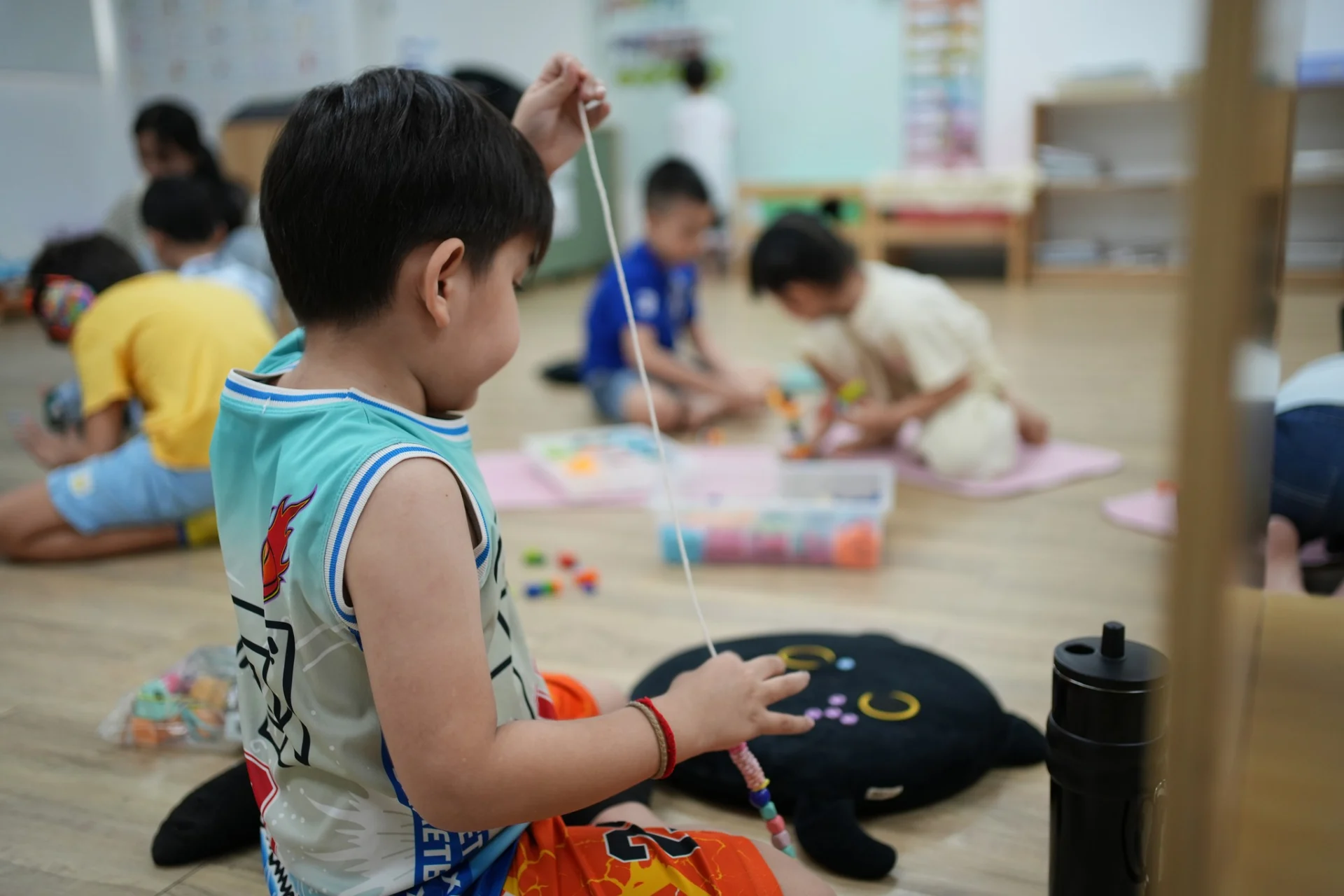
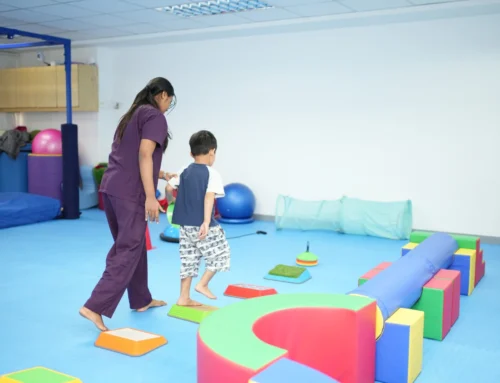
Close cooperation between teachers and therapists gives children more opportunities to practise important skills in real situations. A self-care goal can be practised during snack time, a sensory strategy can support classroom transitions, and fine motor work can be included in art and play activities.
At OrbRom Center in Phnom Penh, occupational therapy in preschool is part of a coordinated approach to early learning and development. Families seeking structured support can learn more about our special education preschool and how our team works together to help children participate more independently and confidently.
We are the only Preschool specialized on children with special needs in PhnomPenh.
| Included therapy sessions per month: |
| – Speech Therapy – 4 sessions / month |
| – Occupational Therapy – 4 sessions / month |
| – Free pre-enrollment assessment |
| – Individualized Learning Plans (ILPs) |
📞 Phone: 077.455.993
Telegram Link: https://t.me/OrbRom

Leave A Comment