
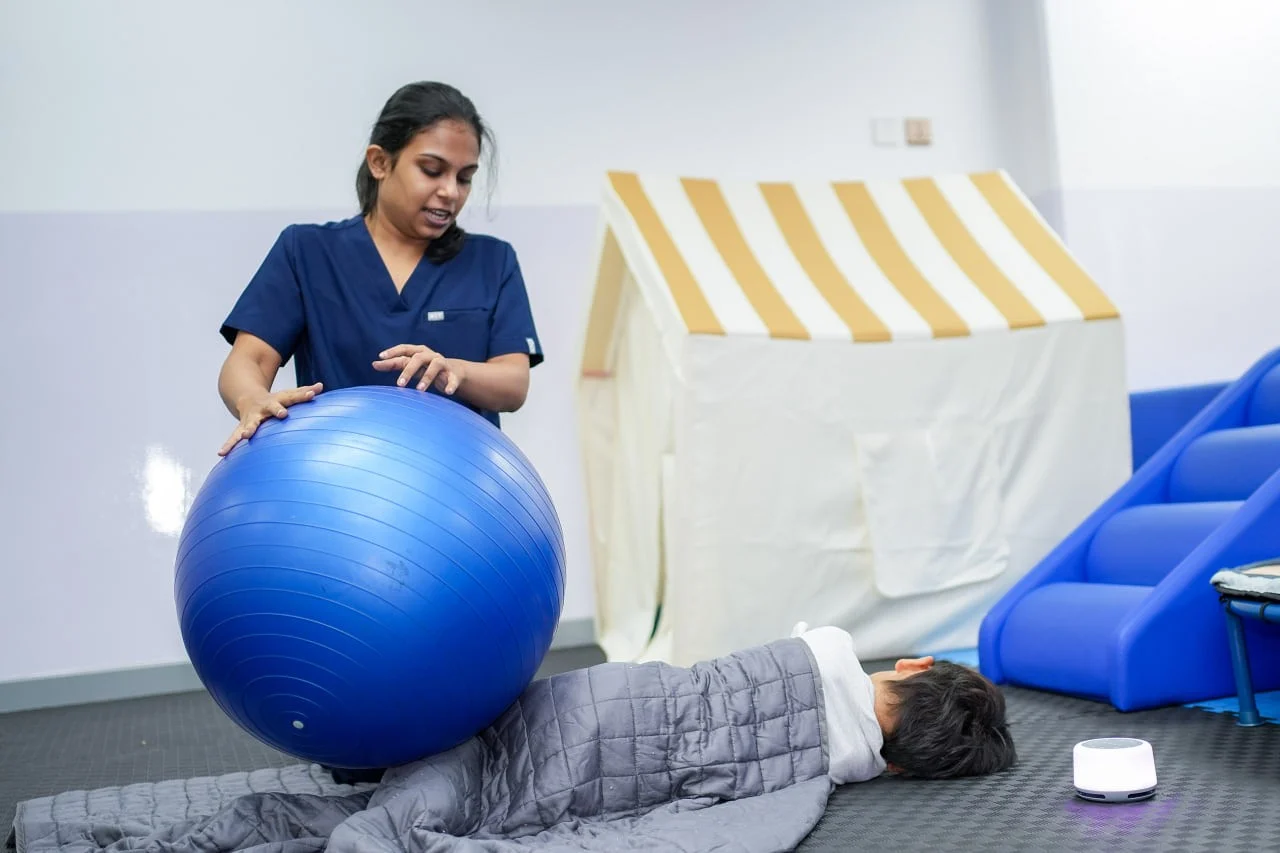
Deep pressure therapy for children is a sensory-based approach that uses firm, controlled pressure to provide proprioceptive input to the body. Occupational therapists may incorporate deep pressure activities into individualized intervention plans to help children explore body awareness, sensory regulation, and participation in daily activities.
Some children with autism, ADHD, or sensory processing differences find deep pressure calming. Others may dislike it or respond differently depending on the activity, intensity, and environment.
At OrbRom Center in Phnom Penh, occupational therapy focuses on understanding each child’s sensory needs and identifying appropriate strategies to support everyday functioning.
What is deep pressure therapy?
Deep pressure involves firm, evenly distributed pressure applied through activities such as supported positioning, compression, or the use of specialized sensory equipment.
One example is using a large therapy ball to provide controlled pressure while a child rests on a padded surface. This activity requires careful supervision, appropriate positioning, and the child’s willingness to participate.
Deep pressure provides input to the proprioceptive system, which helps the brain process information about body position, movement, and muscle activity.
Children who experience sensory processing challenges may respond differently to this type of input.
How deep pressure therapy may support sensory regulation
Deep pressure activities are sometimes incorporated into occupational therapy to address individual sensory preferences and regulation needs.
Potential benefits for some children include:
- Body awareness: Providing sensory information that may help children recognize their body position.
- Emotional regulation: Offering a preferred sensory experience that some children find calming.
- Participation: Helping certain children prepare for activities requiring attention or sustained engagement.
- Sensory exploration: Allowing children to experience different types of tactile and proprioceptive input in a structured environment.
Responses vary between children. Although some report calming effects, research has not established consistent benefits from deep pressure interventions across all children or outcomes.
Understanding proprioceptive activities can help parents recognize how movement and body-based sensory experiences relate to development.
Is deep pressure therapy appropriate for children with autism?
Some autistic children actively seek firm pressure, while others avoid physical contact or experience discomfort from compression.
An occupational therapist considers the child’s sensory preferences, communication abilities, physical needs, and responses before recommending activities.
Deep pressure should never be forced or used to restrain a child. Pressure must not restrict breathing, and children must be able to communicate discomfort or stop the activity.
For families exploring sensory processing in autism, understanding individual sensory differences is more useful than assuming one intervention works for every child.
How occupational therapists use sensory-based activities
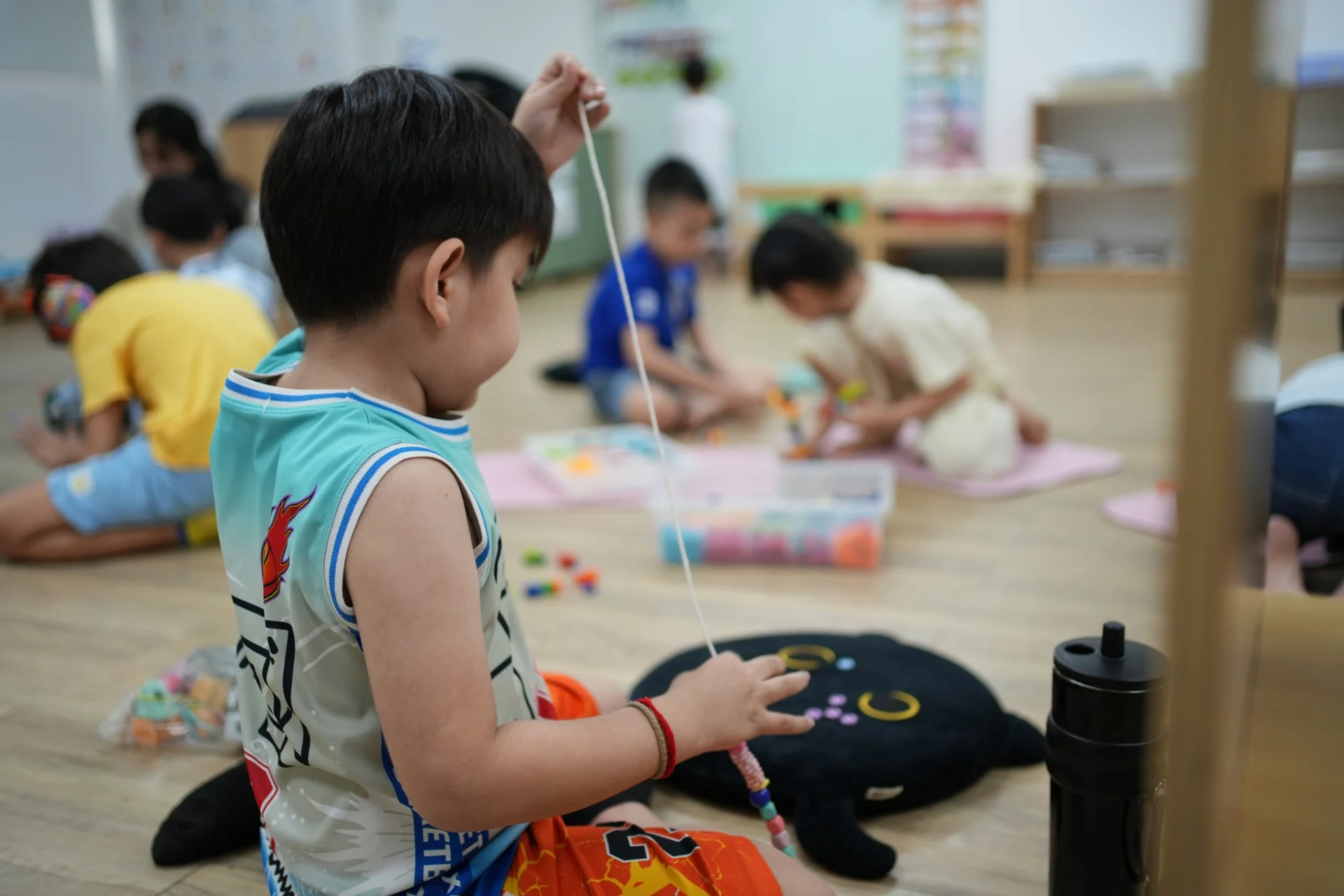
At OrbRom Center, occupational therapy addresses functional difficulties that may involve sensory processing, motor coordination, self-care, and participation in learning activities.
Depending on assessment findings, therapists may incorporate movement activities, therapy balls, tactile materials, and other sensory equipment into sessions.
The goal is to identify strategies that help children participate more comfortably and independently in meaningful activities.
Parents can also explore how sensory rooms support children with special needs through structured opportunities for movement and sensory exploration.
Occupational therapy for sensory regulation in Phnom Penh
Children who frequently seek pressure, struggle with certain sensory experiences, or have difficulty participating in daily routines may benefit from an occupational therapy assessment.
OrbRom Center provides individualized occupational therapy for children in Phnom Penh, including support for sensory processing, body awareness, motor development, and functional independence.
Our occupational therapists work with families to identify practical strategies appropriate for each child’s developmental profile. Deep pressure activities may be considered when suitable, but intervention decisions are based on individual needs and functional goals.
We are the only Preschool specialized on children with special needs in PhnomPenh.
| Included therapy sessions per month: |
| – Speech Therapy – 4 sessions / month |
| – Occupational Therapy – 4 sessions / month |
| – Free pre-enrollment assessment |
| – Individualized Learning Plans (ILPs) |
📞 Phone: 077.455.993
Telegram Link: https://t.me/OrbRom

Leave A Comment