
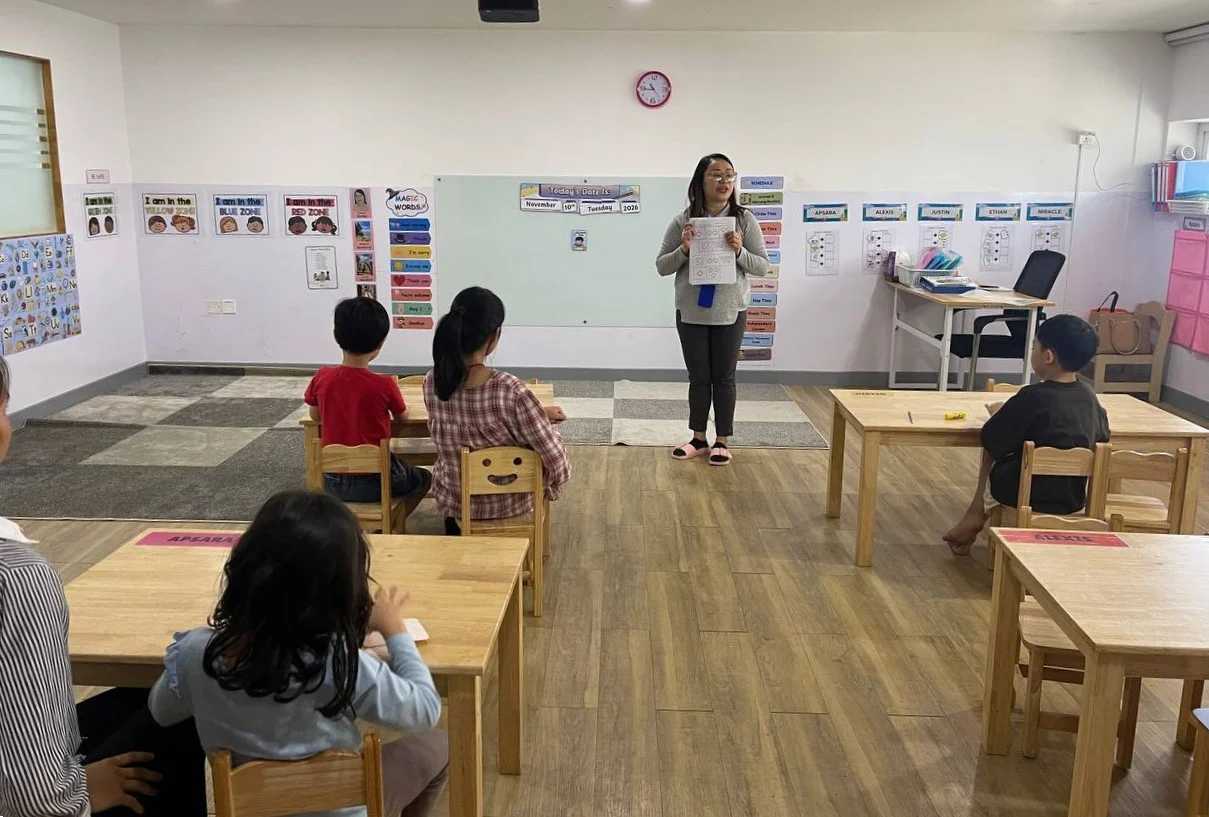
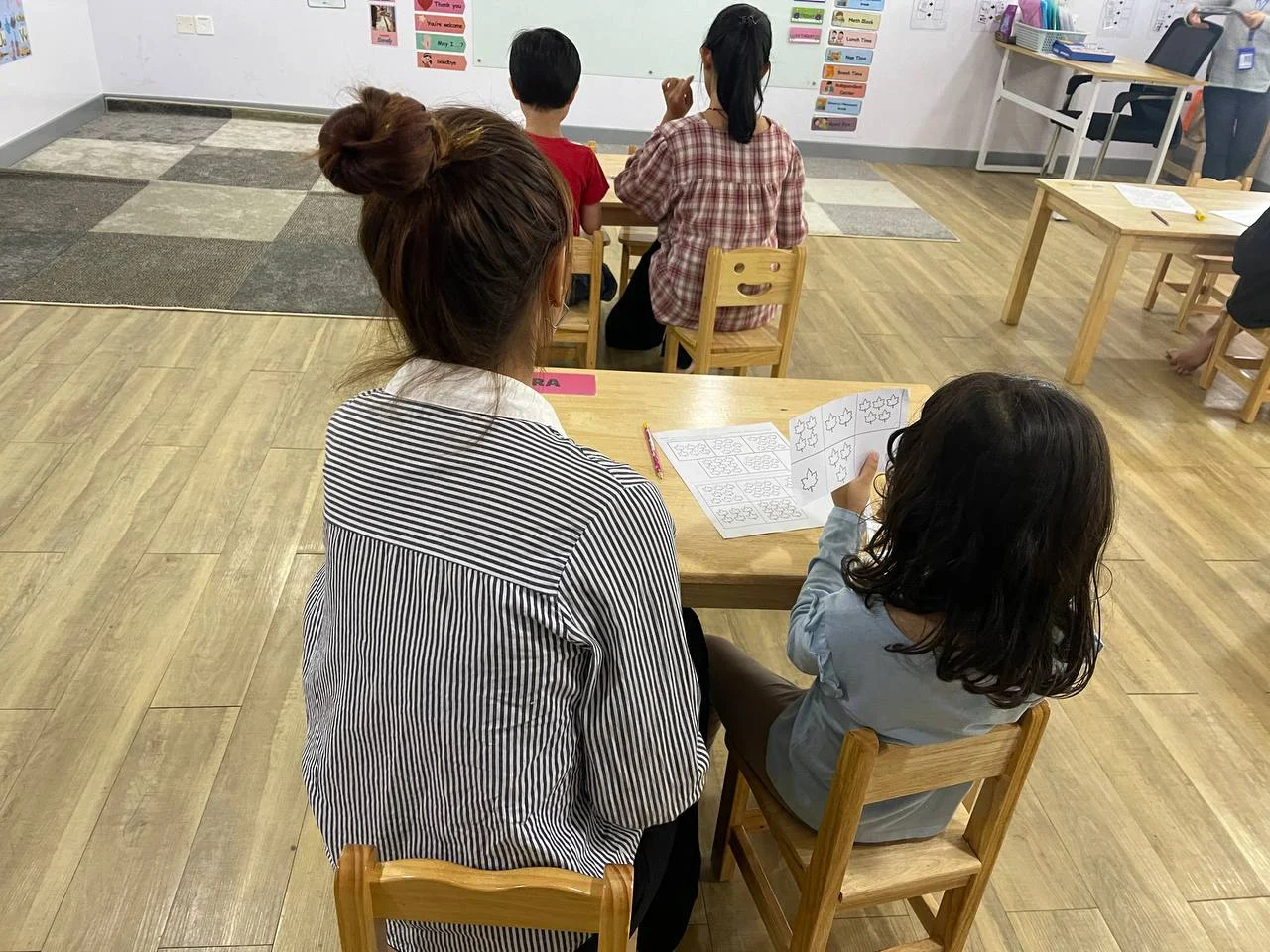
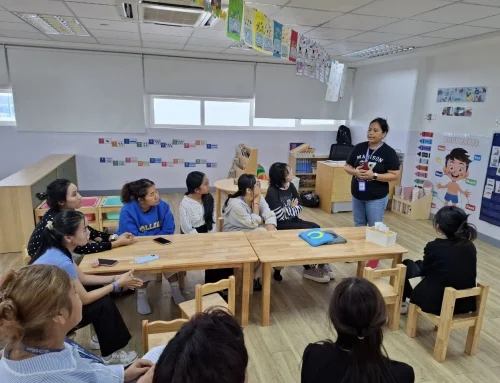
In Classroom C at OrbRom Preschool in Phnom Penh, our older preschoolers learn alongside classmates and practise doing more on their own. Our classroom photos show a teacher holding up a page for the group, an adult sitting beside a child at a table, and a child reaching toward an illustrated activity during floor time. They offer a look at how children take part in different ways across a classroom session.
How older preschoolers learn together in Classroom C
Children have opportunities to listen as part of a group and work directly with materials. A teacher can introduce an activity to the whole class, then move closer to a child who needs help with a step. Another child may be ready to begin once they have seen the demonstration. Working in the same room gives children a shared activity while leaving room for different levels of support.
The activity on the floor is a good example of how a child can participate without having to give a long spoken answer. A child might point to a picture, move a piece or show a choice. The teacher can then respond to what the child does and build from there. During a group activity, children also get chances to watch what a classmate does and practise waiting for a turn.
How familiar routines support independence
A predictable routine gives children repeated chances to try a step. For example, when an activity ends, a child might put their materials away and then join the group. If those steps happen in the same order each day, the child has more opportunities to recognise what comes next and begin with less prompting.
A teacher may pause before offering help to see whether a child is ready to start. If the child needs support, a gesture toward the materials or a short reminder may be enough. Another child may need the first step demonstrated again. Independence can look different across tasks. A child who puts materials away on their own may still need help getting started with a new activity, and asking for that help is a skill in itself.
Choosing a classroom based on age and readiness
Our preschool program welcomes children ages 3 to 7. Classroom C is for older preschoolers, and we consider age and developmental readiness when grouping children. Children of a similar age can be ready for different steps. One may be comfortable joining a group activity but need help with a table task. Another may work comfortably at a table and need more support when moving to the next activity.
At home, families can offer a similar chance to practise by choosing one familiar step, such as putting a book back after reading. Give your child time to respond before repeating the instruction. If they need a cue, point to where the book goes or show them the first step. Keeping the task familiar makes it easier to notice when your child starts it with less help.
Visit OrbRom Preschool in Phnom Penh
If you are exploring OrbRom Preschool in Phnom Penh, you can ask what a typical day looks like, how teachers introduce a new routine and how classroom placement is decided. It helps to share a few examples from home, such as an activity your child enjoys, a routine they already manage and a situation where they usually ask for help. To arrange a preschool visit or discuss your child’s needs, contact OrbRom Center.
Leave A Comment