
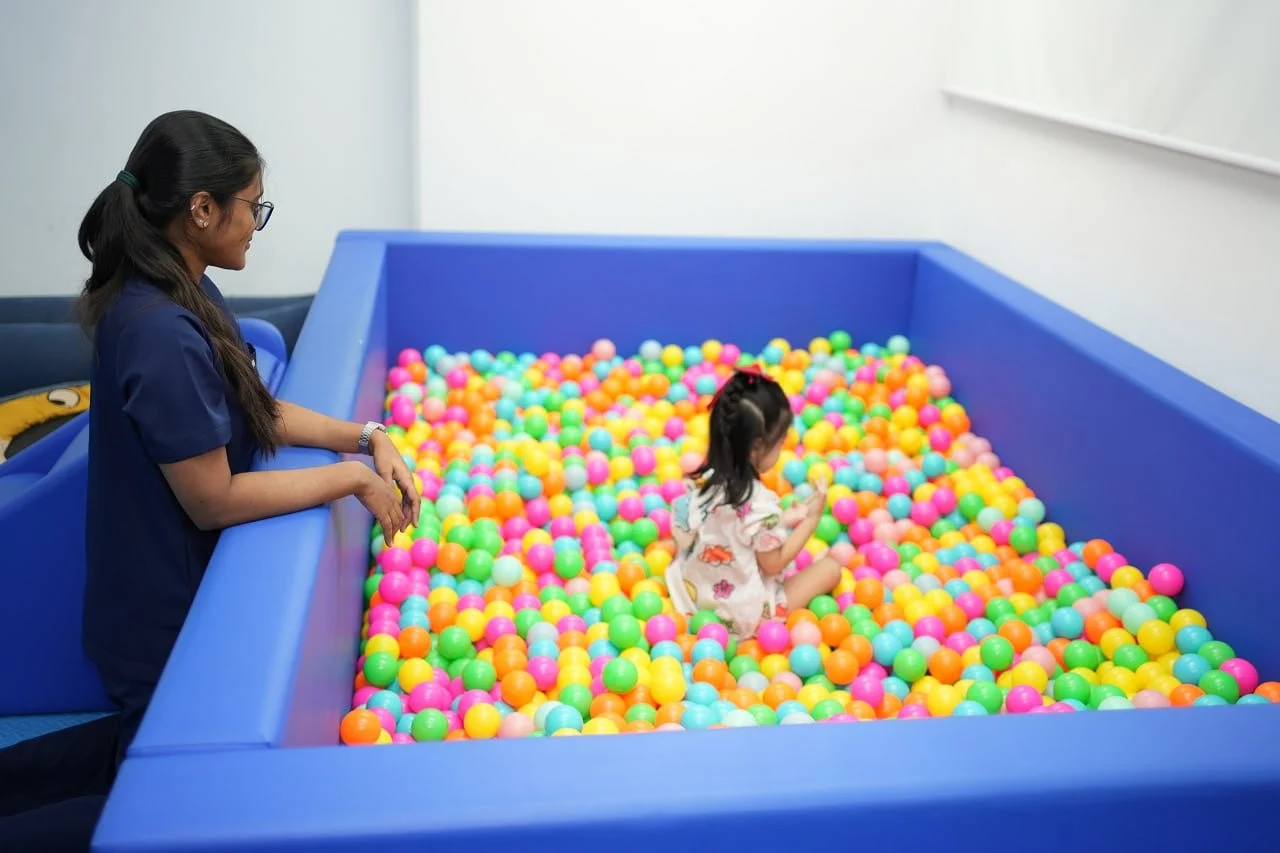
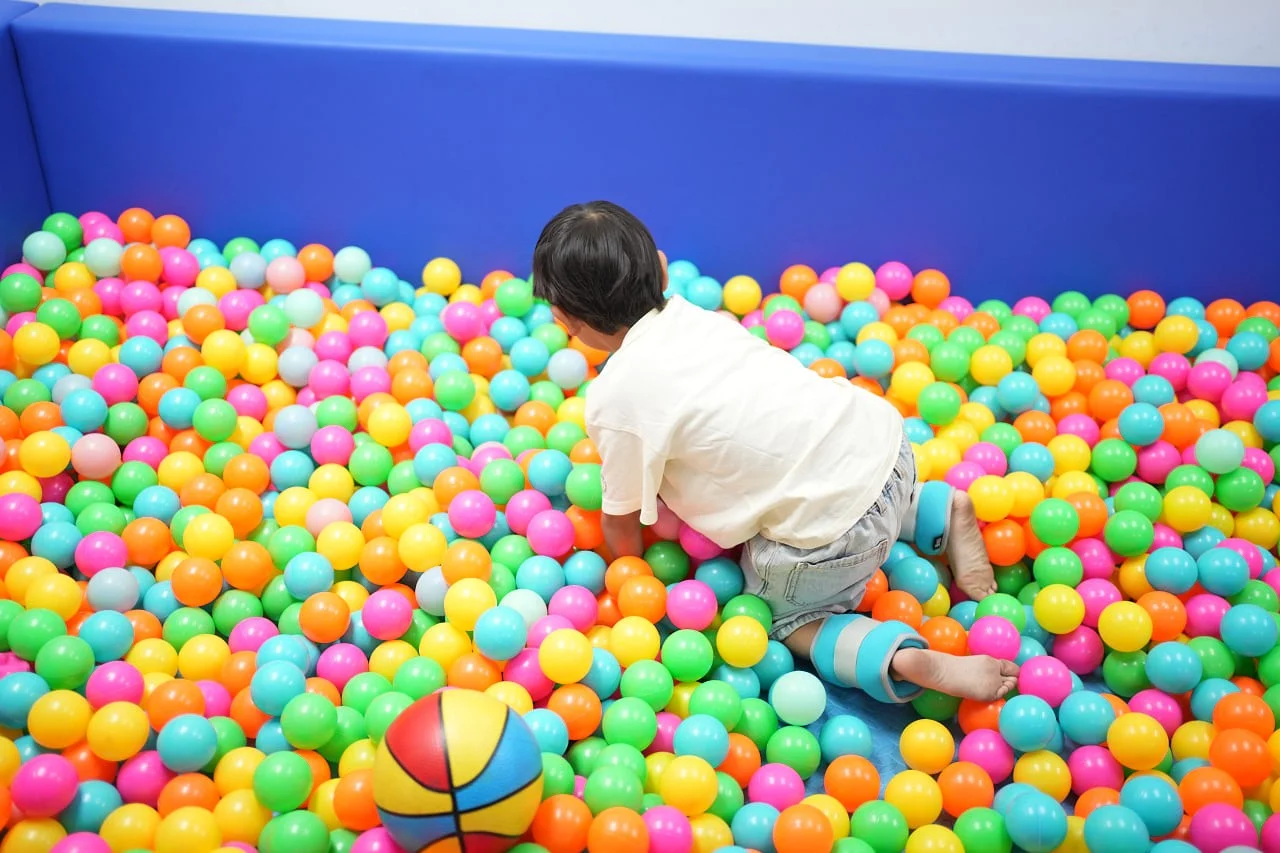
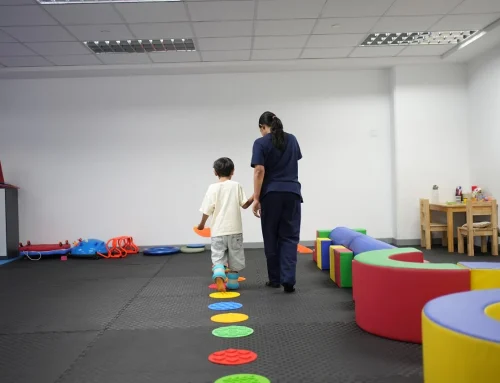
Sensory play can give children opportunities to explore movement, touch, and body position in a structured, supportive setting. In pediatric occupational therapy, activities are selected according to a child’s individual needs and functional goals. Ball pit play is one option that may encourage movement, problem-solving, and engagement, while allowing therapists to observe how a child responds to different sensory experiences.
Understanding sensory processing
Sensory processing refers to how the nervous system receives and organizes information from the body and environment. Touch, movement, balance, and awareness of body position all influence everyday participation. Children vary in how they respond to sensory input. Some actively seek movement or tactile experiences, while others may become uncomfortable or overwhelmed. These differences should be understood in context rather than treated as a diagnosis on their own. Occupational therapists consider a child’s responses alongside daily activities, developmental history, and family priorities.
Body awareness and movement
Moving through a ball pit involves changing position, shifting weight, and coordinating the arms and legs. The resistance of the balls can offer tactile and proprioceptive input as a child reaches, pushes, sits, or changes direction. These actions may provide opportunities to practise body awareness and motor planning. However, sensory input does not have the same effect on every child. Therapists adjust the activity according to observed responses, safety, and the skills being addressed.
Developing motor planning through play
Motor planning involves deciding what movement to make, organizing the action, and adjusting it as needed. During a play activity, a child might reach toward a target, move to a different position, or retrieve an object. Adults can introduce simple goals, demonstrate movements, or reduce the number of steps. The challenge should be achievable without removing opportunities for the child to attempt the task independently. Successful participation depends on appropriate support, not on completing a particular activity in a prescribed way.
Communication and social participation
Play also creates natural opportunities for communication. A child may request a turn, indicate a preferred colour, ask for help, or signal that they want to stop. Therapists and educators can model simple language and accept gestures or other communication methods. Shared play can support turn-taking and joint engagement when the child is comfortable with the interaction. These opportunities can connect occupational therapy goals with communication strategies used in other learning environments.
Individualizing sensory activities
An occupational therapist may adjust the duration, level of movement, number of materials, or amount of adult support. A child who enjoys tactile exploration may need clear boundaries and transitions. Another child may prefer to begin by touching the balls from outside the pit before entering. Participation should be voluntary and monitored closely. Adults should avoid assuming that more intense sensory input produces better results. The child’s comfort, engagement, and functional goals guide each decision.
Safety and meaningful progress
Ball pits require appropriate supervision, clean equipment, and attention to the child’s age, mobility, and ability to move safely. Small objects, unsafe climbing, and difficulties exiting the pit can create risks. Progress should be measured through meaningful changes in daily participation, such as navigating play spaces, managing transitions, or joining activities with less support. Enjoyment during one session is valuable, but it is not sufficient evidence of therapeutic improvement.
Occupational therapy at OrbRom Center
OrbRom Center provides pediatric occupational therapy and individualized intervention in Phnom Penh. Families can also explore the preschool program for information about early learning support. An assessment and discussion of everyday challenges can help determine which activities and strategies are appropriate for each child.
Leave A Comment