
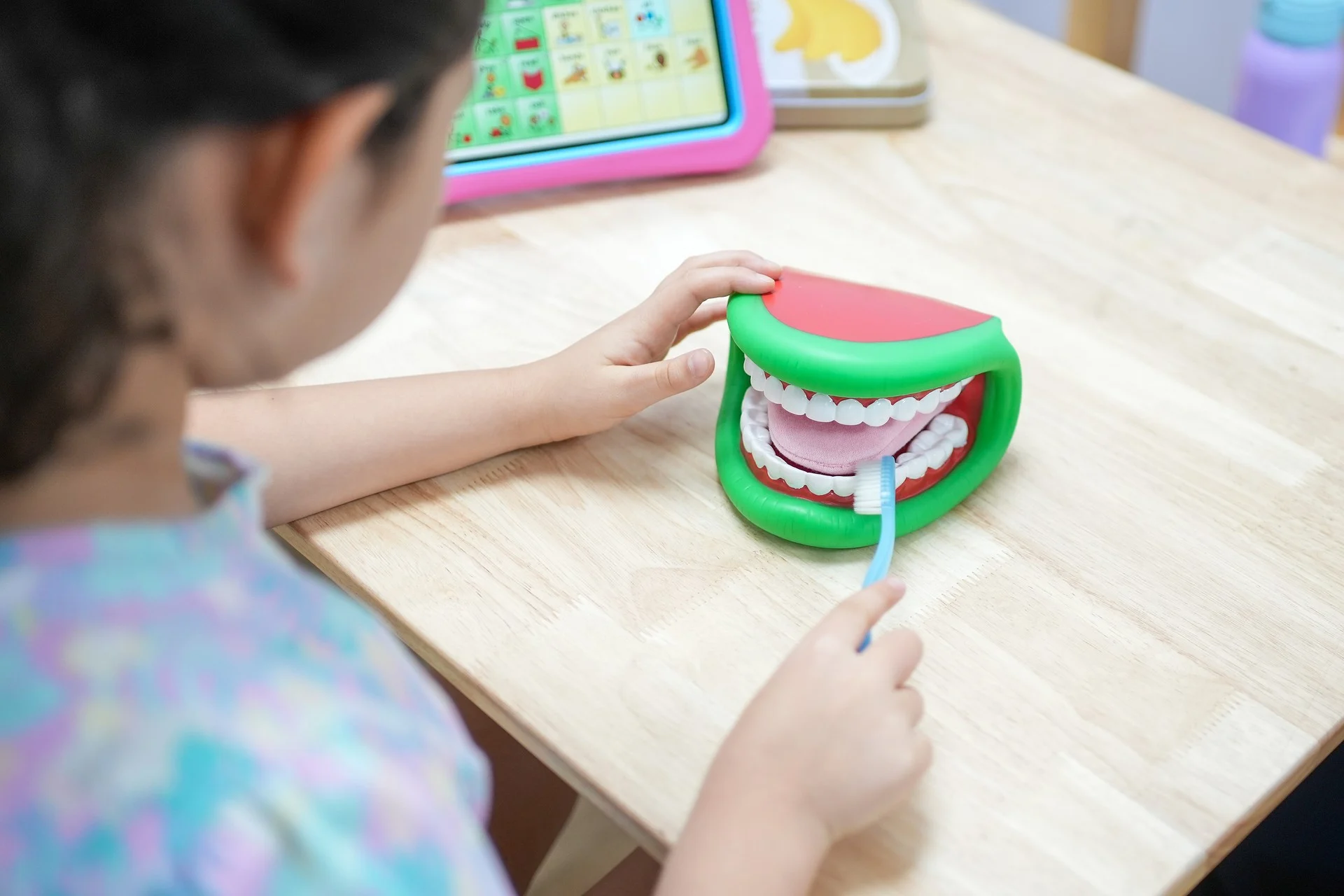
Teaching toothbrushing skills to children involves more than explaining why clean teeth matter. Children must learn a sequence of actions, coordinate their hands, tolerate different sensations, and gradually take responsibility for a daily routine. For children with developmental delays, autism, or sensory differences, these steps may require explicit teaching and individualized support. At OrbRom Center in Phnom Penh, daily living skills can be addressed through practical learning activities and occupational therapy goals.
Why toothbrushing can be challenging
Brushing teeth requires a child to hold a toothbrush, move it across different tooth surfaces, and remember which areas have already been cleaned. The taste of toothpaste, sensation of bristles, sound of running water, and proximity of an adult can also affect participation. Some children understand the task but have difficulty with motor coordination or sequencing. Others may resist because the sensations are uncomfortable. Identifying the specific barrier helps adults choose appropriate support instead of treating every difficulty as a behavior problem.
Using models to teach oral hygiene
A large model of teeth and a toothbrush can make an abstract instruction easier to understand. Adults can demonstrate where to place the brush and how to move it along the outer, inner, and chewing surfaces. Children can rehearse these actions on the model before trying them on their own teeth. This is a teaching activity rather than a substitute for actual brushing. Demonstration can be paired with simple words, pictures, or a short visual sequence to support understanding.
Breaking the routine into manageable steps
A visual schedule can show the order of the routine: prepare the toothbrush, apply toothpaste, brush the teeth, spit, rinse the brush, and put materials away. Adults can initially teach one step at a time and provide prompts only where needed. Some children benefit from practising the same sequence at a consistent time each day. As the child becomes more familiar with the routine, prompts can be reduced gradually. The goal is greater participation and independence while maintaining effective cleaning.
Supporting sensory comfort and cooperation
Sensory preferences should guide how toothbrushing is introduced. A child may tolerate touching a toothbrush to their lips before accepting it inside the mouth. A smaller, soft-bristled brush, a different toothpaste flavour, or a quieter environment may help. Adults should avoid forcing a distressed child through the routine. A gradual approach can build familiarity, but persistent pain, gagging, or oral discomfort warrants discussion with a dentist or appropriate healthcare professional.
Building fine motor and self-care skills
Toothbrushing can also provide opportunities to practise grasp, wrist movement, bilateral coordination, and awareness of body position. Children may need an adapted handle or help positioning the brush. Occupational therapists can identify motor and sensory barriers and develop strategies that support participation in the routine. Young children and children who cannot yet brush thoroughly still need adult assistance. Independence should increase only when effective oral hygiene can be maintained.
Working together with families and dental professionals
Families can reinforce consistent steps at home and share which parts of the routine remain difficult. Teachers and therapists may help with sequencing, communication, and sensory tolerance, while dental professionals provide guidance on oral health, fluoride toothpaste, and brushing technique. Children should brush twice daily with age-appropriate fluoride toothpaste under suitable adult supervision. Educational practice supports the routine but does not replace dental care.
Daily living skills support at OrbRom Center
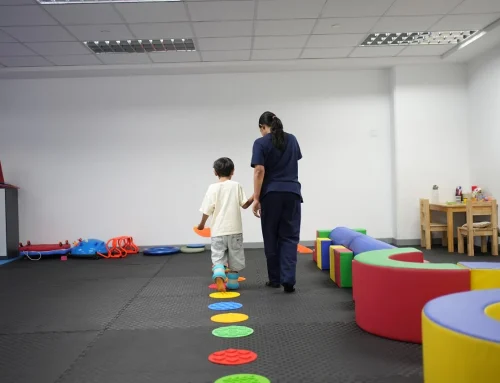
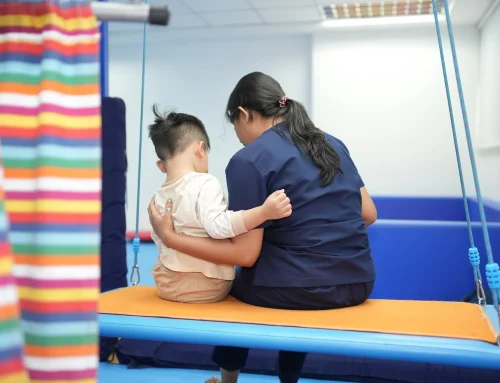
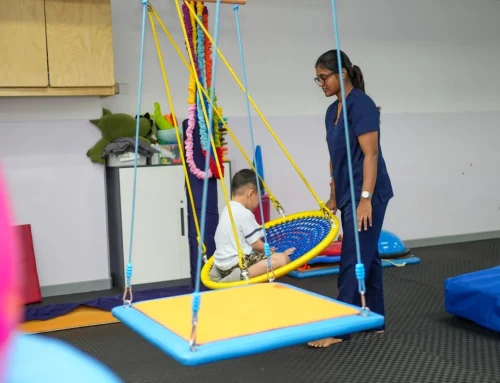
OrbRom Center provides occupational therapy, individualized special education intervention, and an early learning preschool program in Phnom Penh. Families can discuss challenges with self-care routines and explore strategies suited to their child’s current abilities and daily needs.
Leave A Comment