
Assistive technology and visual learning can help preschool children access educational activities, communicate their needs and develop greater independence. At OrbRom Preschool in Phnom Penh, digital resources and hands-on teaching materials provide different ways for children to engage with classroom topics.
Children with developmental and communication differences may need additional time, adapted materials or alternative ways to respond during lessons. A structured preschool environment allows teachers to adjust activities according to each child’s learning needs.
Using interactive technology to develop vocabulary
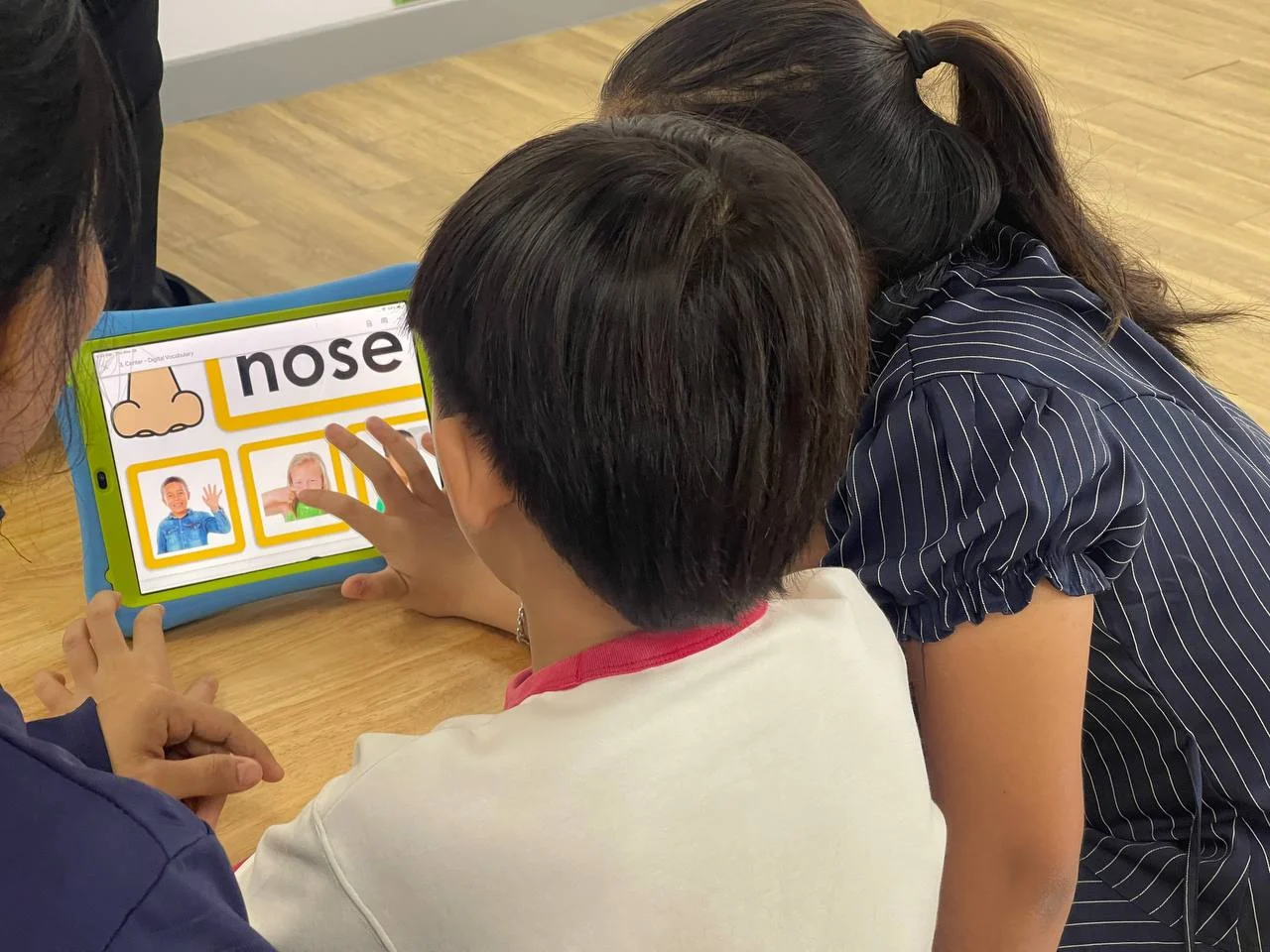
Interactive tablet activities can help children connect spoken words, written labels and pictures. During a lesson about body parts, for example, a child can match the word nose with a corresponding picture or identify the body part on themselves.
Teachers can extend the activity by asking children to point, imitate an action, select a picture or use a word in a meaningful context. This provides opportunities to practise receptive and expressive language without requiring every child to respond verbally.
Digital activities are most useful when they have a clear educational purpose. Teachers can adjust the number of choices, provide appropriate prompts and gradually reduce assistance as children become more independent.
Supporting communication through AAC
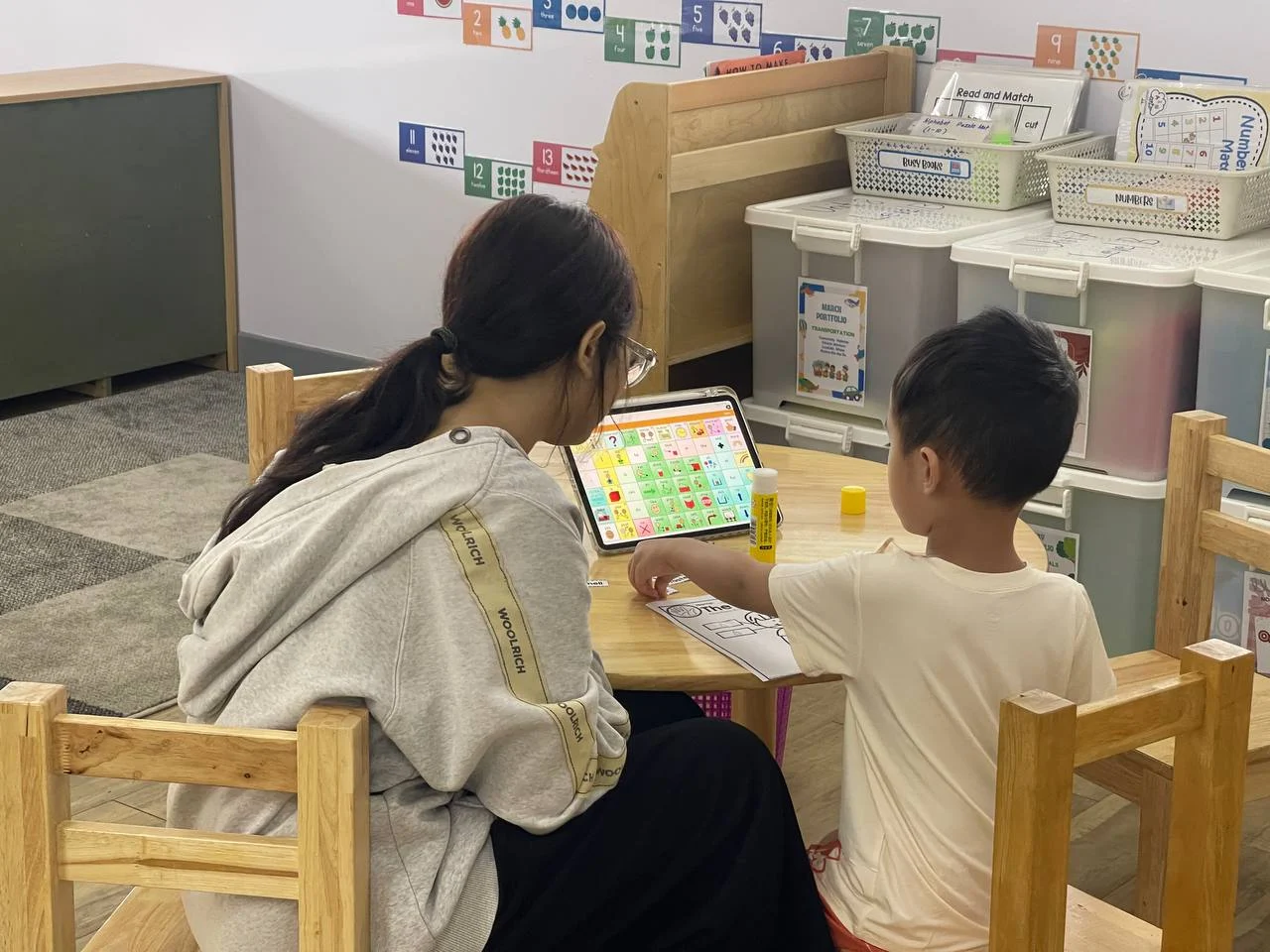
Augmentative and alternative communication (AAC) includes tools and strategies that supplement or replace spoken communication. These may include gestures, picture boards and tablet-based communication systems.
A symbol-based communication application can provide access to vocabulary for requesting materials, expressing preferences, commenting and asking for help. Adults can model the use of symbols during ordinary classroom routines, allowing children to see how communication works in context.
AAC should be selected according to individual communication needs. Children do not need to demonstrate a particular level of spoken language before being considered for communication support. Collaboration with a speech and language therapist can help identify appropriate communication strategies.
Learning about the five senses
The five senses provide an accessible topic for preschool learning. Visual classroom displays at OrbRom Preschool connect sight, hearing, smell, taste and touch with familiar examples such as music, sunshine and different textures.
Teachers can combine pictures with safe, practical experiences. Children might listen to a familiar sound, compare soft and rough materials or match pictures of everyday objects to the relevant sense.
Participation should remain flexible. Children who are sensitive to particular sounds, textures or smells should have the option to observe or participate in another way. The purpose of the lesson is to develop understanding rather than require children to tolerate uncomfortable sensory experiences.
Combining digital resources with hands-on activities
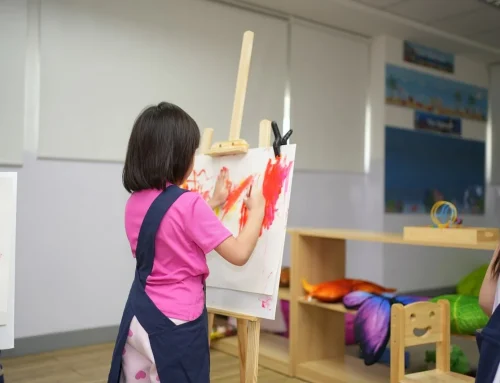
Technology is one part of an adapted preschool curriculum. Paper-based tasks, classroom displays, play and interaction with teachers provide additional opportunities to practise the same concepts.
For example, a child who identifies a body part on a tablet may then match a printed picture, point to the body part on a doll or participate in a movement activity. Repeating concepts across different materials can help teachers determine whether a child understands the concept beyond a single familiar task.
Activities can also incorporate fine motor skills, turn-taking and attention. When motor or sensory difficulties affect participation, occupational therapy can help identify suitable adaptations.
Individualized preschool learning in Phnom Penh
The OrbRom Preschool Program supports children with diverse developmental and educational needs through structured learning activities and individualized support. Teachers can adapt instructions, materials and response expectations according to children’s abilities.
Some children may benefit from additional individual special education intervention alongside classroom learning. Families can discuss their child’s communication, learning and participation needs with the OrbRom team to determine appropriate support.
Leave A Comment