If you’ve ever watched a child almost say the word, then freeze, you know the gap isn’t always “more practice.” Often, the missing piece is how we teach communication so it works in real life. Speech Therapy Phnom Penh families ask the same practical questions: How do we help my child request help without crying? Answer simple questions at school? Use words when they’re frustrated?
At OrbRom Center, we focus on functional language—communication that a child can actually use with teachers, siblings, and friends—not just repeating vocabulary on a worksheet.
What “functional language” looks like in Speech Therapy Phnom Penh
Functional language is the language that makes daily life easier. It includes skills like:
-
Asking for help (“Help me,” “Open please,” “I don’t know”)
-
Taking turns in conversation (waiting, responding, staying on topic)
-
Understanding and answering WH questions (who/what/where/why)
-
Expressing needs and feelings (hungry, tired, scared, angry)
-
Following classroom directions (one-step to multi-step)
If a child can label “apple” but can’t say “I want apple,” they’re not getting the full benefit. That’s why we build language around real situations—snack time, classroom routines, play, and transitions.
Why visual supports and structure help children talk more
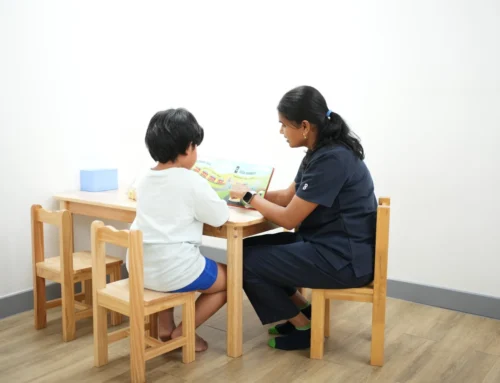
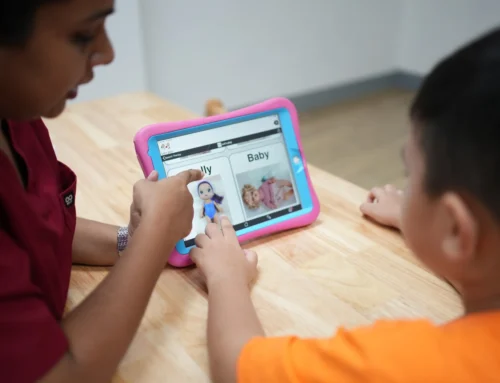
Many children learn best when language is paired with something they can see: pictures, simple written cues, gesture prompts, or organized choices. Visual supports reduce pressure, increase understanding, and give children a clear “next step.”
In sessions, we may use:
-
Choice boards to practice requesting (not guessing)
-
Visual schedules to reduce meltdown triggers during transitions
-
Simple sentence frames (“I want ___,” “I feel ___ because ___”)
-
Turn-taking cues so a child learns conversation rules
This is especially effective for children who are bilingual, easily overwhelmed, or still developing attention and comprehension. If you want a clear overview of the approach, start with what speech therapy is and how it supports daily communication.
How we individualize goals so progress shows at home and school
Good therapy doesn’t look the same for every child. At OrbRom Center, we match the level of structure, prompts, and activities to the child’s profile—then fade support over time so independence increases.
When families want clearer direction and measurable goals, we often recommend pairing therapy with developmental assessments. This helps us target the right skills (language, attention, social communication) and avoid wasting months on the wrong focus.
For many children, combining visual supports with consistent practice at home and school creates faster, more stable gains—especially when communication challenges overlap with autism or learning differences. (This is also why visual supports improve learning for many children.)
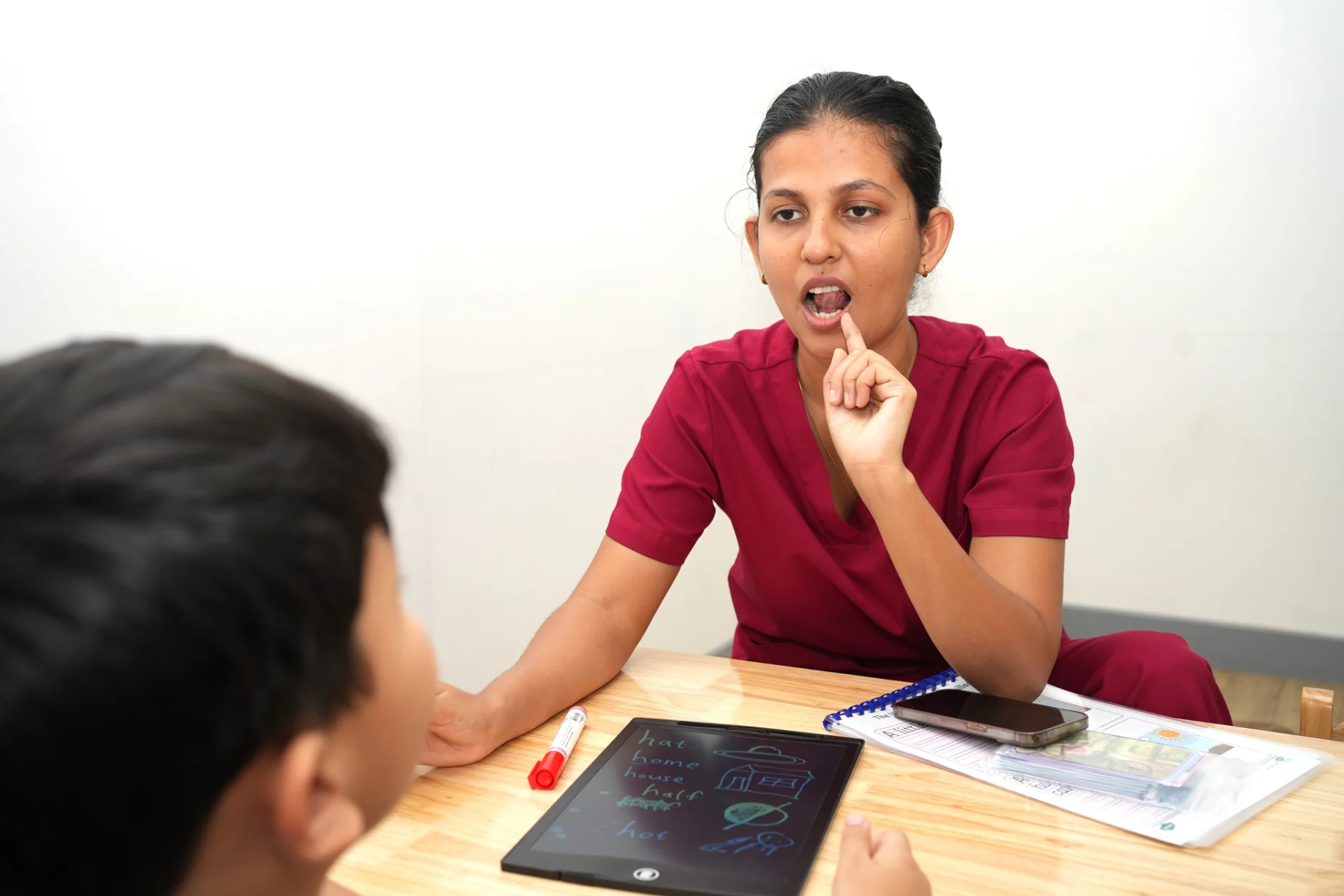
In short: Speech Therapy Phnom Penh works best when practice is designed to transfer into daily life. OrbRom Center’s speech therapy sessions are built around structured play, meaningful interaction, and practical language goals—so children don’t just learn words, they learn how to use them.
We are the only Preschool specialized on children with special needs in PhnomPenh.
- Internationally qualified teachers
- Cambodia’s largest sensory room
- Outdoor swimming pool
- Covered outdoor playground
📞 Phone: 077.455.993
Telegram Link: https://t.me/OrbRom