
#ChampionsOfInclusion: Connecting Schools and Specialists
Building effective inclusive education in Phnom Penh requires more than providing additional support to individual students. It requires schools, teachers, specialists, families, and community organizations to communicate and work toward shared goals.
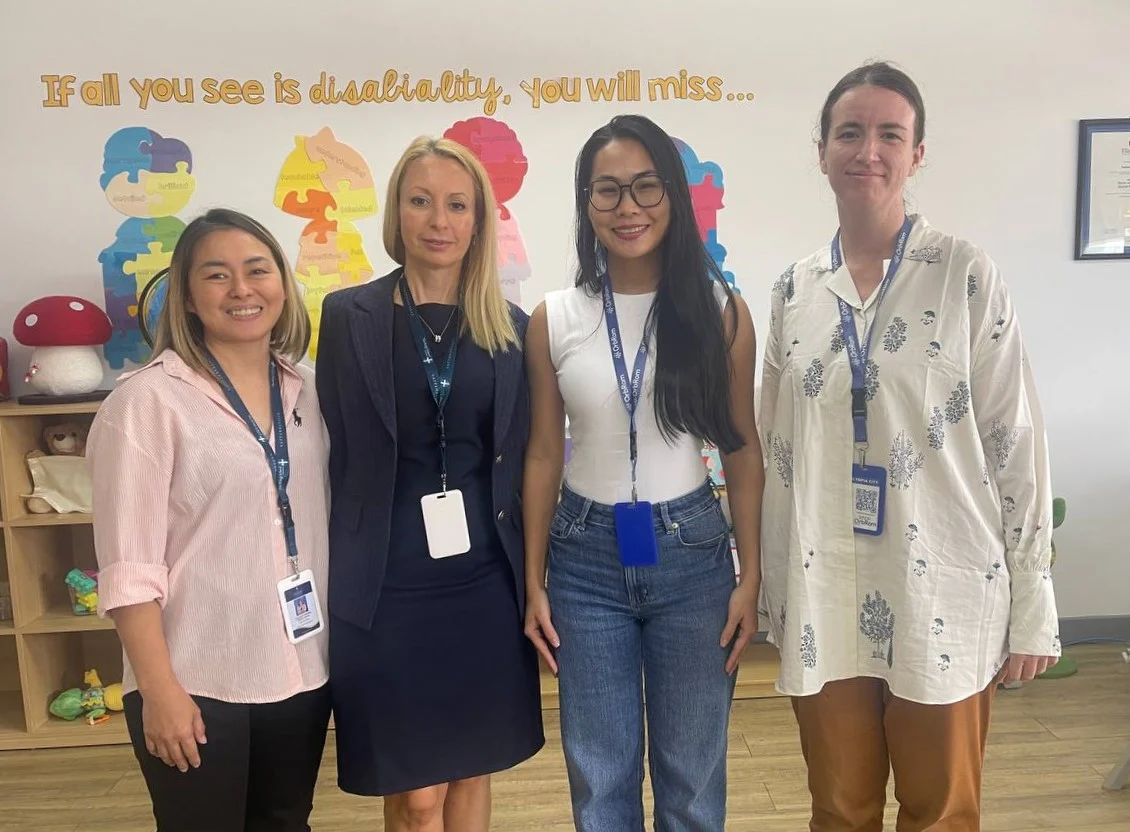
OrbRom Center recently had the pleasure of meeting colleagues from The King’s School, Vattanacville, including Danijela Pop-Jovanov, Deputy Principal, and Kenneth Rivera, SENCO and Designated Safeguarding Lead (DSL).
The meeting provided an opportunity to discuss inclusive education, safeguarding, learning support, and the importance of collaboration between mainstream schools and specialized education providers.
As part of our #ChampionsOfInclusion initiative, we recognize educators and school leaders who actively contribute to improving access, participation, and meaningful learning opportunities for students with diverse needs.
What Does Inclusive Education Look Like in Practice?
Inclusion is not simply about placing a student with additional needs inside a mainstream classroom.
Effective inclusion considers whether the student can participate, communicate, build relationships, access the curriculum, regulate their emotions and behavior, and make meaningful academic and developmental progress.
Depending on the individual child, this may involve classroom accommodations, differentiated instruction, individualized learning goals, additional adult support, environmental modifications, or specialist intervention.
Some students may also benefit from services such as speech therapy, occupational therapy, developmental assessments, academic assessments, or individualized special education intervention.
The objective should always be to understand the individual student rather than applying the same approach to every child.
Collaboration Between Schools and Specialists
One of the important areas discussed during our meeting with The King’s School was the relationship between schools and specialist support providers.
A child may work with teachers, teaching assistants, SENCOs, speech and language therapists, occupational therapists, special education teachers, psychologists, or other professionals.
When these professionals work separately, important information can be missed.
Collaboration allows everyone supporting the student to understand the same priorities. A skill developed during an intervention session, for example, becomes considerably more useful when it can also be practiced in the classroom and at home.
At OrbRom Center, this collaborative approach forms an important part of our work with families and international schools across Phnom Penh.
The Importance of SENCO Leadership
The SENCO (Special Educational Needs Coordinator) has an important role in developing effective learning support within a school.
SENCOs can help identify students who may require additional support, coordinate interventions, communicate with teachers and families, monitor student progress, and connect schools with external specialists when further assessment or intervention is required.
The role also contributes to building a school culture where additional learning needs are understood as part of student diversity rather than treated as an isolated issue.
Our discussion with Kenneth Rivera, SENCO and DSL, also highlighted the connection between learning support and safeguarding.
Children who experience communication difficulties, developmental delays, sensory differences, or challenges with social understanding may sometimes require additional consideration within safeguarding procedures. Clear systems and communication between professionals therefore remain essential.
Supporting Successful Mainstream Inclusion
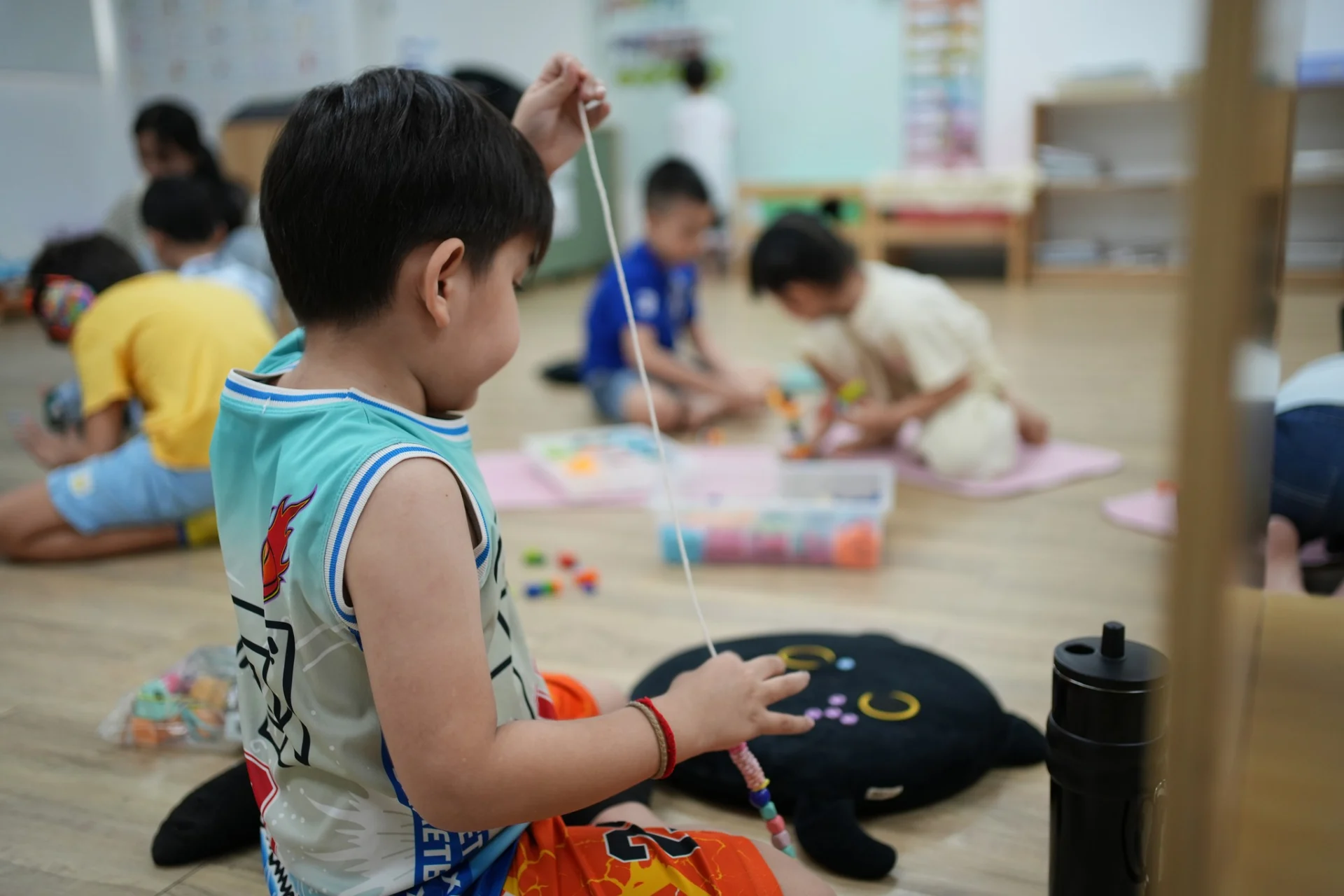
At OrbRom Center, one of the central objectives of our specialized preschool and intervention programs is to help children develop the skills necessary for greater independence and successful participation in mainstream education whenever appropriate.
This may include developing:
- functional communication and language;
- social interaction and play skills;
- attention and classroom participation;
- emotional and behavioral regulation;
- independence and self-care;
- fine and gross motor abilities;
- early literacy and numeracy; and
- the ability to follow classroom routines and instructions.
Progress does not look identical for every student. Effective support begins by understanding the child’s current abilities and identifying realistic priorities.
For some children, a formal developmental, language, adaptive functioning, or academic assessment can provide valuable information for educational planning.
Creating a Stronger Inclusive Education Community in Cambodia
The development of inclusive education in Cambodia depends on continued communication between mainstream schools, specialized education providers, therapists, teachers, school leaders, and families.
Professional conversations between organizations are valuable because they allow educators to share experiences, discuss challenges, and identify practical ways to improve student support.
We thank Danijela Pop-Jovanov, Deputy Principal, Kenneth Rivera, SENCO and DSL, and our colleagues from The King’s School, Vattanacville for taking the time to meet with our team.
Their commitment to strengthening inclusive practices makes Danijela and Kenneth deserving members of OrbRom Center’s #ChampionsOfInclusion.
OrbRom Center will continue working with schools and families to strengthen special education, learning support, therapy, assessment, and inclusive education in Phnom Penh, with the shared objective of helping children access the support they need to learn, participate, and progress.
We are the only Preschool specialized on children with special needs in PhnomPenh.
| Included therapy sessions per month: |
| – Speech Therapy – 4 sessions / month |
| – Occupational Therapy – 4 sessions / month |
| – Free pre-enrollment assessment |
| – Individualized Learning Plans (ILPs) |
📞 Phone: 077.455.993
Telegram Link: https://t.me/OrbRom

Leave A Comment