
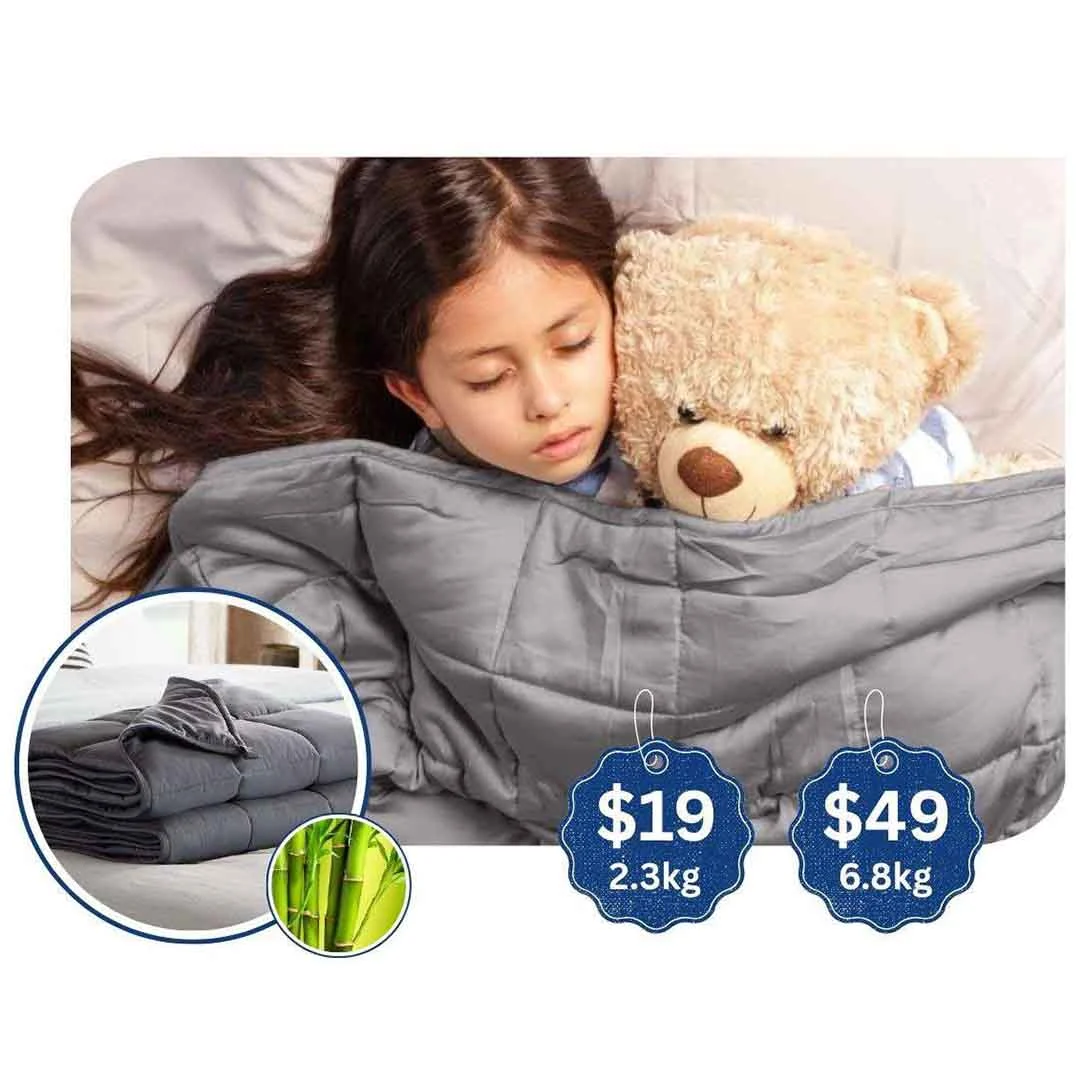
Your child comes home tired but cannot settle into a quiet activity. You have seen a weighted sensory blanket advertised and wonder whether it might help. Before spending money, it helps to understand what the blanket offers and where its limits are.
A weighted blanket contains filling that makes it heavier than ordinary bedding. Some children like the pressure; others push it away. Your child’s comfort matters more than a product’s claims about calmness or better sleep.
What to expect from a weighted sensory blanket
A child may enjoy resting under one while listening to a story. That preference is worth respecting, but it does not establish that the blanket treats a sensory difficulty or improves sleep.
A study of autistic children with severe sleep problems found that weighted blankets did not help them sleep longer, fall asleep faster, or wake less often than ordinary blankets. Many children and parents still preferred them. Enjoying a blanket and sleeping better are separate outcomes. pubmed.ncbi.nlm.nih.gov
If sleep is your main concern, explain what is happening before choosing a product. Taking two hours to fall asleep is a different problem from waking repeatedly or becoming upset when bedtime approaches.
Safety comes before weight
Choosing a blanket involves more than finding a percentage of your child’s body weight. Their movement, health, ability to communicate discomfort, and surroundings also need consideration.
An occupational therapist can help assess suitability, particularly when a child has breathing difficulties, limited mobility, or difficulty managing body temperature. The Royal College of Occupational Therapists recommends an individual plan explaining how and when the blanket should be used.
During use, your child must be able to move freely and remove the blanket independently. Leave their head and neck uncovered. Never wrap them tightly, tuck them in so they cannot get out, or use the weight to stop them moving. If it is used while settling for bed, remove it once they fall asleep.
Think about the room, too. A thick cover may be uncomfortable in Phnom Penh’s heat, even when the weight feels pleasant. Sweating, struggling, or trying to escape are reasons to remove it immediately.
Notice whether your child actually likes it
After a professional has advised that a trial is appropriate, follow the recommended supervision and duration. Offer the blanket during a familiar activity rather than introducing several new things at once.
For example, try it during a story your child already enjoys. Notice whether they choose it, stay comfortable, and can take it off without help. Compare that experience with the same activity without it.
Quietness alone tells you little. Ask whether they want it again, and pay attention to gestures or attempts to remove it. Refusing the blanket is useful information. There is no need to persuade a child to enjoy the pressure.
Ask questions before purchasing
Check the dimensions, fabric, washing instructions, and manufacturer’s safety guidance for any weighted sensory blanket you are considering. Ask for missing details before ordering.
At OrbRom Center, families can discuss sensory difficulties through our occupational therapy services. Bring a specific example of what is difficult at home so the discussion starts with your child’s needs.
A weighted sensory blanket may be something your child enjoys during a supervised break. Buy it with that realistic expectation, a clear safety plan, and the freedom for your child to say no.
We are the only Preschool specialized on children with special needs in PhnomPenh.
| Included therapy sessions per month: |
| – Speech Therapy – 4 sessions / month |
| – Occupational Therapy – 4 sessions / month |
| – Free pre-enrollment assessment |
| – Individualized Learning Plans (ILPs) |
📞 Phone: 077.455.993
Telegram Link: https://t.me/OrbRom



Leave A Comment