

Communication development in children involves learning to express needs, understand messages, connect with others, and participate in daily activities. At OrbRom Learning Support Center in Phnom Penh, communication opportunities are integrated into everyday learning through structured group activities, visual supports, Augmentative and Alternative Communication (AAC), and individualized guidance. The aim is to help each child communicate in ways that are meaningful and accessible to them.
Communication goes beyond spoken language
Children communicate through speech, gestures, facial expressions, pictures, signs, and other methods. Some may speak confidently but find it difficult to understand questions or participate in conversations. Others may need an alternative way to express preferences or ask for help. Recognizing these differences allows educators and therapists to identify appropriate goals without assuming that every child should communicate in the same way.
Building communication through group activities
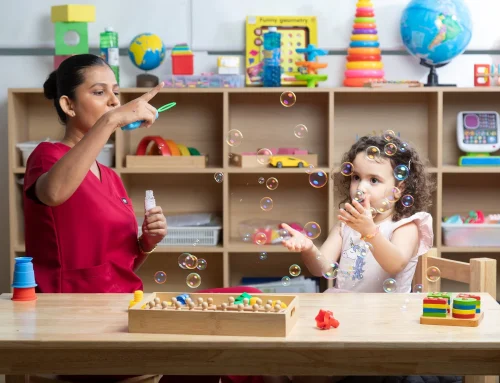
Structured group activities provide opportunities to practise listening, responding, turn-taking, and interacting with peers. A child may answer a question, choose an activity, request a material, or contribute using a gesture or communication aid. Educators can model language, provide sufficient processing time, and adjust expectations to the child’s abilities. Participation should be encouraged without requiring identical responses from everyone. Even small contributions can form part of a child’s developing communication skills. For example, a child who points to a preferred song is making a meaningful choice. Another child who uses a communication device to answer a question is taking an active role in the group. Both responses deserve recognition and appropriate follow-up.
How visual supports help children participate
Visual schedules, picture choices, and illustrated instructions can make spoken information easier to understand. They may help children anticipate transitions, follow classroom routines, or communicate preferences. Visual supports are most effective when adults demonstrate how to use them consistently and adapt them to individual needs. A picture board, for example, may help a child choose an activity or indicate that they need assistance during a lesson.
The role of AAC in communication development
Augmentative and Alternative Communication includes tools and strategies that supplement or provide alternatives to spoken communication. AAC may involve picture cards, communication boards, or electronic devices. These systems can help children express ideas and participate in learning when speech alone does not meet their needs. Choosing an AAC approach requires consideration of the child’s communication profile, access needs, and daily environments. Families and educators also benefit from guidance on using the system throughout the day.
Individualized guidance and professional collaboration
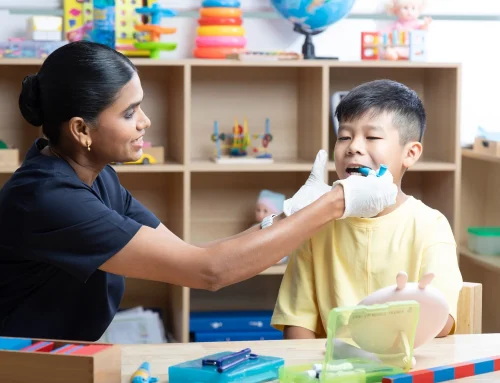
Communication development often involves several areas of learning. Speech-Language Pathologists can assess speech, language, and functional communication needs. Special Education Teachers can incorporate communication strategies into instruction and classroom participation. Occupational Therapists may address motor, sensory, or access-related factors that affect a child’s ability to engage in activities. Collaboration helps professionals coordinate strategies while keeping each child’s goals specific and achievable.
Supporting communication beyond therapy sessions
Children need opportunities to use communication skills across familiar settings. Parents and teachers can reinforce useful strategies by offering choices, acknowledging communication attempts, and allowing time for responses. Progress may involve requesting help more independently, understanding a classroom instruction, or participating in a shared activity. Regular observation and communication among adults can help identify which skills are becoming more consistent and which require further support.
Communication support at OrbRom Center
OrbRom Center provides speech therapy, individualized special education intervention, occupational therapy, and an early learning preschool program in Phnom Penh. Families can contact the center to discuss communication concerns, assessment options, and suitable individualized support.

Leave A Comment