

Down syndrome support starts with understanding the child, not only the diagnosis. Children with Down syndrome often have strengths in social connection, visual learning, imitation, and routine-based activities. At the same time, they may need help with speech, motor skills, attention, independence, and learning readiness. For families in Cambodia, early and consistent support can make a meaningful difference.
Understanding Down Syndrome in Daily Learning
Down syndrome is a genetic condition that can affect development, learning, muscle tone, communication, and independence. Some children may speak later, need more repetition to learn new concepts, or find fine motor tasks such as writing, cutting, buttoning, and feeding more difficult.
This does not mean the child cannot learn. It means learning needs to be structured, patient, visual, and practical. For example, instead of only telling a child to “pack your bag,” adults can show a picture checklist, model each step, and practise the routine every day.
Parents can also read more about Down syndrome in Cambodia and how awareness is growing around inclusion and early support.
Key Areas Children May Need Support
Many children with Down syndrome benefit from help in several developmental areas:
Speech and communication: Some children understand more than they can express. They may need support with sounds, vocabulary, sentence building, and social communication. OrbRom Center’s speech therapy supports children in building clearer and more functional communication.
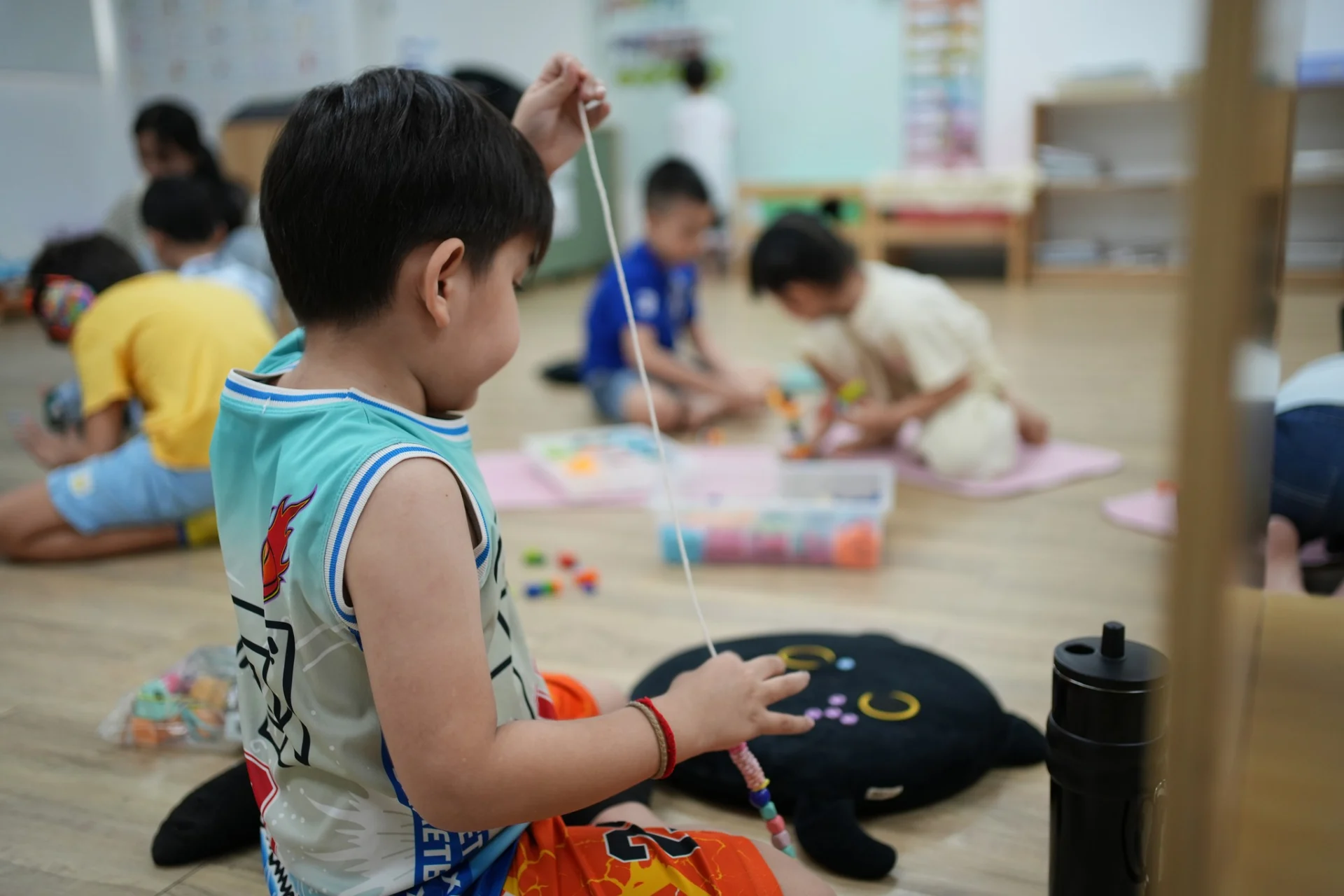
Motor and independence skills: Low muscle tone can affect posture, balance, pencil control, self-feeding, dressing, and classroom participation. Occupational therapy can help children strengthen fine motor skills, sensory regulation, coordination, and daily living skills.
Learning and school readiness: Children may need modified teaching, repetition, visual prompts, and one-on-one support. Families can also explore early intervention and special education services to better understand how structured support helps children progress.
When Should Parents Seek Support?
Parents should consider professional guidance if their child is significantly delayed in speech, struggles with daily routines, has difficulty joining classroom activities, or becomes frustrated because they cannot communicate their needs.
A developmental profile can help identify the child’s current strengths and support needs. OrbRom Center provides assessments to help families understand areas such as communication, adaptive behavior, learning, and developmental progress.
Supporting Down Syndrome with the Right Plan
Down syndrome support works best when parents, teachers, and therapists follow the same goals. A child may practise requesting help during speech therapy, then use the same phrase at home and in class. They may practise fine motor skills during occupational therapy, then apply those skills during snack time, art, or dressing.
The goal is not to push children beyond what they are ready for. The goal is to build independence step by step. With early support, realistic goals, and a caring team, children with Down syndrome can develop stronger communication, confidence, and participation in everyday life.
We are the only Preschool specialized on children with special needs in PhnomPenh.
| Included therapy sessions per month: |
| – Speech Therapy – 4 sessions / month |
| – Occupational Therapy – 4 sessions / month |
| – Free pre-enrollment assessment |
| – Individualized Learning Plans (ILPs) |
📞 Phone: 077.455.993
Telegram Link: https://t.me/OrbRom
Leave A Comment