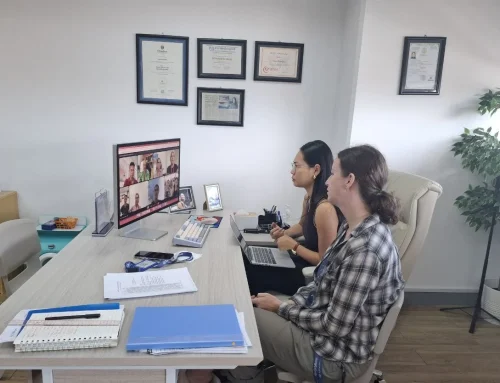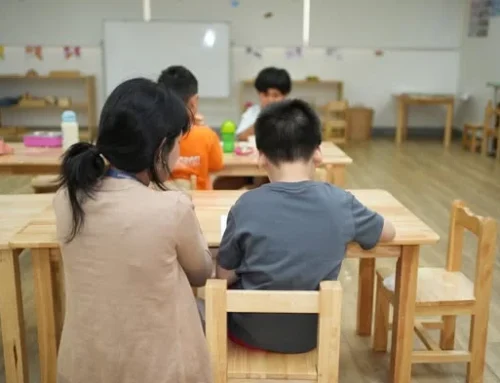
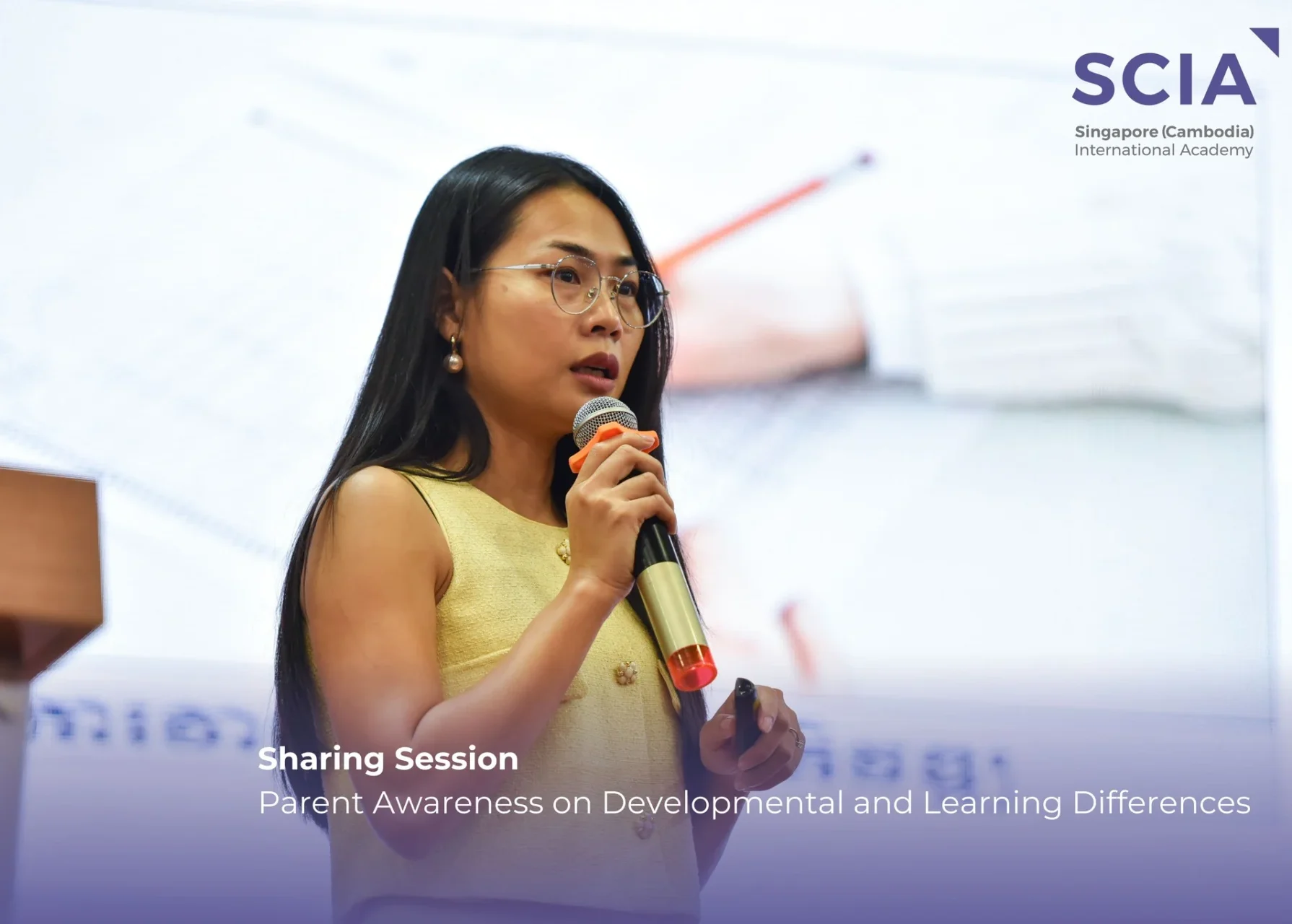
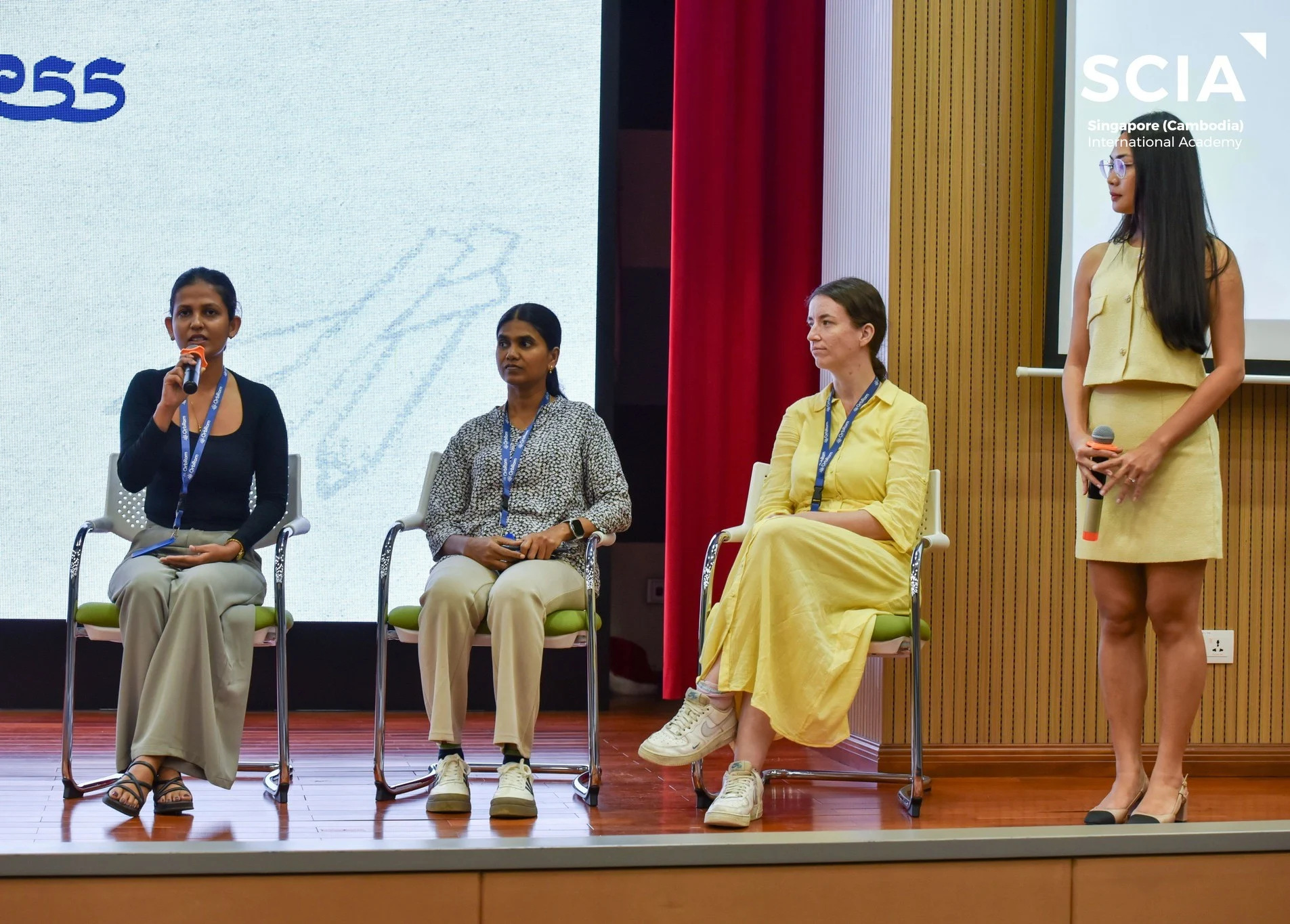
Inclusive education Phnom Penh is no longer a future goal—it is becoming a present responsibility for schools and families. During a recent Parent Awareness Sharing Session at Singapore Cambodia International Academy (SCIA), one message stood out clearly: inclusion works best when parents understand learning differences early and schools respond with structure, not assumptions.
Rather than focusing on diagnoses or labels, the session centered on how children experience learning—and what adults can do when progress does not follow a typical path.
Understanding learning differences without panic
Many parents worry when a child struggles, but uncertainty often causes more stress than the difficulty itself. Inclusive education Phnom Penh requires shifting the question from “What is wrong?” to “What support does this child need to learn effectively?”
At SCIA, the discussion highlighted common patterns families notice first:
-
A child who speaks well but struggles to explain ideas clearly
-
Difficulty following multi-step instructions
-
Strong thinking skills paired with weak reading or writing
-
Emotional shutdowns during classroom tasks
These signs don’t point to failure. They point to how the brain processes information differently, something well documented in special education research and practice.
For parents wanting context, resources such as understanding diverse learning needs and special education in Cambodia help clarify why early understanding matters more than waiting.
What inclusive schools do differently
Inclusive education Phnom Penh succeeds when schools move beyond goodwill and into intentional planning. SCIA’s approach emphasized:
-
Clear communication with parents
-
Classroom strategies that support attention and comprehension
-
Collaboration with specialists when learning stalls
-
Regular monitoring rather than “wait and see”
Parents were encouraged to ask practical questions:
-
How is progress tracked?
-
What strategies are already working?
-
Who coordinates support across subjects?
This aligns closely with structured models such as an Individualized Education Program (IEP), which transforms concern into clear goals and shared responsibility.
When awareness should lead to assessment
Awareness alone is not enough. When challenges persist, assessment becomes a tool for clarity, not a judgment. A well-conducted assessment identifies strengths, learning barriers, and the supports that will actually help in class.
At OrbRom Center, our developmental and educational assessments are designed to guide teaching strategies and home routines, not simply generate scores. For families concerned about autism, understanding what happens during an autism assessment often removes fear and confusion.
Linking support to real classroom needs
Once needs are identified, support must connect directly to learning demands. Two services commonly discussed during the session were:
-
Speech therapy, which supports comprehension, expressive language, and social communication needed for classroom participation
→ OrbRom’s Speech Therapy Services -
Targeted learning support for attention, language processing, or executive functioning challenges frequently seen in children with ADHD or learning differences
Inclusive education Phnom Penh improves when support is consistent, evidence-based, and collaborative—not reactive or occasional.
What parents should take away
The most important takeaway from SCIA’s session was simple: early understanding leads to better outcomes. When parents and schools share knowledge, children are no longer expected to “fit the system”—the system adapts to support the child.
Inclusive education is not about lowering expectations. It is about giving children the right tools to meet them.
We are the only Preschool specialized on children with special needs in PhnomPenh.
- Internationally qualified teachers
- Cambodia’s largest sensory room
- Outdoor swimming pool
- Covered outdoor playground
📞 Phone: 077.455.993
Telegram Link: https://t.me/OrbRom