
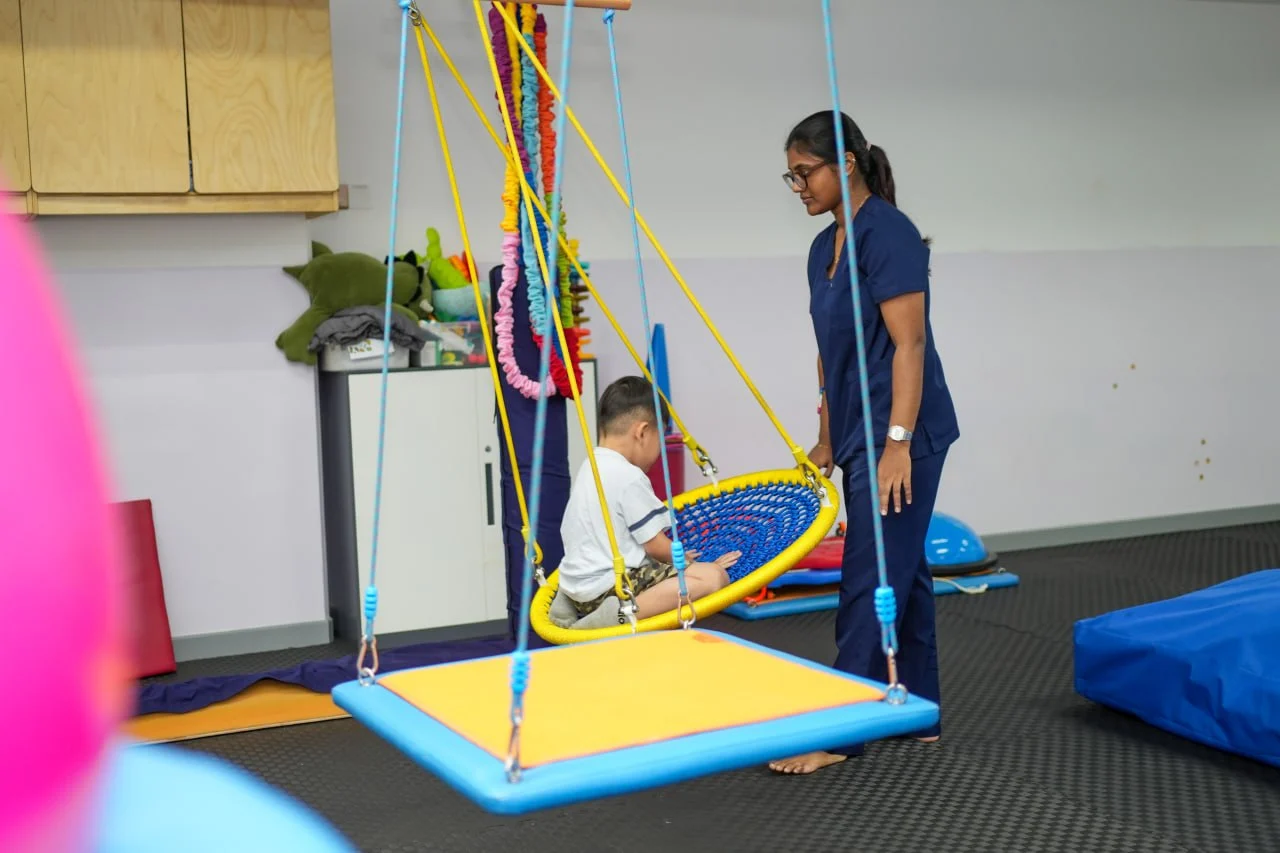
At OrbRom Center in Phnom Penh, Cambodia, pediatric occupational therapy helps children develop essential skills for movement, learning, sensory regulation, and everyday independence. Through individualized, play-based interventions, occupational therapists support children in building the physical, sensory, and functional abilities needed to participate in daily activities.
One therapeutic activity commonly used in pediatric occupational therapy is sensory swinging. Although swinging may appear to be a simple recreational activity, when incorporated into a structured therapy session, it can help children develop balance, body awareness, postural control, and motor coordination.
How sensory swings support child development
Sensory swings provide movement experiences that stimulate the vestibular system, which helps the brain detect movement, head position, and changes in balance.
During occupational therapy sessions, therapists may use different types of swings to provide controlled movement experiences based on each child’s sensory needs, abilities, and therapy goals.
These activities can support several areas of development.
1. Sensory processing and integration
Sensory processing refers to how the nervous system receives, organizes, and responds to information from the environment and body.
Children with sensory processing difficulties may be particularly sensitive to movement, seek additional movement experiences, or struggle to coordinate their responses to sensory information.
Occupational therapists use carefully graded sensory activities to help children develop more effective responses to movement and other sensory experiences.
2. Balance, coordination, and body awareness
Swinging engages the vestibular and proprioceptive systems, which work together to support balance, body position, and coordinated movement.
During structured swinging activities, children may practice maintaining their posture, adjusting their body position, and responding to changes in movement.
These skills contribute to everyday activities such as walking, climbing stairs, participating in playground games, and navigating classroom environments.
3. Core strength and postural stability
Postural control is essential for maintaining stable body positions during movement and daily activities.
Depending on the activity, children using sensory swings may engage their trunk muscles to maintain balance and adjust their posture.
Improved postural stability can support participation in activities such as sitting at a desk, drawing, dressing, and engaging in classroom tasks.
4. Motor planning and movement coordination
Motor planning, also called praxis, involves developing an idea for movement, organizing the necessary actions, and carrying them out.
Occupational therapists may incorporate activities that encourage children to change positions, reach for objects, coordinate movements, or maintain balance while swinging.
These experiences provide opportunities to practice motor planning and develop greater confidence in physical activities.
5. Attention and sensory regulation
Some children experience difficulties maintaining attention, regulating their activity levels, or responding appropriately to sensory stimulation.
Individualized movement activities may help certain children achieve a level of alertness that supports participation in learning and daily routines.
However, responses to swinging vary. Occupational therapists carefully monitor each child’s comfort, sensory responses, and engagement to determine whether an activity is appropriate.
Occupational therapy for children with autism and developmental delays
At OrbRom Center, our pediatric occupational therapy services support children with autism spectrum disorder (ASD), ADHD, developmental delays, sensory processing difficulties, and motor coordination challenges.
Occupational therapy addresses functional difficulties that may affect children’s participation at home, at school, and in the community.
Depending on individual needs, intervention may focus on sensory processing, fine and gross motor coordination, self-care skills, emotional regulation, handwriting readiness, and classroom participation.
Our occupational therapists develop individualized therapy goals based on each child’s developmental profile, strengths, and areas requiring additional support.
Why play-based occupational therapy matters
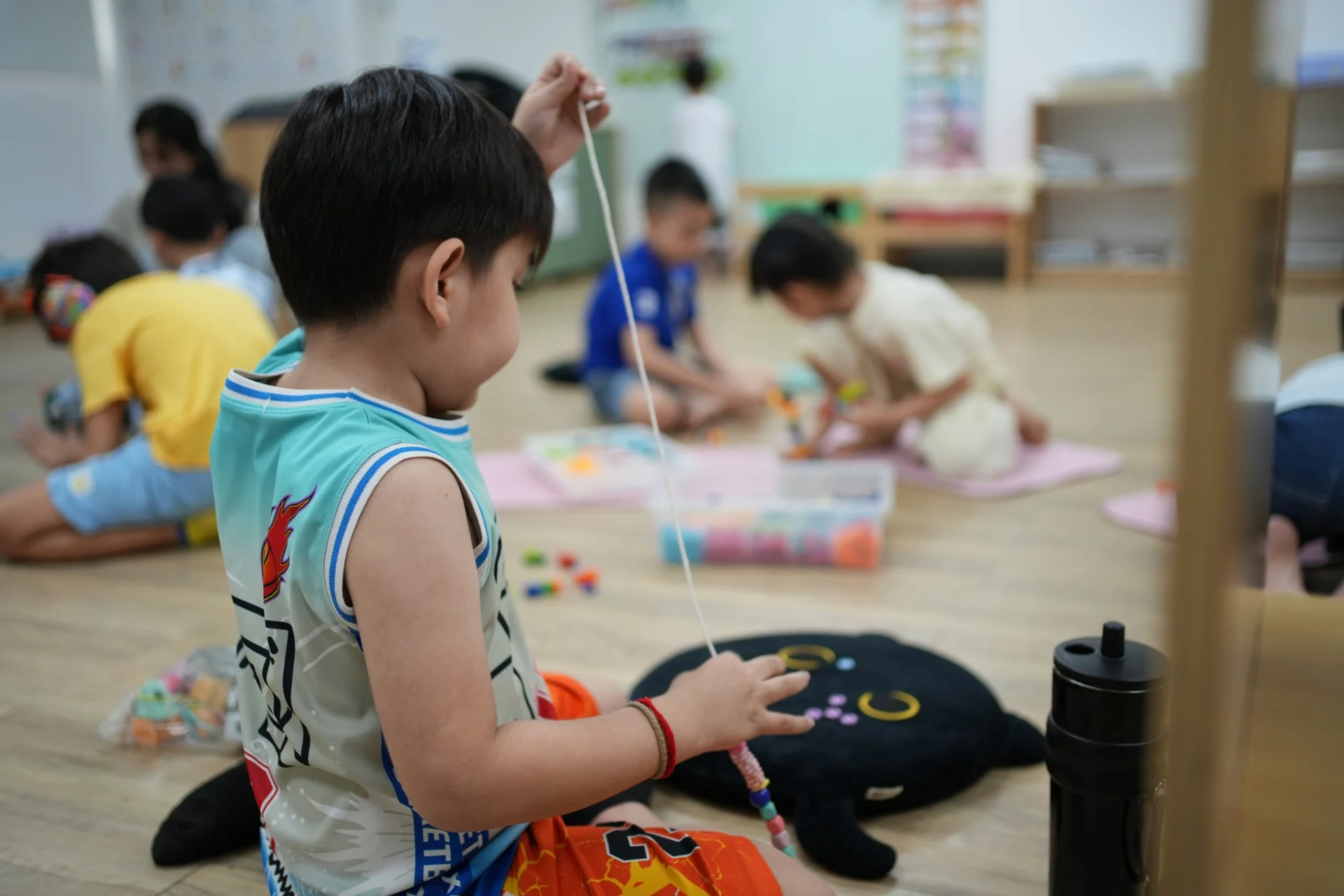
Play is a natural way for children to explore their environment, practice new movements, and develop important developmental skills.
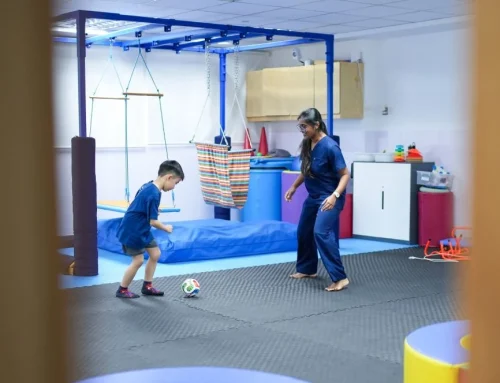
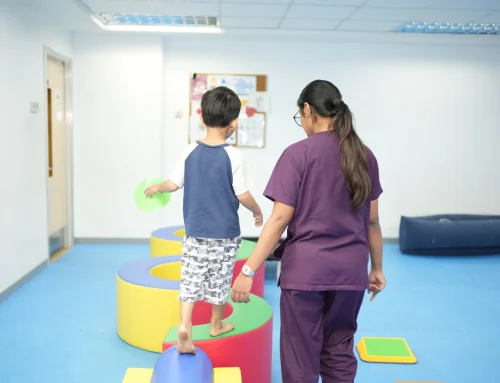
In pediatric occupational therapy, play-based activities are selected with specific therapeutic objectives. A sensory swing, balance activity, or movement game can provide opportunities to practice skills that children need in everyday situations.
At OrbRom Center, therapists adapt activities to each child’s abilities and gradually adjust the level of challenge as skills develop.
This individualized approach helps make therapy engaging, purposeful, and relevant to the child’s daily life.
Pediatric occupational therapy at OrbRom Center in Phnom Penh
OrbRom Center provides individualized pediatric occupational therapy in Phnom Penh, Cambodia, with a focus on helping children develop practical skills for greater independence and participation.
Our occupational therapists work with children and families to identify developmental needs, establish meaningful goals, and provide structured interventions that support progress across home, school, and community environments.
Through sensory-based activities, motor development exercises, and functional skill training, occupational therapy at OrbRom Center supports children in building the foundations for learning, movement, and everyday independence.
We are the only Preschool specialized on children with special needs in PhnomPenh.
| Included therapy sessions per month: |
| – Speech Therapy – 4 sessions / month |
| – Occupational Therapy – 4 sessions / month |
| – Free pre-enrollment assessment |
| – Individualized Learning Plans (ILPs) |
📞 Phone: 077.455.993
Telegram Link: https://t.me/OrbRom

Leave A Comment