
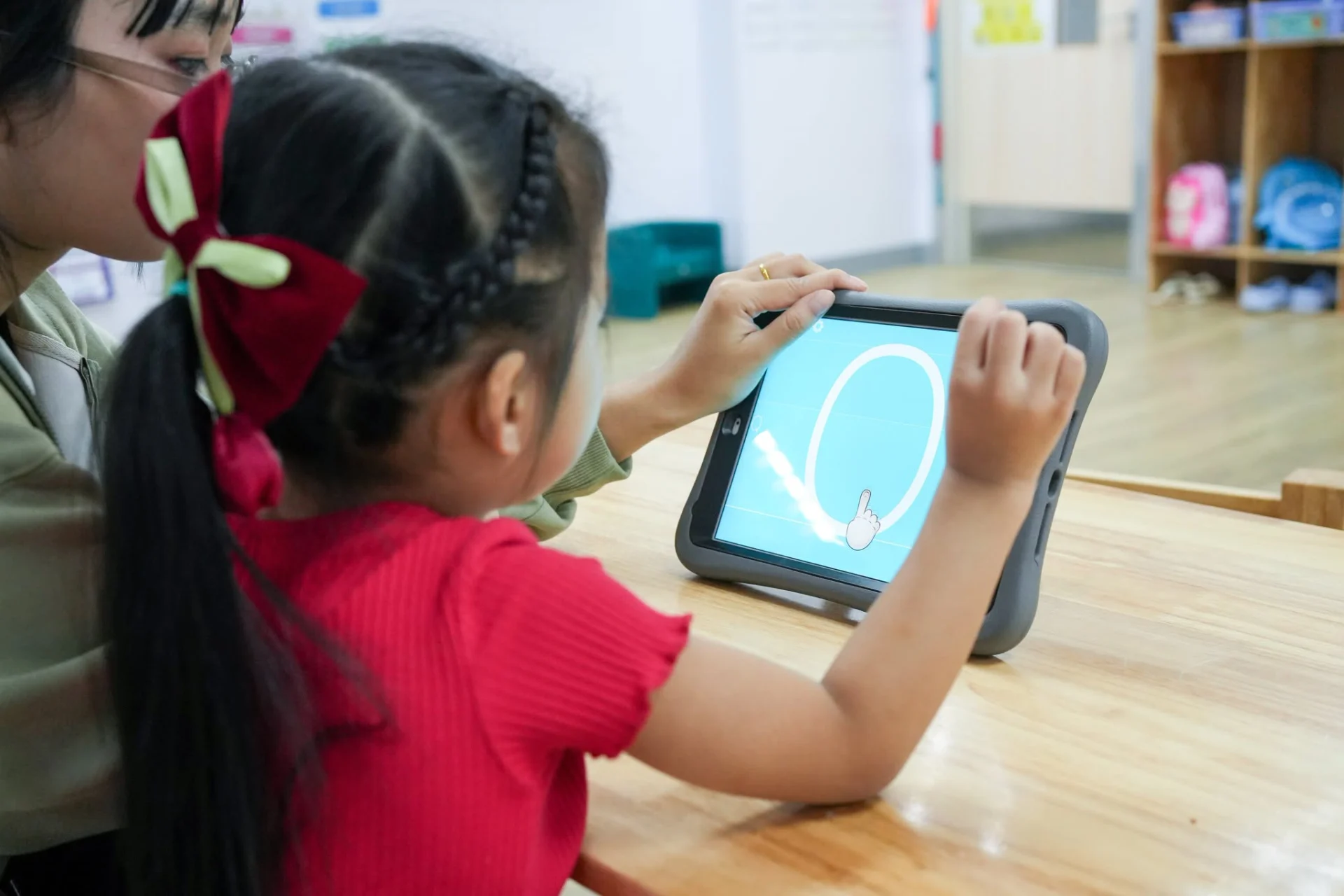
Letter tracing activities can support early writing readiness by helping children practise controlled movements, visual attention, and coordination. For children who find pencil-and-paper tasks difficult, interactive tracing may offer another way to explore letter shapes and movement patterns. At OrbRom Center in Phnom Penh, occupational therapy focuses on functional skills and individualized support that reflects each child’s strengths, needs, and pace.
How letter tracing supports early learning
Tracing a letter involves noticing its shape, planning a movement, and guiding the hand along a path. These steps can provide opportunities to practise visual-motor coordination, motor planning, and sustained attention. The activity can also introduce letter formation, although tracing alone does not establish handwriting proficiency or letter recognition. Children need opportunities to apply emerging skills through varied activities, including drawing, play, and everyday classroom tasks.
The role of visual-motor integration
Visual-motor integration is the ability to coordinate information from the eyes with movements of the hands. Children use this skill when copying shapes, drawing, assembling puzzles, and writing. A tracing task can be adjusted by changing the size of the letter, the width of the path, or the level of guidance provided. Larger movements may be more accessible initially, while smaller, more precise movements can be introduced when appropriate. Progress depends on the child’s broader developmental profile and functional goals.
Using digital tools thoughtfully
A tablet can provide a clear visual path and immediate feedback during tracing practice. Some children find touching and following a line easier than controlling a pencil. Digital activities can be useful when they serve a specific learning objective and when an adult monitors engagement. However, tracing on a screen differs from using a pencil, which requires grip control, pressure regulation, and coordination with paper. Digital practice should therefore complement, rather than automatically replace, hands-on activities.
Adapting support to individual needs
Children vary in attention, motor control, sensory preferences, and familiarity with letters. An adult may model the movement, offer verbal cues, or provide a visual starting point. Other children may need fewer prompts to develop independence. The task can be shortened, simplified, or combined with movement breaks. Physical guidance should be respectful and appropriate to the child’s comfort. The goal is meaningful participation and gradually increasing independence, not completing the same task in the same way as peers.
Connecting tracing to everyday skills
Handwriting readiness includes more than forming letters. Postural stability, bilateral coordination, hand strength, and the ability to manipulate classroom materials can influence participation. Occupational therapy may address these areas when they affect daily activities. A therapist can also recommend adaptations such as positioning materials differently or selecting suitable writing tools. These recommendations should follow observation and assessment rather than assuming that one tracing exercise will resolve every difficulty.
Working with families and educators
Consistency can help children practise a developing skill in different settings. Families and teachers may use short drawing or tracing activities, while observing whether the child becomes more accurate, comfortable, or independent. Sharing observations with the therapist can guide adjustments to the plan. Practice should remain manageable and should not cause pain, prolonged frustration, or unnecessary pressure to perform.
Occupational therapy at OrbRom Center
OrbRom Center offers occupational therapy, individualized special education intervention, and an early learning preschool program in Phnom Penh. Families can contact the center to discuss fine motor development, writing readiness, and support for participation in everyday learning activities.
Leave A Comment