
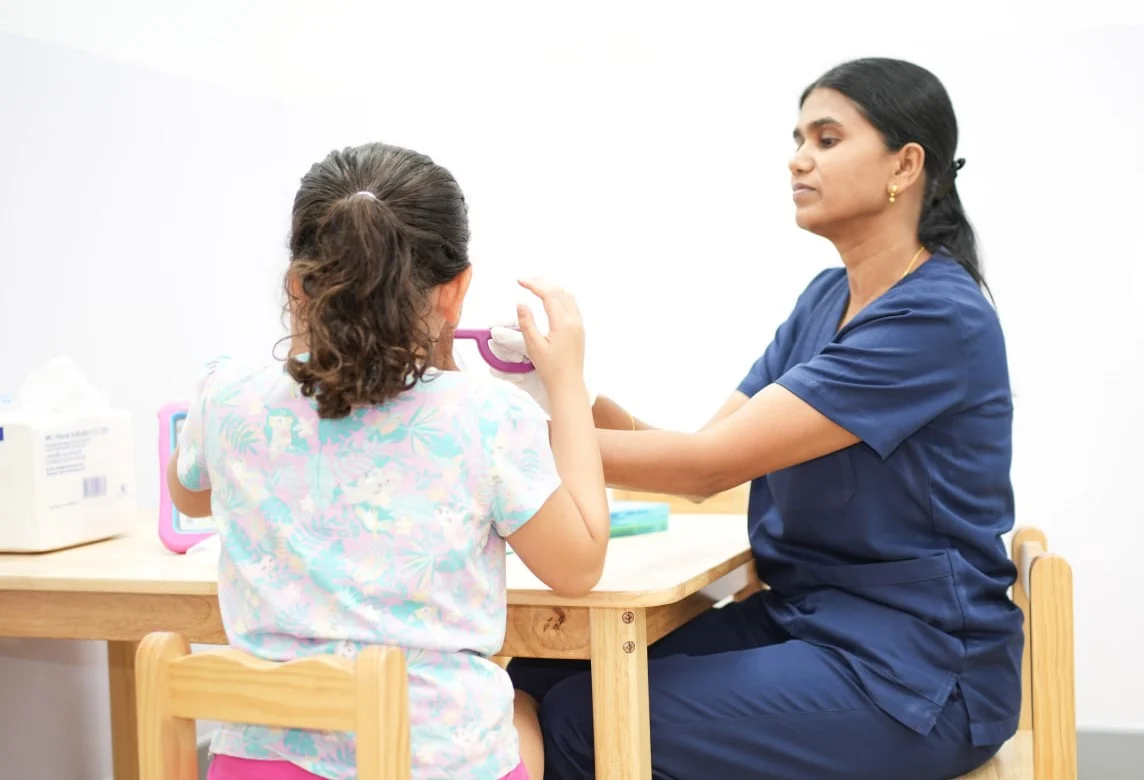
Communication allows children to express their needs, share their ideas, build relationships, and participate more confidently in everyday life. When speech or language development is challenging, professional support can make a meaningful difference.
At OrbRom Center, our speech therapy in Phnom Penh is provided by qualified professionals who understand that every child communicates differently. One of our experienced team members is Santha Subbiah, a qualified Speech-Language Pathologist with 17 years of clinical experience supporting children with diverse communication needs.
Experienced Speech Therapy in Phnom Penh
Santha brings extensive clinical knowledge, patience, and commitment to every therapy session. Throughout her career, she has worked with children presenting with a wide range of speech, language, communication, and feeding difficulties.
Her experience allows her to identify each child’s strengths, understand the areas in which additional support may be needed, and develop an individualized intervention plan. Therapy is never based on a one-size-fits-all programme. Activities, materials, communication methods, and goals are carefully selected according to the child’s developmental level and individual needs.
What Can a Speech-Language Pathologist Support?
A Speech-Language Pathologist, commonly called an SLP, assesses and supports different areas of communication and feeding development. Depending on the child’s needs, speech therapy may address:
- Delayed speech and language development
- Difficulty producing speech sounds clearly
- Limited vocabulary or sentence development
- Difficulty understanding instructions and questions
- Challenges expressing needs, thoughts, and emotions
- Social communication and conversational skills
- Fluency difficulties, including stuttering
- Voice and oral-motor concerns
- Feeding and swallowing difficulties
- The use of Augmentative and Alternative Communication
Early identification and consistent intervention can help children develop important skills for home, school, and social environments.
Supporting Communication Through AAC
Some children may not yet communicate effectively through spoken language alone. In these situations, Augmentative and Alternative Communication, or AAC, can provide another way for the child to communicate.
AAC may include pictures, symbols, communication boards, gestures, or speech-generating devices. These tools can help children make choices, request items, answer questions, participate in learning, and connect with the people around them.
During her sessions, Santha may use AAC when it is appropriate for the child. AAC does not prevent spoken language from developing. Instead, it gives the child a functional way to communicate while continuing to build broader speech and language abilities.
Individualized and Engaging Speech Therapy
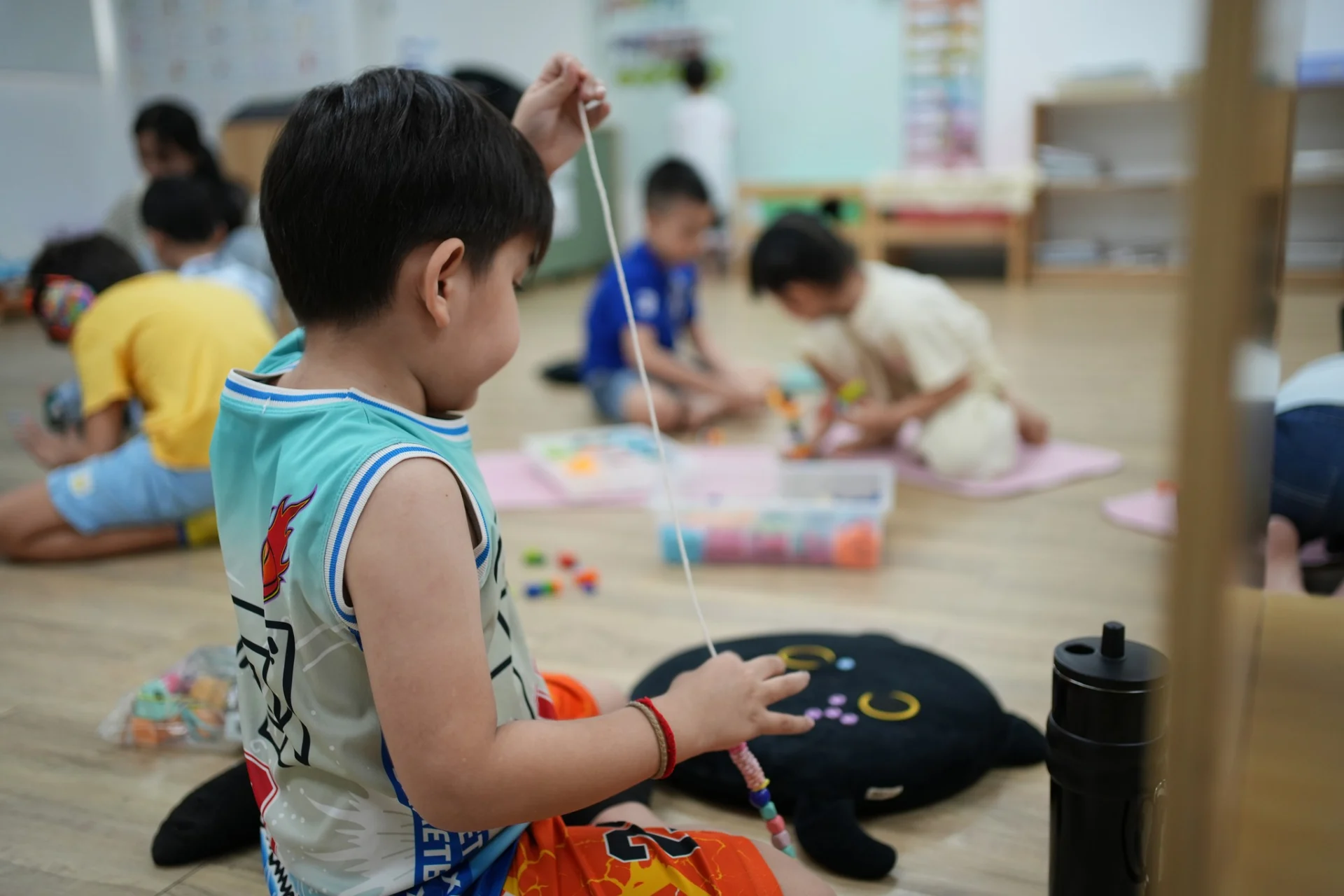
Children learn best when they feel safe, understood, and actively involved. Speech therapy at OrbRom Center therefore combines professional clinical knowledge with engaging, child-friendly activities.
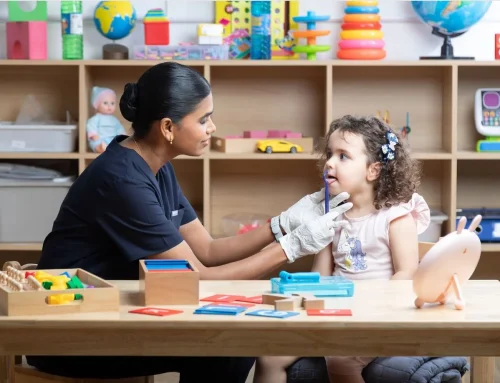
A session may include play, picture-based activities, interactive games, books, oral-motor materials, structured conversation, or communication technology. These activities are selected for a therapeutic purpose and are connected directly to the child’s individual goals.
Progress may look different for every child. For one child, success may mean producing a new sound clearly. For another, it may mean following a two-step instruction, combining words into a sentence, using an AAC device to request help, or participating in a short conversation.
Each achievement represents an important step toward greater independence and confidence.
Working Together with Families and Schools
Effective speech therapy continues beyond the therapy room. Families, teachers, and other professionals all play an important role in helping a child use new communication skills in daily life.
Where appropriate, OrbRom Center works collaboratively with parents, schools, teachers, special education professionals, and other therapists. This coordinated approach helps children practise their skills across different settings and makes intervention more relevant to their everyday experiences.
Parents may also receive practical recommendations for supporting communication at home. These strategies are designed to be realistic and easy to include in familiar routines such as mealtimes, play, reading, and getting ready for school.
Why Professional Experience Matters
Speech and language development can be complex, particularly when a child has multiple developmental, learning, sensory, or communication needs. A qualified and experienced SLP can carefully observe the child, select appropriate approaches, monitor progress, and adjust intervention when necessary.
With 17 years of clinical experience, Santha brings both depth of knowledge and a thoughtful, individualized approach to her work. Her focus is not simply on completing activities but on helping each child develop communication skills that are useful, meaningful, and relevant to everyday life.
Speech Therapy at OrbRom Center
OrbRom Center provides individualized services for children with a variety of developmental and learning needs. Our multidisciplinary team includes speech-language pathologists, occupational therapists, special education teachers, and early-years professionals.
Our goal is to help every child build practical skills, increase independence, and participate more confidently at home, at school, and in the community.
If you are concerned about your child’s speech, language, communication, or feeding development, a professional consultation can help determine the most appropriate next step.
Contact OrbRom Center to learn more about speech therapy in Phnom Penh or to schedule an appointment with our team.
Frequently Asked Questions
When should my child see a Speech-Language Pathologist?
You may consider consulting an SLP if your child has difficulty speaking clearly, understanding language, forming sentences, expressing needs, communicating socially, or eating and swallowing safely. An assessment can help identify the child’s strengths and support needs.
Does speech therapy only help children who cannot speak?
No. Speech therapy can support many areas, including pronunciation, vocabulary, sentence structure, language comprehension, social communication, fluency, voice, feeding, and alternative communication.
What is AAC?
AAC stands for Augmentative and Alternative Communication. It includes tools and strategies—such as pictures, symbols, communication boards, or speech-generating devices—that help a person communicate.
How long will my child need speech therapy?
The duration of therapy depends on the child’s needs, goals, attendance, progress, and opportunities to practise skills outside therapy. Recommendations are individualized following assessment or clinical observation.
We are the only Preschool specialized on children with special needs in PhnomPenh.
| Included therapy sessions per month: |
| – Speech Therapy – 4 sessions / month |
| – Occupational Therapy – 4 sessions / month |
| – Free pre-enrollment assessment |
| – Individualized Learning Plans (ILPs) |
📞 Phone: 077.455.993
Telegram Link: https://t.me/OrbRom

Leave A Comment