
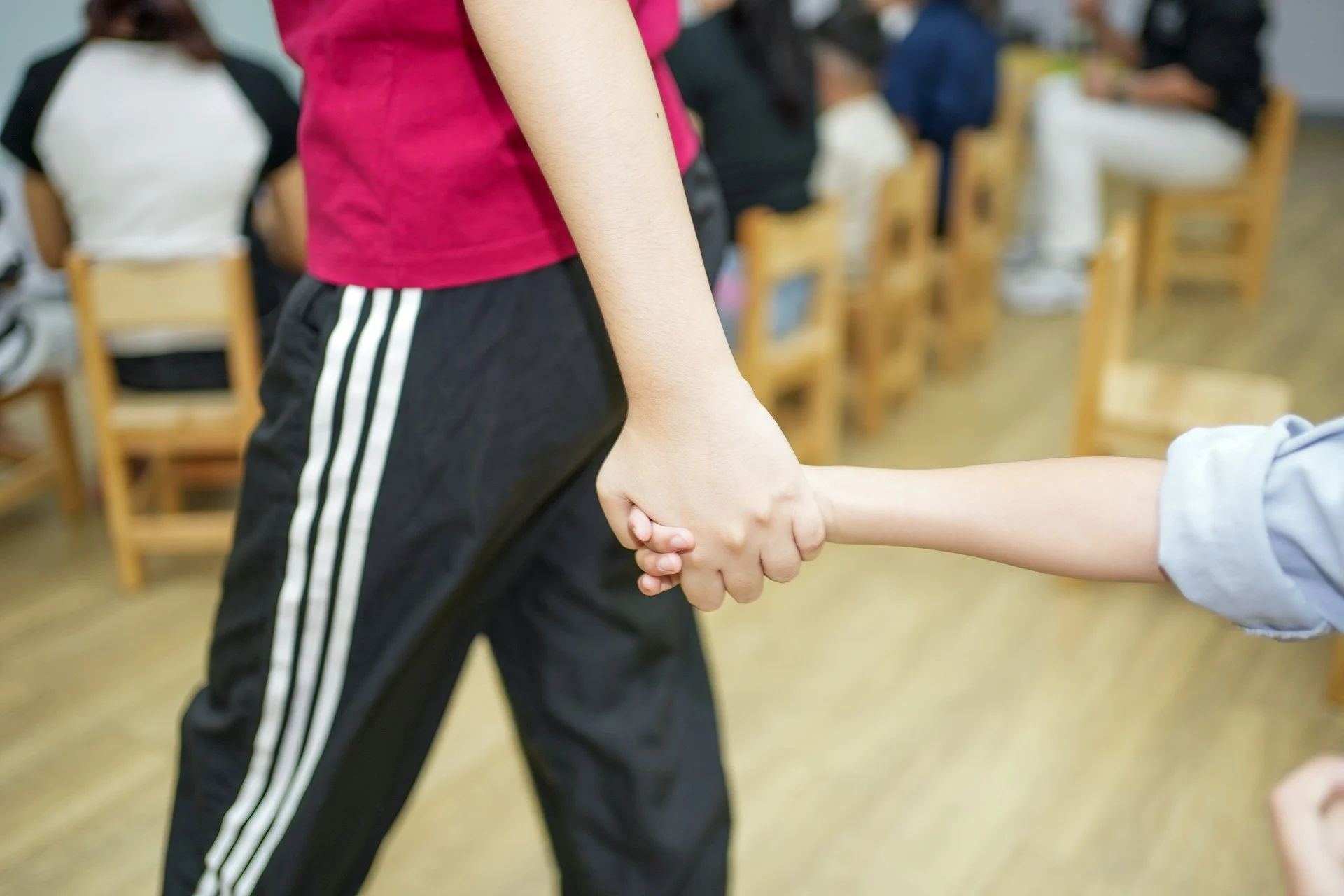
Supporting a child during transitions requires a balance between safety, independence, and respect for individual needs. In special education, guided assistance can help children move between activities, navigate unfamiliar spaces, and participate in classroom routines. The amount of support should reflect each child’s skills, comfort, and goals. At OrbRom Center in Phnom Penh, individualized intervention can address the practical skills children need throughout the school day.
Why transitions can be challenging
Moving from one activity to another involves understanding instructions, anticipating what happens next, and adjusting attention and behaviour. Some children find these changes difficult because they need more processing time, struggle with unfamiliar routines, or experience sensory discomfort. A transition may also involve physical challenges, such as navigating a busy classroom or walking across an uneven surface. Educators should consider what makes a particular transition difficult before choosing a support strategy.
Using predictable routines and visual cues
Clear routines can reduce uncertainty. A visual schedule, first-then board, or simple verbal reminder may help a child understand when an activity is ending and what follows. Adults can allow processing time and use consistent language rather than repeating increasingly complex instructions. For some children, a countdown or familiar transition object can be helpful. The best approach depends on the child’s understanding and preferences, and it should be reviewed as their skills develop.
Providing physical guidance respectfully
Handholding may offer safety or reassurance in situations where a child needs support, such as walking through a crowded area. However, physical assistance should be purposeful, proportionate, and responsive to the child’s willingness to participate. Adults should not automatically use physical guidance when a verbal cue, gesture, or visual prompt would be sufficient. Children should have opportunities to communicate discomfort, request space, or choose an appropriate alternative whenever safety allows.
Teaching independence step by step
The long-term aim of many transition strategies is to help children participate with less assistance. An educator may initially walk beside a child and point toward the next activity, then gradually reduce prompts as the routine becomes familiar. Independence can include checking a visual schedule, gathering materials, asking for help, or moving to a designated area. Progress should be measured by what the child can manage safely and meaningfully, not simply by whether they follow directions immediately.
Building trust through responsive interactions
A supportive relationship helps educators recognize when a child needs encouragement, a break, or a change in approach. Adults can acknowledge emotions, offer choices, and explain expectations using language the child understands. Consistent responses are important, but flexibility matters when a child is tired, distressed, or overwhelmed. Respectful interactions also give children opportunities to practise self-advocacy and communicate their needs.
Coordinating strategies across environments
Children may transition differently at home, in school, and during therapy. Families and professionals can compare observations to identify which cues work reliably. For example, a child may follow a classroom picture schedule but need additional preparation for an unfamiliar outing. Shared goals and practical feedback can help adults adjust the support without assuming that success in one environment automatically transfers to another.
Individualized support at OrbRom Center
OrbRom Center provides one-on-one special education intervention, occupational therapy, and an early learning preschool program in Phnom Penh. Families can discuss difficulties with transitions, daily routines, and independence to identify suitable assessment and support options.


Leave A Comment