
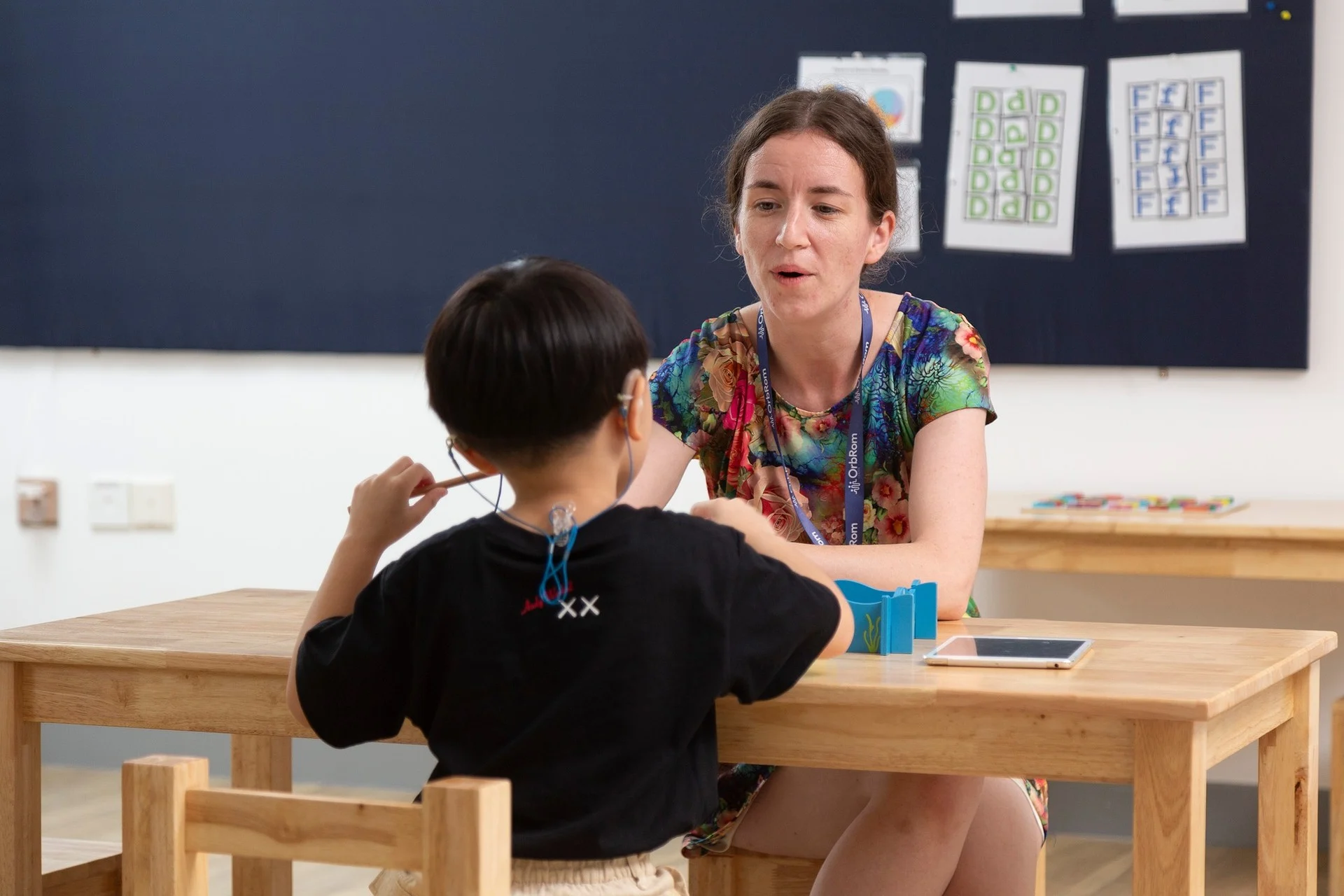
Transitions between activities can be difficult for children who need extra time to process instructions, manage sensory demands, or adjust to changes in routine. In special education, transition support helps children move between tasks with greater predictability and participation. At OrbRom Center in Phnom Penh, educators can use individualized strategies to support children during classroom changes, arrival routines, and movement between learning spaces.
Why transitions can be challenging
Moving from one activity to another involves several skills at once. A child may need to stop an enjoyable task, understand what happens next, organize their belongings, and move to a different place. Language comprehension, attention, emotional regulation, and executive functioning can all affect this process. Some children become distressed by unexpected changes, while others need more time or a clearer instruction. Understanding the reason for difficulty is more useful than assuming a child is refusing to cooperate.
Using predictable routines and visual supports
Consistent routines help children anticipate daily activities. A visual schedule can show the order of events, while a first-then board can clarify a shorter sequence. For example, an educator might indicate that cleanup comes before outdoor play. Visual cues can remain available after spoken instructions have ended, giving children additional time to process information. Educators should select supports the child understands and teach their meaning rather than expecting a picture alone to resolve every transition difficulty.
Providing appropriate physical support
Some children need an adult nearby when moving through busy or unfamiliar environments. Depending on the child’s needs, support might include walking alongside them, offering a hand when welcomed, or providing verbal and visual guidance. Physical assistance should be purposeful, proportionate, and respectful of the child’s comfort and autonomy. Staff should avoid pulling or forcing a child through a routine. The goal is to promote safety and participation while gradually building independent skills where appropriate.
Building communication during transitions
Children need accessible ways to express what they want and how they feel. During a transition, a child might request more time, ask for help, indicate discomfort, or choose between two acceptable options. Adults can model short phrases and provide gestures, pictures, or augmentative communication when needed. Acknowledging a child’s communication does not mean every request can be granted, but it allows staff to respond clearly and respectfully. Consistent language between adults can also reduce confusion.
Supporting emotional regulation
Unexpected transitions may be especially demanding when children are tired, overwhelmed, or engaged in a preferred activity. Advance notice, a clear ending signal, and a manageable next step can reduce uncertainty. Some children benefit from a short pause or a familiar calming strategy before moving on. Educators should observe whether a particular environment, sound, or instruction contributes to distress. Adjustments based on those observations can improve participation without relying on punishment or repeated demands.
Measuring progress toward independence
Transition goals should focus on meaningful daily participation. A team might track whether a child follows a visual cue, begins cleanup with fewer prompts, or moves between rooms safely. Progress should be considered across different activities and over time. Independence may involve using a communication support or requesting assistance appropriately, rather than completing every transition without help. Families can share which routines work at home so that useful strategies can be adapted across settings.
Individualized support at OrbRom Center
OrbRom Center provides individualized special education intervention, occupational therapy, speech therapy, and an early learning preschool program in Phnom Penh. Families can contact the center to discuss classroom transitions, daily routines, communication needs, and appropriate assessment or support options.

Leave A Comment