
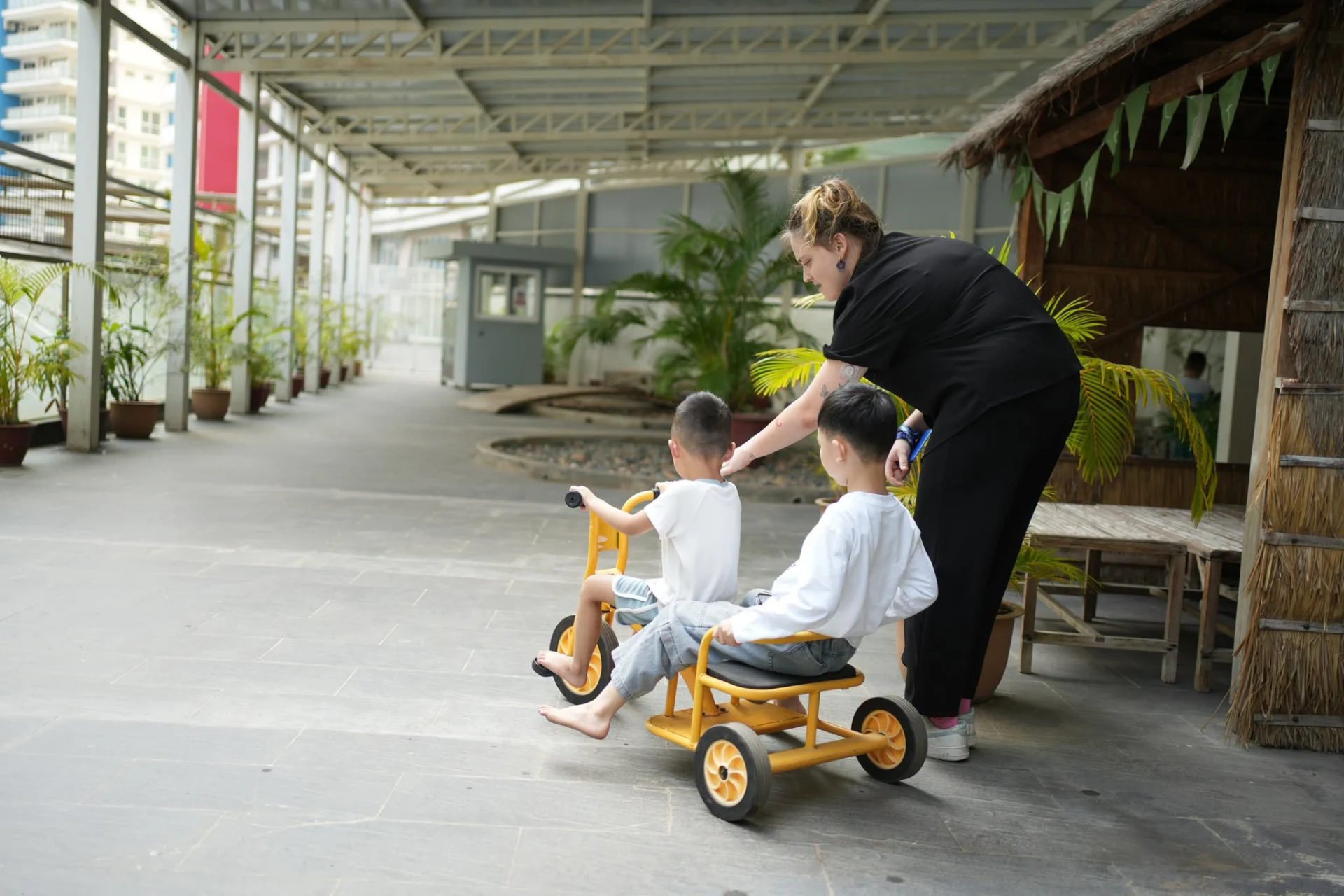
Outdoor play is an essential part of healthy child development. While classroom learning supports academic and cognitive skills, outdoor activities provide children with opportunities to develop physical coordination, social interaction, emotional regulation, and independence through real-life experiences.
At OrbRom Center in Phnom Penh, outdoor play is an important part of our approach to early childhood education and developmental support. Our playground offers children opportunities to climb, balance, swing, ride bicycles, explore their surroundings, and interact with peers in a supportive environment.
For children with autism, ADHD, developmental delays, or additional learning needs, these experiences can be particularly valuable in supporting their individual developmental goals.
1. Outdoor Play Supports Physical and Motor Development
One of the most important benefits of outdoor play for child development is the opportunity to strengthen gross motor skills.
Activities such as climbing stairs, navigating playground equipment, riding tricycles, and balancing help children develop:
- Muscle strength and endurance
- Balance and coordination
- Body awareness and spatial orientation
- Motor planning and movement control
- Postural stability
These skills support everyday activities, including walking safely, dressing independently, participating in sports, and navigating different environments.
For children receiving occupational therapy, playground activities can provide opportunities to practice movement skills in meaningful, enjoyable situations.
2. Encouraging Cognitive Development and Problem-Solving
Outdoor play encourages children to think, explore, and make decisions independently.
When a child figures out how to climb a structure, navigate an obstacle, or coordinate movements on playground equipment, they are practicing problem-solving and planning skills.
Unstructured outdoor play also creates opportunities for imagination and creativity. Children can experiment with different ways of using equipment, invent games, and learn through trial and error.
These experiences support executive functioning skills, including attention, flexible thinking, planning, and decision-making.
3. Developing Social Skills Through Play
Playgrounds provide natural opportunities for children to interact with others.
Whether children are taking turns on equipment, riding bicycles together, or participating in group activities, they encounter situations that encourage communication and cooperation.
Outdoor play can help children practice:
- Initiating interactions with peers
- Sharing and taking turns
- Understanding social boundaries
- Following simple rules
- Resolving disagreements
- Participating in cooperative activities
For children with communication difficulties, these interactions provide opportunities to use language, gestures, and other communication methods in everyday situations.
At OrbRom Center, outdoor activities can complement speech therapy and social communication interventions by allowing children to practice skills beyond structured therapy sessions.
4. Supporting Emotional Regulation and Confidence
Outdoor play offers children opportunities to experience challenges, manage frustration, and celebrate personal achievements.
A child who initially hesitates to climb playground equipment may gradually develop the confidence to try independently. Another child may learn to manage disappointment while waiting for a turn.
These experiences can help children develop emotional regulation, persistence, and resilience.
Physical movement can also support attention and emotional well-being, particularly for children who benefit from regular movement opportunities throughout the day.
Adults can support this development by providing appropriate supervision while allowing children opportunities to explore and make age-appropriate decisions.
5. Outdoor Play and Sensory Development
Outdoor environments provide varied sensory experiences that are difficult to reproduce entirely within a classroom.
Children encounter different textures, sounds, movements, temperatures, and visual experiences.
Activities such as swinging, climbing, balancing, and pushing playground equipment stimulate important sensory systems, including:
Vestibular System: Supports balance, movement awareness, and coordination.
Proprioceptive System: Helps children understand body position, movement, and the amount of force needed during activities.
Tactile System: Supports the processing of touch sensations through contact with different surfaces and materials.
These experiences can support sensory-motor development. However, children have different sensory preferences and needs, so activities should be adapted to their individual comfort and abilities.
For children receiving occupational therapy, carefully selected outdoor activities may complement individualized sensory and motor interventions.
6. Why Inclusive Outdoor Play Matters
Every child deserves opportunities to participate in meaningful play, regardless of developmental ability.
Inclusive outdoor play recognizes that children develop at different rates and may require different levels of support.
Some children may confidently explore playground equipment independently, while others benefit from adult guidance, adapted activities, visual instructions, or additional time.
At OrbRom Center, we encourage children to participate according to their abilities while gradually developing independence, confidence, and social engagement.
Our educators and therapists recognize the importance of balancing appropriate support with opportunities for children to make choices and explore their environment.
7. Connecting Outdoor Play With Early Intervention
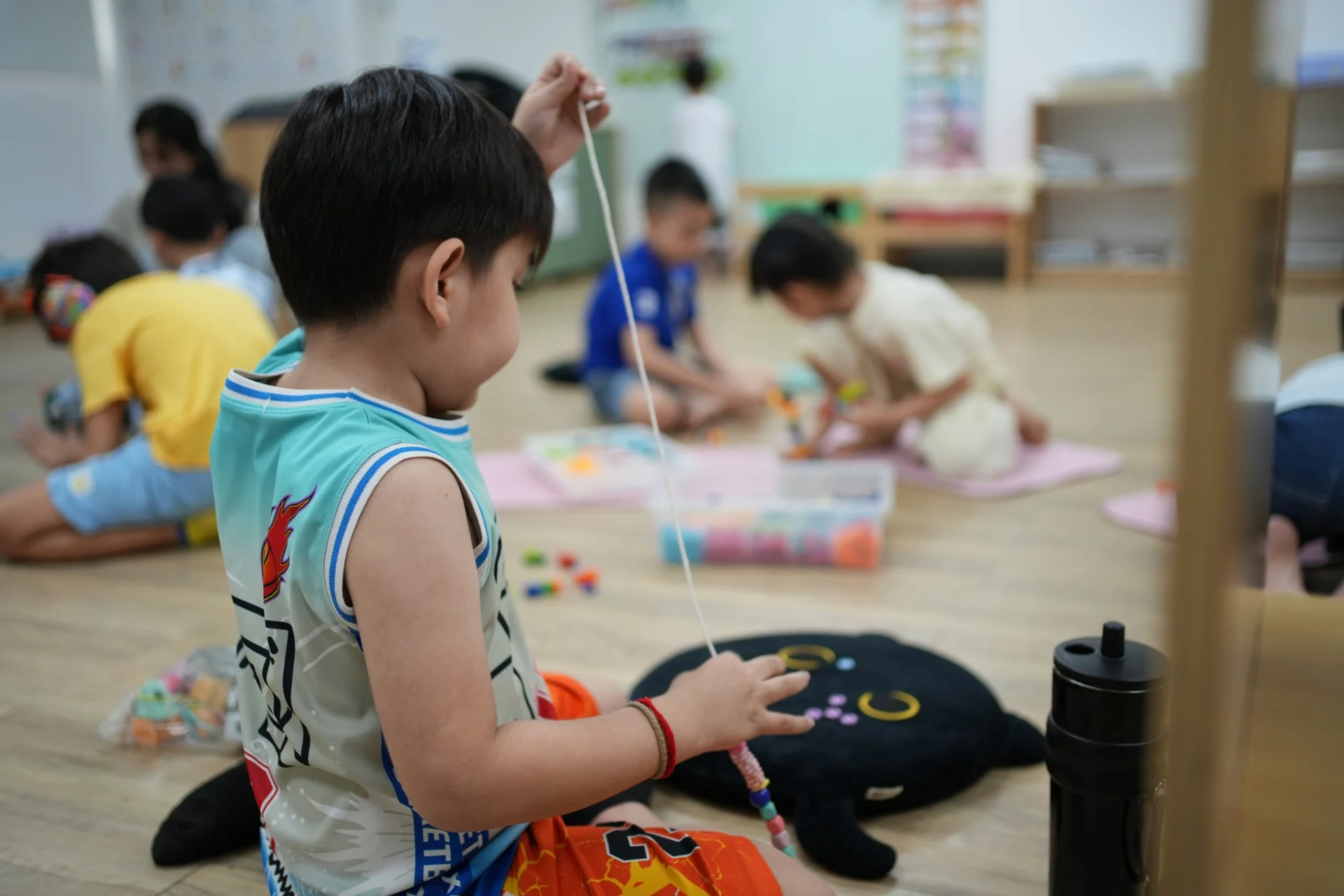
Outdoor play can reinforce skills developed during structured early intervention, speech therapy, and occupational therapy sessions.
For example, a child practicing balance during occupational therapy may apply those skills while navigating playground equipment. A child working on communication may practice requesting a turn, asking for help, or interacting with peers during outdoor activities.
These everyday opportunities support the generalization of learned skills across different settings.
For children with additional learning needs, combining structured intervention with meaningful play experiences can support participation and functional independence.
Outdoor Play at OrbRom Center in Phnom Penh
At OrbRom Center, we believe that children’s development extends beyond classroom instruction and therapy sessions.
Our outdoor playground provides opportunities for children to move, explore, interact, and learn through experiences that are both enjoyable and developmentally meaningful.
By incorporating outdoor play into early childhood education and intervention, we aim to support children’s physical, cognitive, social, emotional, and sensory development.
Outdoor play is not simply a break from learning. It is an important part of how children learn, grow, and develop independence.
To learn more about our early intervention, preschool, speech therapy, and occupational therapy services, visit OrbRom Center.
We are the only Preschool specialized on children with special needs in PhnomPenh.
| Included therapy sessions per month: |
| – Speech Therapy – 4 sessions / month |
| – Occupational Therapy – 4 sessions / month |
| – Free pre-enrollment assessment |
| – Individualized Learning Plans (ILPs) |
📞 Phone: 077.455.993
Telegram Link: https://t.me/OrbRom

Leave A Comment