
Sophaneth HENG, B.Ed, M.Ed

1224 items

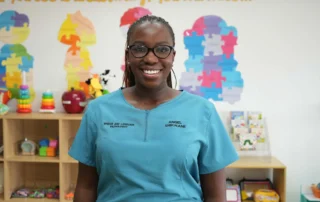
About Sophaneth HENG, B.Ed, M.Ed

I am an experienced Special Educational Needs (SEN) Teacher with a Master’s Degree in Special Education from Flinders University, Australia. I have 8 years of experience working with children with a wide range of special needs, including autism, ADHD, and learning disabilities.

Collaboration Between Therapists and Preschool Teachers: What It Looks Like (and Why It Works)

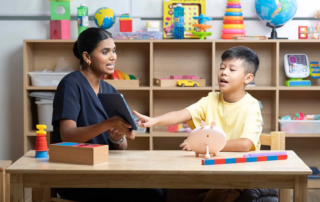
PRESCHOOL PROGRAM Strong collaboration between therapists and preschool teachers turns everyday classroom moments into therapy-rich opportunities. When speech and occupational therapists coordinate with teachers, goals are embedded into circle time, play, and routines—so children practice skills [Read More]

Supporting Neurodiverse Learners in the Preschool Classroom

PRESCHOOL PROGRAM Every preschool has a mix of strengths, needs, and personalities—that diversity is a gift. Supporting neurodiverse learners in the preschool classroom means designing routines and environments where all children can participate, communicate, and grow. [Read More]

The Role of Social Stories in Supporting Communication and Behavior

Speech Therapy Services Social stories are short, personalized narratives that teach everyday situations step by step—and the role of social stories in supporting communication and behavior is powerful for many neurodivergent children. By pairing clear language [Read More]

Using Visuals and PECS Cards for Autism Communication

Speech Therapy Services When children struggle to speak, pictures can unlock communication. Using visuals and PECS cards for autism communication gives children a clear, low-pressure way to express needs, make choices, and join social routines—at home, [Read More]

How AAC (Augmentative and Alternative Communication) Supports Nonverbal Children

Speech Therapy Services Families often ask how AAC (Augmentative and Alternative Communication) supports nonverbal children and whether it will “replace speech.” In practice, AAC does the opposite: it opens communication, reduces frustration, and creates more opportunities [Read More]

Transitioning from Dependence to Independence: Steps for Parents

Helping a child move from relying on adults to managing daily tasks is a journey—and it starts at home. Transitioning from Dependence to Independence doesn’t mean doing everything at once; it means building small routines that grow confidence, [Read More]

Visual Schedules for Building Independence at Home

Visual schedules for building independence at home give children a clear, step-by-step map of what to do next—reducing stress, boosting confidence, and cutting down on constant reminders. Families across Phnom Penh tell us the biggest win is predictability: [Read More]

Developing Self-Care Skills for Autistic Children (Dressing, Eating, Hygiene)

Building independence in self-care is possible—and powerful—for autistic children. Developing self-care skills for autistic children starts with breaking routines into small, teachable steps, using visual supports, and practicing in calm, predictable moments. These foundations help with dressing, eating, [Read More]

How Occupational Therapy Builds Independence in Children with Autism

For many families, independence isn’t a single milestone—it’s a series of small, meaningful wins. How occupational therapy builds independence in children with autism is through targeted practice of everyday skills, sensory regulation, and confidence-building routines. At OrbRom Center, [Read More]

Teaching Daily Routines to Children with Autism: Simple Steps That Work

Teaching daily routines to children with autism builds confidence, reduces anxiety, and helps families run smoothly. In this guide, we’ll show practical ways to teach daily routines to children with autism, using visual supports, task analysis, and sensory-aware [Read More]